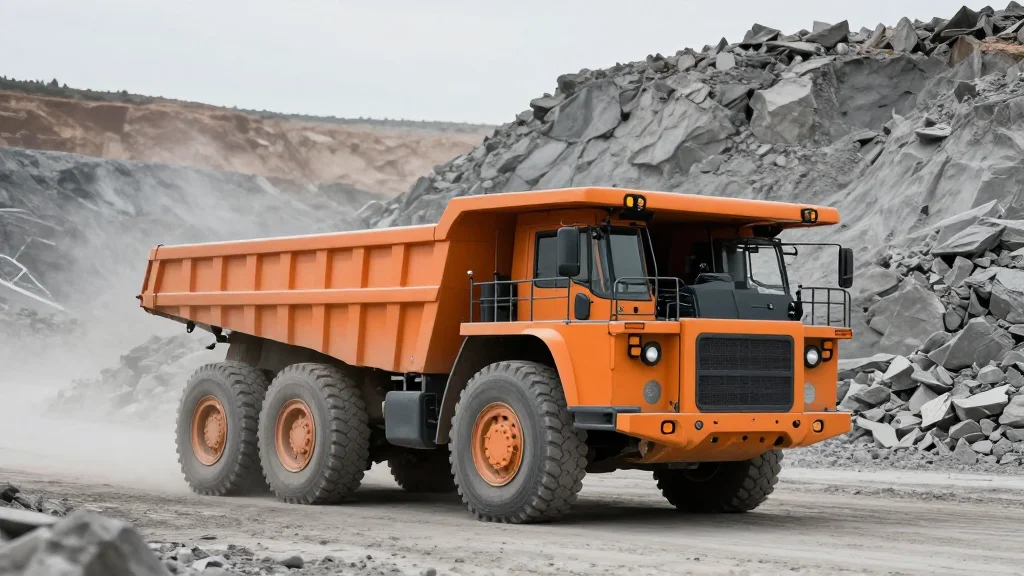
Volvo Automates Dam Building at Garpenberg
Companies Mentioned
Why It Matters
The deployment proves that autonomous haulage can deliver massive material moves safely and efficiently, setting a new benchmark for mining productivity and cost reduction. It signals a shift toward TaaS models that could become standard across the sector.
Key Takeaways
- •700,000 t of rock moved using Volvo’s autonomous trucks.
- •Transport‑as‑a‑service model reduced crew exposure to hazards.
- •Project equals weight of roughly 100 Eiffel Towers.
- •Automation cuts cycle time and fuel consumption at Garpenberg.
Pulse Analysis
Volvo Autonomous Solutions (VAS) is accelerating the mining industry’s transition to fully driverless operations. By integrating autonomous haul trucks into a transport‑as‑a‑service framework, VAS provides a turnkey logistics solution that eliminates the need for on‑site vehicle operators, reduces human error, and aligns with broader digitalisation trends. The technology leverages real‑time data, AI‑driven routing, and remote monitoring to keep fleets running at optimal efficiency, a capability that is increasingly critical as mines scale up production while tightening safety standards.
At the Garpenberg copper‑zinc mine, VAS’s autonomous fleet moved almost 700,000 tonnes of rock to construct a new dam, a volume comparable to 100 Eiffel Towers. The TaaS model allowed Boliden to outsource the entire haulage function, converting a traditionally labor‑intensive task into a service contract. This approach slashed crew exposure to hazardous environments, cut fuel usage through optimized haul cycles, and delivered the project on schedule, demonstrating tangible cost and safety benefits that can be quantified in future mine plans.
The Garpenberg success story underscores a broader industry shift toward autonomous, service‑based logistics. As mining companies grapple with decarbonisation targets and rising labor costs, the ability to outsource haulage to an autonomous provider offers a pathway to lower emissions, improve asset utilisation, and accelerate project timelines. Analysts expect the TaaS model to gain traction, prompting equipment manufacturers and technology firms to expand their autonomous fleets and support services, reshaping the competitive landscape of future mining fleets.
Volvo automates dam building at Garpenberg
Comments
Want to join the conversation?
Loading comments...