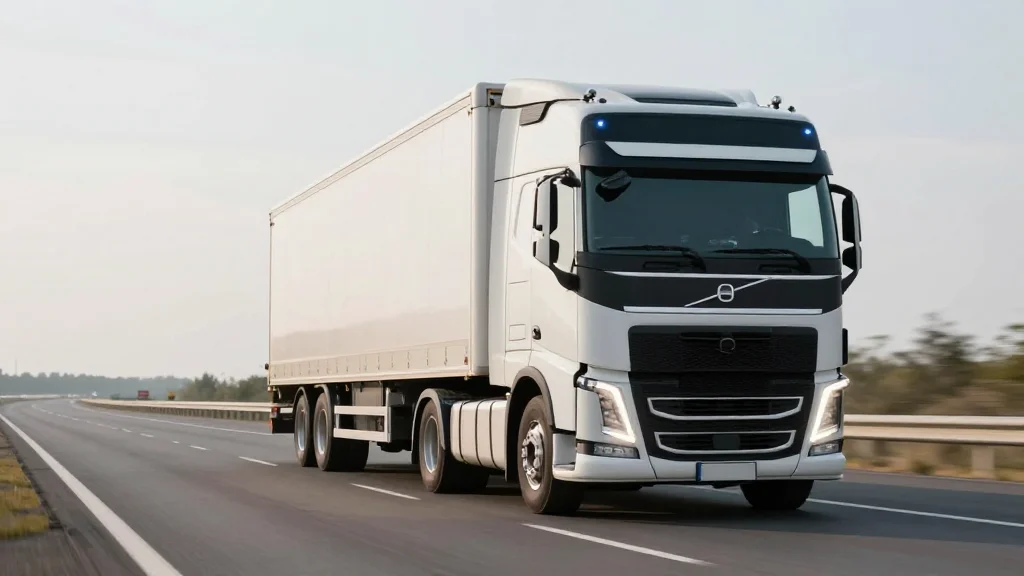
Volvo Autonomous Solutions Launches Dallas‑Oklahoma City Driverless Freight Lane with DSV

Companies Mentioned
Why It Matters
The Dallas‑Oklahoma City lane is the first U.S. freight corridor where a major OEM‑tech joint venture has moved from pilot to commercial service with a clear timeline for full autonomy. By proving that safety‑driver‑free operations can be achieved within quarters, Volvo and Aurora are setting a benchmark for regulatory bodies and other manufacturers. The collaboration with DSV also shows that large logistics firms are ready to embed autonomous trucks into their existing supply‑chain architectures, signaling a shift from experimental trials to revenue‑generating services. If the model scales, autonomous freight could dramatically reshape cost structures in long‑haul trucking, reducing labor expenses, improving asset turnover, and mitigating the driver shortage that has driven up wages and freight rates. The success of this lane could accelerate investment in supporting infrastructure—dedicated loading bays, automated gate systems, and digital freight documentation—creating a virtuous cycle that lowers barriers for additional routes across the United States.
Key Takeaways
- •Volvo Autonomous Solutions opened its third commercial autonomous lane, Dallas‑Oklahoma City, in May 2026.
- •President Nils Jaeger said full driverless operation is expected within quarters, not years.
- •DSV Road CEO Helmut Schweighofer highlighted safety, driver‑shortage mitigation, and 24/7 asset utilization as key benefits.
- •The partnership uses Volvo VNL tractors with Aurora’s self‑driving stack and integrates with DSV’s logistics network.
- •VAS plans to add at least two more long‑haul lanes by the end of 2026, leveraging a rapid lane‑opening process.
Pulse Analysis
Volvo’s aggressive lane rollout underscores a strategic pivot from hardware sales to service‑based revenue. By owning the trucks and contracting directly with shippers, VAS captures the high‑margin logistics services market while retaining control over data and fleet performance. This model mirrors the approach of early autonomous taxi operators, but applied to freight, where the economics of scale are even more compelling. The partnership with DSV is a pragmatic move: DSV brings a massive, data‑rich customer base and the operational expertise to absorb autonomous trucks into existing depot‑to‑depot flows, reducing the friction that has slowed other pilots.
Regulatory risk remains the primary headwind. While VAS has secured approvals for the Dallas‑Oklahoma City corridor, each new route will require state‑by‑state clearance, a process that can be protracted. However, the company’s claim that lane openings can be compressed from months to weeks suggests a growing familiarity with state DOTs and a template for compliance that could be replicated nationwide. Competitors such as TuSimple and Waymo are also racing to commercialize driverless trucks, but Volvo’s advantage lies in its deep manufacturing pedigree and the Aurora partnership, which provides a proven sensor suite and motion‑planning software.
The broader market impact could be profound. If VAS can demonstrate consistent on‑time delivery, lower per‑mile costs, and safety parity with human‑driven trucks, shippers will have a compelling reason to shift volume to autonomous fleets. This would accelerate the erosion of the driver labor market, forcing carriers to either adopt similar technology or double down on driver incentives. In the short term, the Dallas‑Oklahoma City lane will serve as a data‑rich proving ground, informing everything from insurance underwriting to real‑time traffic management for autonomous freight across the United States.
Volvo Autonomous Solutions Launches Dallas‑Oklahoma City Driverless Freight Lane with DSV
Comments
Want to join the conversation?
Loading comments...