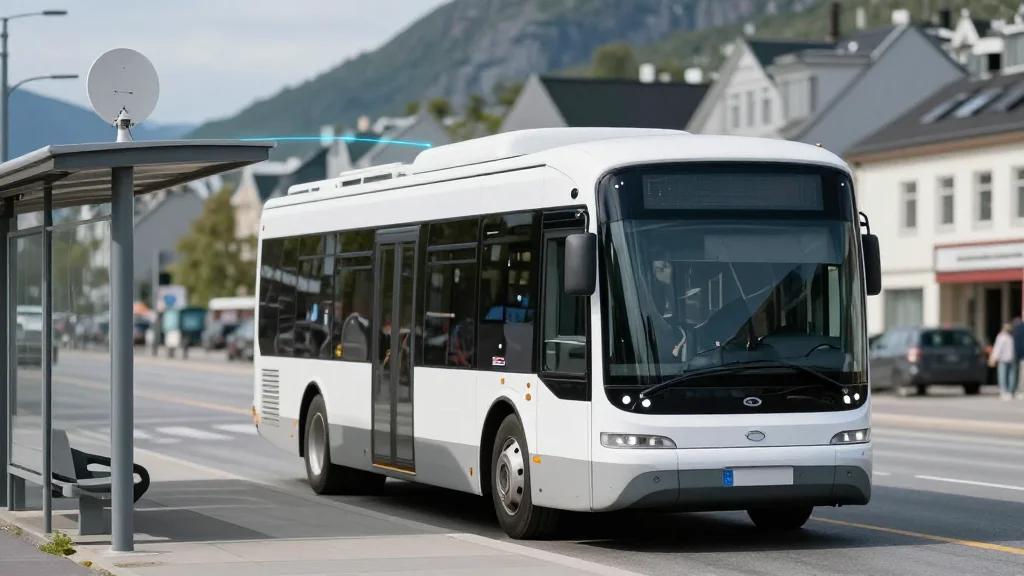
Vy Buss to Deploy Europe’s First Fully Driverless Public Bus in Stavanger

Why It Matters
The deployment tackles two pressing issues: a chronic shortage of qualified bus drivers and the need for greener, more efficient urban mobility. By proving that a remote‑supervised, Level‑4 bus can operate safely in a live city environment, the project could unlock a new operational model for transit agencies across Europe, reducing labour costs and emissions while maintaining service levels. Beyond immediate operational benefits, the rollout tests regulatory frameworks for fully autonomous public transport. Successful integration could prompt revisions to EU safety standards, encouraging manufacturers and technology providers to accelerate development of driverless fleets, and potentially reshaping the competitive landscape among bus makers, autonomous‑software firms, and telecom operators that supply the connectivity backbone.
Key Takeaways
- •Vy Buss to launch driverless service in Stavanger later this month
- •Level‑4 Karsan e‑ATAK bus equipped with Adastec autonomous stack
- •Remote monitoring via Applied Autonomy’s xFlow® platform
- •Route includes 800‑meter tunnel, mixed traffic, speeds up to 40 km/h
- •European bus driver shortage exceeds 105,000, driving demand for automation
Pulse Analysis
Europe’s public‑transport sector has been hamstrung by a chronic driver shortage, forcing many municipalities to curtail services or rely on costly temporary staffing. The Stavanger pilot demonstrates a viable alternative: a remote‑supervised, fully autonomous bus that can maintain schedule integrity without a human driver on board. This model leverages advances in sensor fusion, high‑definition mapping, and low‑latency communications to shift the safety burden from the vehicle to a centralized control room.
Historically, driverless bus trials have kept a safety driver in the cockpit to satisfy regulators and assuage public concerns. By removing that last human presence, Norway is testing the limits of current safety certifications and could set a precedent for the EU’s forthcoming autonomous‑vehicle directives. If the six‑month performance review shows low incident rates and high passenger satisfaction, other cities may fast‑track similar deployments, accelerating the shift from driver‑dependent fleets to software‑centric operations.
However, scaling will depend on more than technology. Operators must address data‑privacy regulations, ensure robust cybersecurity for remote control links, and negotiate labor agreements that may resist automation. The success of xFlow® as a remote‑operations platform could spawn a new market for “fleet‑as‑a‑service” providers, reshaping revenue streams for traditional bus manufacturers. In the longer term, the Stavanger rollout could act as a catalyst for a continent‑wide re‑evaluation of public‑transport economics, potentially delivering greener, more reliable services while mitigating the looming driver crisis.
Vy Buss to Deploy Europe’s First Fully Driverless Public Bus in Stavanger
Comments
Want to join the conversation?
Loading comments...