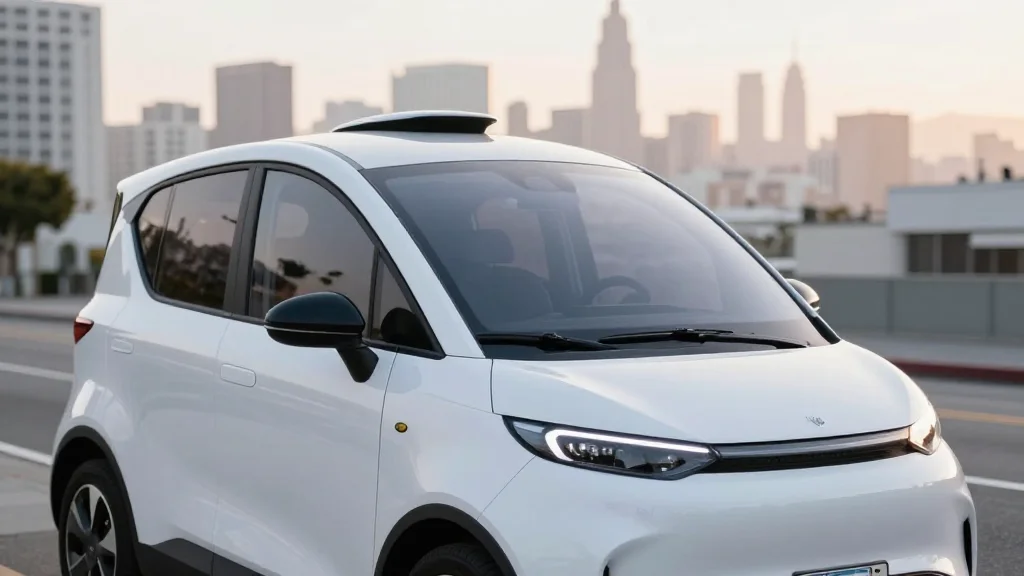
Waymo Deploys Ojai Robotaxi, First Passenger‑Centric Vehicle Built with Zeekr

Companies Mentioned
Why It Matters
The Ojai represents Waymo’s first vehicle built from the ground up for autonomous passenger service, a shift that could accelerate public acceptance of driverless rides. By offering a spacious cabin, accessibility features and a user‑customizable interface, Waymo aims to reduce the psychological barrier that has slowed adoption. The vehicle’s sixth‑generation Driver also expands operational geography into snow‑prone regions, unlocking new revenue streams. Berkshire Hathaway’s $10 billion stake in Alphabet underscores the growing confidence of traditional capital in autonomous‑driving technology. That backing not only provides Waymo with financial muscle but also signals to the broader market that robotaxis are moving from experimental pilots to scalable commercial products. The Ojai’s mass‑production target of tens of thousands of units per year could set the supply side of the equation, making it easier for cities to launch large‑scale fleets and for regulators to develop consistent safety standards.
Key Takeaways
- •Waymo begins free Ojai robotaxi rides for select users in San Francisco, Los Angeles and Phoenix
- •Ojai is built by Chinese EV maker Zeekr and features a flat floor, low step‑in height and three adaptive screens
- •Sixth‑generation Waymo Driver debuts, enabling operation in snowier climates
- •Waymo’s Mesa, Arizona factory targets production of tens of thousands of Ojai units annually
- •Berkshire Hathaway invests $10 billion in Alphabet, reinforcing confidence in Waymo’s technology
Pulse Analysis
Waymo’s Ojai launch is more than a product refresh; it is a strategic pivot toward a purpose‑built autonomous fleet. Historically, Waymo retrofitted existing SUVs, which limited interior flexibility and added weight penalties. By partnering with Zeekr, Waymo gains access to a modular electric platform that can be produced at scale, reducing per‑unit costs and simplifying maintenance. The design emphasis on accessibility and rider control addresses a key adoption hurdle: the perceived loss of agency in a driverless environment. If passengers can adjust temperature, music and even seat height via large touchscreens, the experience feels more personal, narrowing the gap between traditional ridesharing and autonomous service.
Financially, the $10 billion Alphabet investment by Berkshire Hathaway is a vote of confidence that could catalyze further institutional funding for autonomous fleets. Berkshire’s capital can help Waymo weather the high‑upfront costs of vehicle production, sensor integration and regulatory compliance. Moreover, the infusion may pressure rivals—Uber, Tesla, and emerging Chinese players—to accelerate their own purpose‑built robotaxi programs, potentially compressing the timeline for a nationwide autonomous mobility market.
The real test will be operational reliability at scale. Waymo’s claim that the sixth‑generation Driver can handle snow opens lucrative markets in the Midwest and Northeast, but sensor performance in adverse weather remains a technical challenge. Success will depend on rigorous data collection during the free‑ride phase, rapid iteration of software, and seamless coordination with city regulators. If Waymo can demonstrate consistent safety and cost‑effectiveness, the Ojai could become the de‑facto standard for robotaxi design, forcing the industry to shift from retrofits to dedicated autonomous platforms.
Looking ahead, the Ojai’s rollout will likely serve as a bellwether for the broader autonomous‑driving ecosystem. A smooth transition from free trials to paid service, coupled with measurable improvements in rider satisfaction and safety, could unlock the next wave of public‑policy support and private investment, ultimately shaping the trajectory of urban mobility for the decade ahead.
Waymo Deploys Ojai Robotaxi, First Passenger‑Centric Vehicle Built with Zeekr
Comments
Want to join the conversation?
Loading comments...