Waymo Driverless Car Mistakes Drive‑Thru Entry in Los Angeles, Raising Safety Concerns

Companies Mentioned
Why It Matters
The Los Angeles drive‑thru mishap spotlights the gap between controlled test environments and the chaotic reality of everyday streets. As autonomous taxis move from pilot programs to broader commercial deployment, each operational slip can erode public trust and invite stricter regulatory oversight. The incident also puts pressure on Waymo to demonstrate that its remote‑operator model can reliably intervene in split‑second scenarios, a factor that could determine whether municipalities grant or renew operating permits. Beyond Waymo, the episode serves as a cautionary tale for the entire autonomous‑vehicle industry. Investors and city planners are watching how quickly companies can diagnose and remediate such errors, and whether they can transparently communicate findings without compromising proprietary technology. The outcome will shape policy frameworks, insurance models, and ultimately the speed at which driverless fleets become a mainstream transportation option.
Key Takeaways
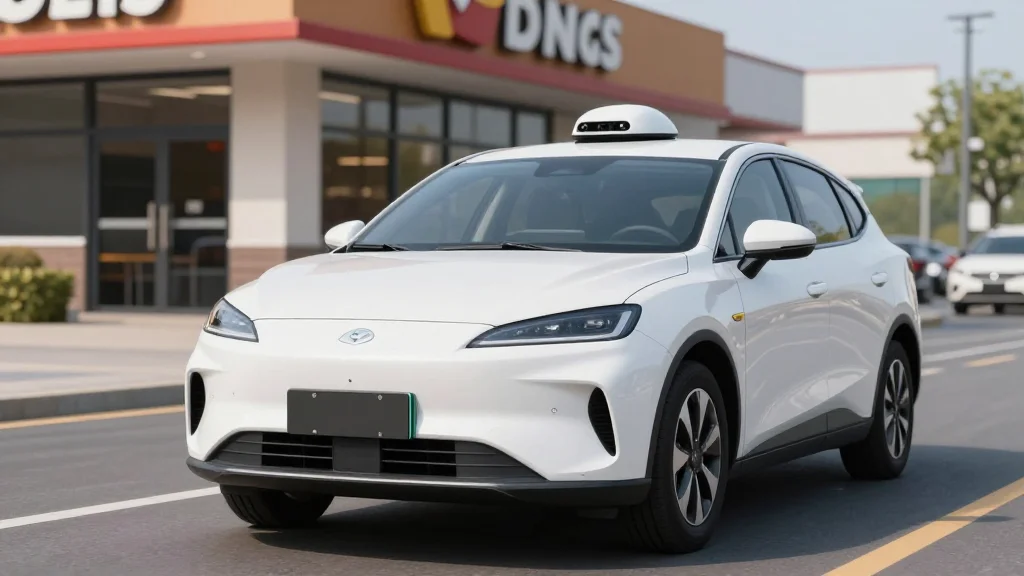
- •Waymo driverless car entered a Los Angeles drive‑thru the wrong way on Friday, captured on video by a passenger’s son.
- •Child’s on‑camera commentary included the quotes: "Way Way! You gotta go through the drive‑thru the other way!" and "My bad, bro, you can’t park here."
- •Waymo previously told KXAN it "closely monitors weather conditions" and will adjust operations, but gave no explanation for this navigation error.
- •The incident revives criticism of Waymo’s reliance on overseas remote operators to intervene during ambiguous driving situations.
- •Los Angeles officials announced a review of Waymo’s safety protocols and may affect future autonomous‑vehicle permits.
Pulse Analysis
Waymo’s misstep underscores a fundamental tension in autonomous mobility: the balance between algorithmic confidence and human oversight. The company’s technology stack, praised for its lidar‑centric perception, has repeatedly demonstrated robustness in controlled environments, yet the drive‑thru error reveals a blind spot in handling non‑standard traffic patterns. Such anomalies are not merely technical glitches; they are public‑facing events that shape perception and, consequently, policy.
Historically, autonomous‑vehicle firms have leaned on remote operators to bridge the gap between sensor data and real‑world nuance. However, latency inherent in transcontinental communication can be fatal in high‑speed contexts. Waymo’s reliance on this model may now be a liability, especially as competitors like Cruise invest heavily in edge‑computing solutions that keep decision‑making onboard. If Waymo cannot prove that its remote‑operator framework can match or exceed the reaction times of an in‑vehicle driver, regulators may favor alternatives that promise tighter control.
Looking ahead, Waymo’s upcoming Phoenix rollout will be a litmus test. Success will require transparent incident reporting, rapid software patches, and perhaps a re‑architecture that reduces dependence on distant operators. The company’s ability to address the drive‑thru incident—by publishing a root‑cause analysis, updating its navigation algorithms, and engaging with local authorities—will determine whether it retains its leadership position or cedes ground to rivals eager to capture municipal contracts.
In the broader market, the episode may accelerate insurance premium adjustments for autonomous fleets, as underwriters factor in the probability of rare but high‑visibility errors. Investors will likely scrutinize Waymo’s quarterly updates for concrete metrics on incident frequency and remediation speed. Ultimately, the drive‑thru mishap is a reminder that autonomous vehicles must not only be technically competent but also socially reliable to achieve widespread adoption.
Waymo Driverless Car Mistakes Drive‑Thru Entry in Los Angeles, Raising Safety Concerns
Comments
Want to join the conversation?
Loading comments...