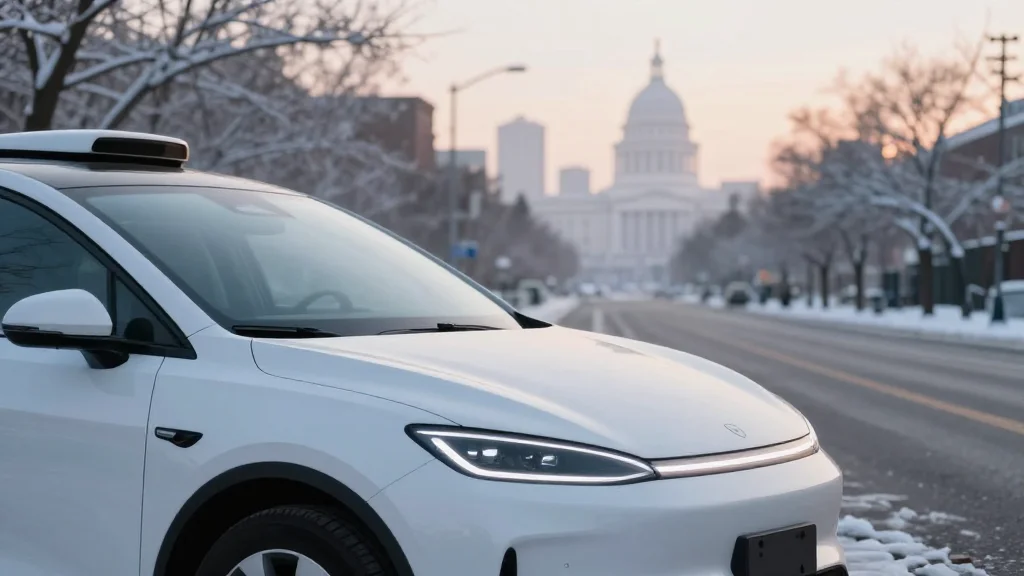
Waymo Expands Self‑driving Taxi Testing in Minnesota as Regulators Face Mounting Pressure

Companies Mentioned
Why It Matters
The Minnesota debate highlights a growing disconnect between rapid AV technology deployment and the pace of legislative action. Without clear rules, cities risk inconsistent safety standards, while drivers face uncertainty about job security. The 44% deadheading rate raises questions about the environmental and economic efficiency of autonomous taxis, suggesting that scaling AV services may not automatically translate into reduced congestion or emissions. Moreover, Minnesota’s experience could become a template for other states grappling with how to balance innovation with public accountability. Regulatory clarity is also crucial for insurers, manufacturers, and investors who need predictable risk assessments. As Waymo and its rivals vie for market share, the outcome of Minnesota’s policy discussions will likely influence the broader trajectory of autonomous mobility in the United States, shaping everything from fleet economics to public trust.
Key Takeaways
- •Waymo began driver‑assisted autonomous taxi testing in Minnesota, adding the state to its list of 21 upcoming markets.
- •Minnesota’s legislature ended its session without adopting any autonomous‑vehicle regulations.
- •MIT study shows Waymo’s fleet traveled empty for roughly 44% of its miles, mirroring rideshare deadheading rates.
- •State Rep. Samantha Sencer‑Mura warned Waymo could "operate in that murkiness" without clear rules.
- •Advocates cite concerns over driver job losses and call for "people‑centered transportation solutions".
Pulse Analysis
Waymo’s Minnesota push is a calculated bet on market momentum outweighing regulatory certainty. By deploying vehicles with safety drivers, the firm sidesteps the immediate need for driver‑less legislation while still gathering data on real‑world performance in harsh winter conditions. This approach mirrors its earlier California strategy, where incremental testing built a de‑facto standard that later informed state policy.
However, the Minnesota scenario differs in political climate. The state’s recent failure to pass AV rules leaves Waymo operating in a legal vacuum, exposing it to potential litigation and public backlash. Competitors may exploit this by positioning themselves as more collaborative with regulators, a tactic that could win favor in jurisdictions that prioritize safety over speed to market.
The 44% deadheading figure is a double‑edged sword. On one hand, it demonstrates that Waymo’s fleet is still learning to match passenger demand, suggesting room for efficiency gains as routing algorithms improve. On the other, it fuels criticism that autonomous taxis may not deliver promised congestion or emissions benefits without complementary policy measures, such as dynamic pricing or dedicated lanes. Stakeholders will need to align technology rollout with broader transportation planning to avoid a scenario where AVs add volume without reducing overall traffic.
Looking ahead, the upcoming 2027 legislative session will be a litmus test. If Minnesota adopts robust AV standards, it could become a showcase for responsible autonomous mobility, attracting further investment and encouraging other states to follow suit. If regulation stalls, Waymo may face mounting pressure from driver groups and city officials, potentially slowing its expansion and prompting a strategic retreat to more permissive markets. The outcome will shape not only Waymo’s regional ambitions but also the national conversation on how to integrate self‑driving cars into existing transportation ecosystems.
Waymo expands self‑driving taxi testing in Minnesota as regulators face mounting pressure
Comments
Want to join the conversation?
Loading comments...