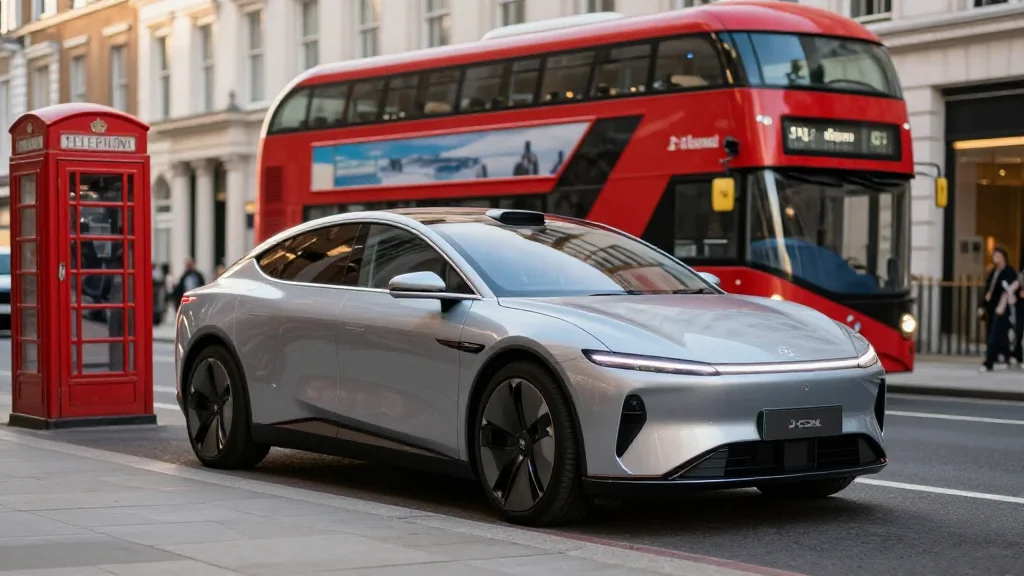
Waymo Launches Autonomous Ride‑Hailing Trials in London with Safety Drivers

Companies Mentioned
Why It Matters
Waymo’s London trials test the scalability of autonomous ride‑hailing beyond the United States, where the company already operates a commercial service in Phoenix. Demonstrating safety and reliability in a complex, historic city like London could unlock regulatory pathways across Europe, prompting faster adoption of driverless taxis. The initiative also pressures competitors to accelerate their own testing programs, potentially hastening a market shift toward electric, autonomous mobility solutions that reduce congestion and emissions. Moreover, the use of safety drivers reflects a pragmatic approach to public acceptance and regulatory compliance. By gathering real‑world data while maintaining a human safety net, Waymo can refine its AI models to handle the nuanced challenges of European road networks, from roundabouts to variable lane markings, thereby strengthening the case for fully driverless operations in the near future.
Key Takeaways
- •Waymo begins autonomous ride‑hailing trials in London with safety drivers.
- •Trials follow tens of thousands of miles of closed‑course testing on London streets.
- •Waymo Driver has logged 170 million U.S. autonomous miles with 92% fewer serious‑injury crashes than human drivers.
- •Company plans to set up multiple AV service centres across London and expand its UK talent pool.
- •Consumer interest is high for electric, autonomous rides to social venues, airports, and daily commutes.
Pulse Analysis
Waymo’s London rollout is a strategic inflection point for the autonomous vehicle (AV) industry. Historically, U.S. pilots have benefited from relatively permissive state regulations; Europe, by contrast, has a patchwork of national rules that often demand higher safety thresholds. By opting for a safety‑driver model, Waymo sidesteps the most stringent driverless‑only mandates while still collecting the high‑resolution data needed to certify a fully autonomous fleet. This hybrid approach could become the de‑facto template for other firms seeking rapid market entry without compromising safety.
The competitive dynamics are also shifting. Cruise’s partnership with General Motors has focused on a driver‑less model in San Francisco, while Uber’s ATG has been absorbed into Aurora, which is pursuing limited‑area pilots in Texas. Waymo’s early move into London gives it a first‑mover advantage in a market where public transport is already highly integrated, but where a premium, on‑demand electric service could fill a niche for door‑to‑door travel. If Waymo can demonstrate a lower incident rate than traditional taxis, it may persuade city planners to allocate dedicated lanes or curbside pick‑up zones, further entrenching its service.
Looking forward, the key to scaling will be the transition from safety‑driver trials to full autonomy. Waymo’s data‑driven methodology—leveraging millions of miles of U.S. experience to train simulation environments—suggests a clear pathway. However, the company must navigate public perception, especially after high‑profile AV incidents elsewhere. Transparent reporting of safety metrics and proactive engagement with London’s emergency services will be essential to building trust. Success could catalyze a cascade of AV deployments across Europe, accelerating the shift toward a low‑emission, autonomous urban mobility ecosystem.
Waymo Launches Autonomous Ride‑Hailing Trials in London with Safety Drivers
Comments
Want to join the conversation?
Loading comments...