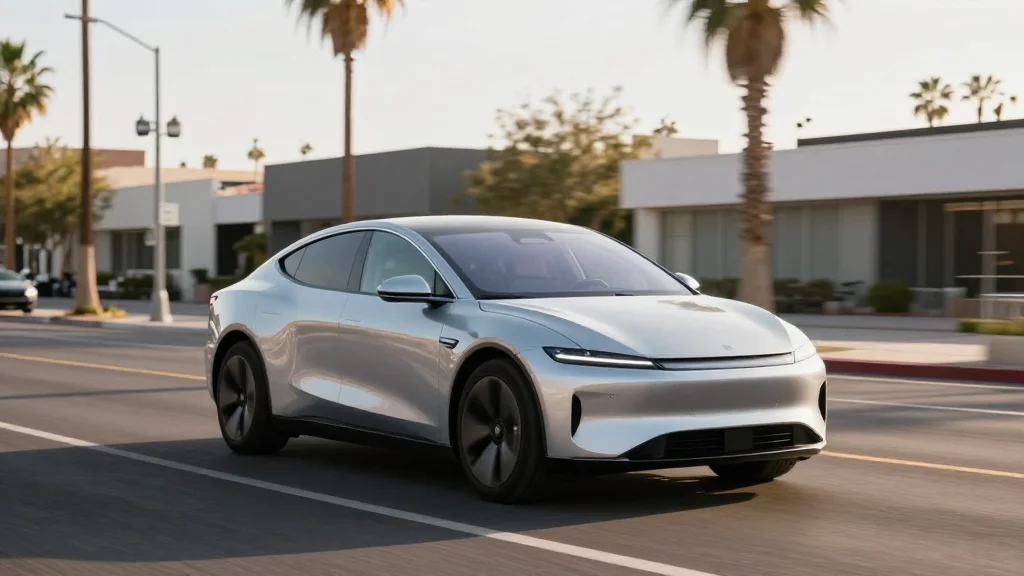
Waymo Launches Fully Driverless Ojai Robotaxi Service in Phoenix

Companies Mentioned
Why It Matters
Waymo’s driverless Ojai deployment demonstrates that Level 4 autonomy is moving from controlled test environments into everyday urban traffic. By eliminating safety drivers, Waymo reduces labor costs and can price rides more competitively, potentially reshaping the economics of autonomous ride‑hailing. The Phoenix rollout also offers a benchmark for other manufacturers and technology firms seeking regulatory approval for driverless services in U.S. cities, highlighting the importance of city‑level partnerships and infrastructure readiness. For investors and policymakers, the launch provides concrete evidence that autonomous vehicle (AV) technology can operate reliably at scale without human intervention. This could accelerate funding for AV infrastructure, influence state legislation on autonomous vehicle testing, and spur competition among firms racing to commercialize driverless mobility solutions.
Key Takeaways
- •Waymo began fully driverless Ojai robotaxi operations in Phoenix
- •The Ojai vehicle is a four‑seat electric model co‑developed with Geely, rebranded from Zeekr RT
- •Testing with safety drivers started in early 2024 before the driverless launch
- •Waymo plans a public ride‑hailing rollout with Ojai later in 2024
- •Phoenix’s regulatory environment and terrain make it a strategic test market for driverless services
Pulse Analysis
Waymo’s decision to go driverless in Phoenix reflects a strategic pivot toward cost‑effective scaling. Removing safety drivers cuts operational expenses by an estimated 30‑40%, a margin that could make autonomous ride‑hailing financially viable without heavy subsidies. The Ojai platform, built on a purpose‑designed chassis from Geely, also signals a shift away from retrofitting existing vehicles toward bespoke AV designs that better accommodate sensor arrays and battery packs.
Historically, Waymo’s deployments have been cautious, favoring suburban corridors with predictable traffic patterns. Phoenix offers a middle ground: a sizable urban population but less congestion than coastal metros. Success here could serve as a template for expanding driverless services to denser cities, provided Waymo can demonstrate consistent safety performance. Competitors such as Cruise and Zoox are also eyeing similar transitions, but Waymo’s early start and partnership with a major OEM give it a distinct advantage in hardware integration and supply chain stability.
Looking ahead, the key risk remains regulatory. While Arizona has been AV‑friendly, broader adoption will require clear state and federal guidelines on liability, insurance, and data privacy. Waymo’s ability to navigate these policy hurdles while delivering a reliable, driverless experience will determine whether the Ojai rollout is a stepping stone to nationwide commercialization or a localized pilot. The upcoming ride‑hailing launch later this year will be the first real test of market demand for a fully autonomous service, and its performance will likely shape investor sentiment across the autonomous mobility sector.
Waymo launches fully driverless Ojai robotaxi service in Phoenix
Comments
Want to join the conversation?
Loading comments...