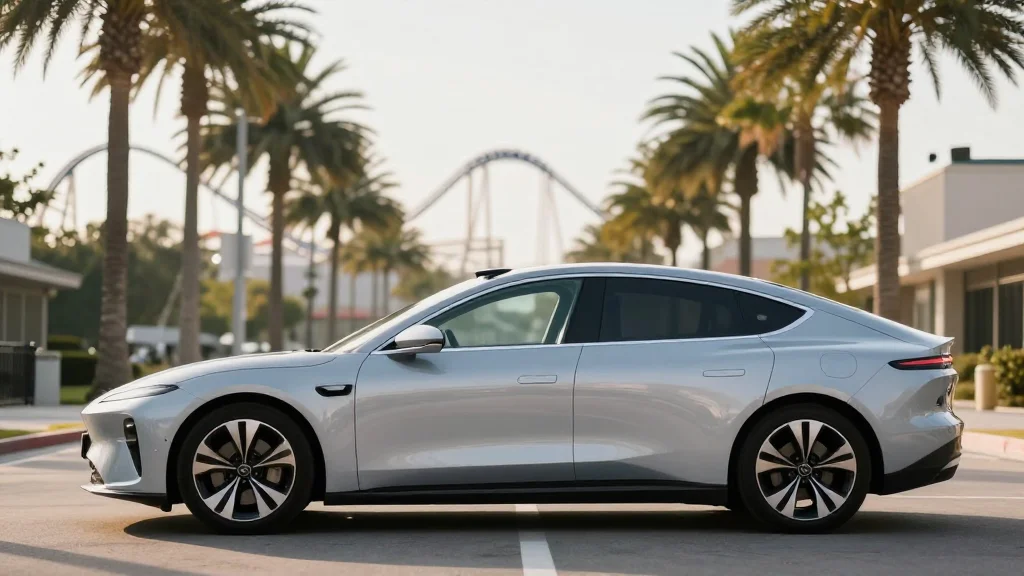
Waymo Opens Autonomous Ride‑Sharing to All Orlando Riders

Companies Mentioned
Why It Matters
Opening Waymo’s driverless service to all Orlando riders marks a tangible step toward mainstream adoption of Level‑4 autonomy. By moving beyond invitation‑only trials, Waypoint demonstrates that the technology can handle the variability of everyday traffic, a key hurdle for regulators and investors. The expansion also provides a real‑world benchmark for safety and reliability that other autonomous firms can reference. For the broader mobility ecosystem, Waymo’s move challenges the dominance of human‑driven ride‑hailing platforms and could accelerate the shift toward autonomous fleets as a cost‑effective alternative. If Waymo can sustain low incident rates while expanding its user base, it may prompt municipalities to prioritize autonomous vehicle infrastructure, influencing policy and investment decisions nationwide.
Key Takeaways
- •Waymo opens its autonomous ride‑sharing service to all Orlando riders on April 15, 2026.
- •The rollout removes the invitation‑only restriction, allowing any passenger with the Waymo app to book a ride.
- •Waymo now operates robotaxi services in four U.S. cities: Phoenix, San Francisco, Los Angeles, and Orlando.
- •Local regulators granted a conditional operating permit, enabling broader data collection while maintaining safety oversight.
- •Analysts view the expansion as a test of autonomous fleet profitability without subsidies.
Pulse Analysis
Waymo’s decision to scale its Orlando service reflects a strategic pivot from proof‑of‑concept to revenue‑generating operations. The company has spent years perfecting its sensor stack and software stack in controlled environments; opening the service to the public forces the technology to confront the full spectrum of urban unpredictability. This real‑world exposure is essential for refining machine‑learning models that underpin safe navigation.
Historically, autonomous vehicle pilots have struggled to transition to commercial viability because of high operational costs and limited rider uptake. Waymo’s approach—leveraging a subscription‑style pricing model and targeting high‑density corridors—aims to improve vehicle utilization and spread fixed costs over more trips. If the Orlando rollout demonstrates sustainable unit economics, it could set a template for other cities and attract additional capital to the sector.
Competitive dynamics are also shifting. Uber’s autonomous ambitions have stalled after costly setbacks, while Lyft’s partnership model leaves it dependent on third‑party technology. Waymo’s vertically integrated stack gives it greater control over the end‑to‑end experience, from sensor data to rider interface. As a result, traditional ride‑hailing firms may be compelled to either accelerate their own autonomous development or seek strategic alliances with firms like Aurora or Cruise. The Orlando expansion, therefore, is not just a geographic addition—it is a litmus test for the broader industry’s ability to move from niche trials to mainstream mobility solutions.
Waymo Opens Autonomous Ride‑Sharing to All Orlando Riders
Comments
Want to join the conversation?
Loading comments...