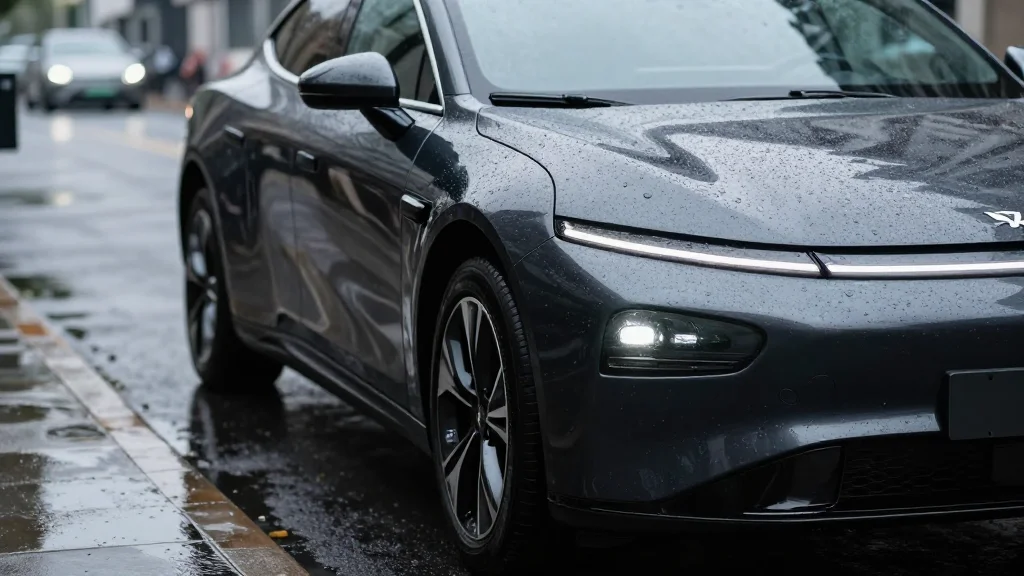
Waymo Recalls Nearly 3,800 Robotaxis Over Flood‑Road Software Flaw

Why It Matters
The recall highlights a critical vulnerability in autonomous‑driving software: the ability to recognize and avoid environmental hazards like flash flooding. As driverless fleets expand into regions with varied weather patterns, robust hazard detection becomes a prerequisite for public trust and regulatory approval. Waymo’s swift action sets a precedent for how large‑scale autonomous operators must respond to safety flaws, potentially influencing industry standards and prompting tighter oversight. Beyond safety, the incident could reshape competitive dynamics. Tesla’s unsupervised robotaxis are already under scrutiny for accident rates, and Waymo’s recall may give rivals an opening to capture market share in cities where Waymo’s service is temporarily halted. The episode also serves as a data point for investors evaluating the financial risk of autonomous‑vehicle ventures, where a single software defect can affect hundreds of thousands of rides and billions in projected revenue.
Key Takeaways
- •Waymo voluntarily recalls 3,800 robotaxis due to a software defect that allowed entry onto flooded roads.
- •The defect affects Waymo’s fifth‑ and sixth‑generation automated driving systems, prompting NHTSA involvement.
- •Waymo provides over 500,000 paid rides weekly across 11 U.S. markets, including San Francisco, Austin and Miami.
- •Service in San Antonio is temporarily suspended while the software fix is deployed.
- •Industry observers note the recall could impact Waymo’s competitive position against Tesla and other robotaxi operators.
Pulse Analysis
Waymo’s recall underscores the paradox of scaling autonomous fleets: the more vehicles on the road, the higher the probability that edge‑case scenarios—like flash flooding—will surface. Historically, Waymo has positioned itself as the safety benchmark in the robotaxi space, leveraging extensive mapping and sensor redundancy. Yet the flood‑road incident reveals a blind spot in its decision‑making hierarchy, where the system can recognize a hazard but still elect to proceed. This suggests that Waymo’s risk‑assessment algorithms may prioritize route continuity over absolute hazard avoidance, a trade‑off that regulators are unlikely to tolerate as fleets grow.
From a market perspective, the recall could temporarily dampen Waymo’s revenue trajectory, especially as the company eyes a high‑profile launch in London later this year. Competitors like Tesla, which are already grappling with public skepticism over unsupervised rides, may leverage Waymo’s misstep to argue that a more aggressive rollout is justified despite safety concerns. However, Tesla’s own incident record—30 NHTSA‑reported incidents in the past year, including five with major injuries—means both firms face an uphill battle to convince municipalities and consumers that their technology is ready for mass adoption.
Looking ahead, the episode may accelerate the push for industry‑wide safety standards, potentially mandating real‑time hazard‑avoidance verification and third‑party audits of autonomous‑driving software. Companies that can demonstrate transparent, rapid remediation processes will likely gain a competitive edge. Waymo’s ability to quickly patch its fleet and resume service will be a litmus test for its operational resilience and could set the tone for how the autonomous mobility sector navigates safety challenges in an increasingly climate‑volatile world.
Waymo Recalls Nearly 3,800 Robotaxis Over Flood‑Road Software Flaw
Comments
Want to join the conversation?
Loading comments...