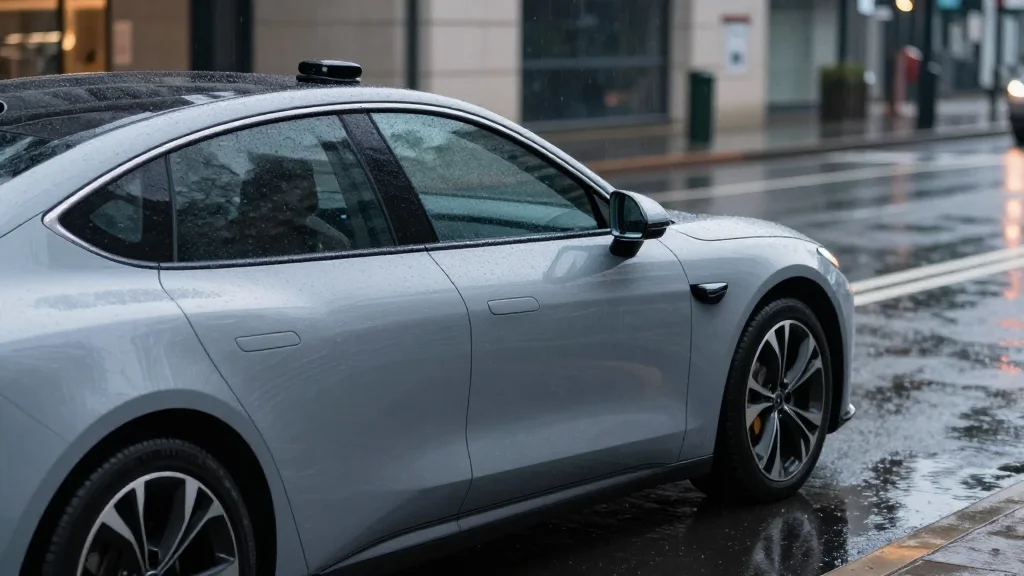
Waymo Recalls Nearly 4,000 U.S. Robotaxis After Floodwater Incident

Companies Mentioned
Why It Matters
The recall highlights a critical vulnerability in autonomous‑driving software: handling rare but high‑impact weather events. As AV firms promise safety advantages over human drivers, any failure that appears to repeat a known human error—driving into floodwater—can erode public trust and invite stricter regulatory oversight. For the broader autonomy ecosystem, Waymo’s response sets a precedent for how quickly manufacturers must deploy remote fixes when safety‑critical bugs are discovered. The incident may accelerate industry‑wide investments in weather‑resilient perception stacks and push policymakers to require more rigorous testing under extreme conditions before granting full driverless deployment approvals.
Key Takeaways
- •Waymo filed a voluntary NHTSA recall for its entire U.S. fleet of 3,791 robotaxis.
- •The recall was triggered by an April 20 incident where a driverless car entered floodwater in San Antonio.
- •Software update will treat flash‑flooded roads as non‑traversable and limit access to high‑risk zones.
- •Service in Texas is paused; Las Vegas testing continues with a safety driver on board.
- •Recall affects vehicles in six U.S. cities, potentially delaying revenue and prompting regulatory review.
Pulse Analysis
Waymo’s recall is a watershed moment for the autonomous‑vehicle industry, not because of the size of the fleet but because it exposes a blind spot in the technology’s decision‑making hierarchy. Floodwater detection is a classic edge case that tests the limits of sensor fusion, map reliability, and real‑time risk assessment. The fact that the vehicle identified the hazard yet proceeded suggests that the system’s rule‑engine prioritized forward progress over a hard stop—a design choice that may have been acceptable in simulation but proved unsafe in the real world.
Historically, AV firms have leaned heavily on high‑definition maps and pre‑programmed behavior trees. This incident forces a shift toward more dynamic, context‑aware algorithms that can override nominal routes when environmental cues exceed predefined thresholds. Competitors will likely accelerate similar updates, and we may see a wave of industry‑wide software patches aimed at weather resilience. The regulatory angle is equally significant: NHTSA’s involvement could lead to new guidelines mandating explicit flood‑avoidance testing before any full‑scale deployment, raising the bar for compliance across the sector.
From a market perspective, Waymo’s brand equity hinges on its safety narrative. A high‑visibility recall can dent investor confidence, especially as venture capital continues to flow into AV startups based on the promise of near‑zero accidents. Yet Waymo’s swift, transparent response—issuing a recall, detailing a concrete fix, and pausing service—could mitigate longer‑term damage if the patch proves effective. The episode will likely become a case study in crisis management for autonomous technology, illustrating how rapid software remediation and clear communication can preserve trust in an industry still fighting for public acceptance.
Waymo Recalls Nearly 4,000 U.S. Robotaxis After Floodwater Incident
Comments
Want to join the conversation?
Loading comments...