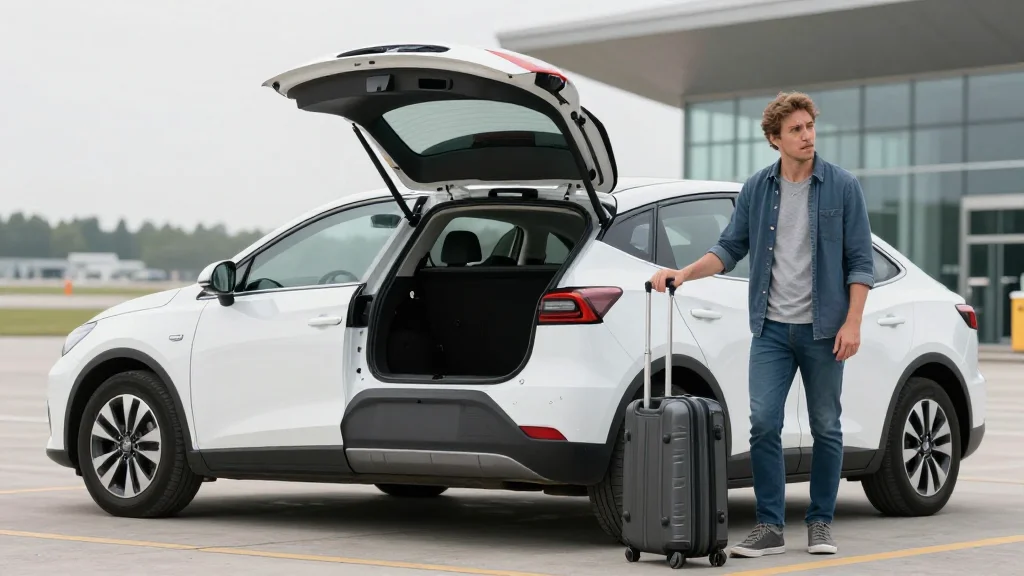
Waymo Robotaxi Drives Off with Passenger's Luggage at San Jose Airport, Sparking Safety Concerns

Companies Mentioned
Why It Matters
The San Jose airport episode spotlights a practical failure mode—trunk‑access malfunction—that directly affects passenger trust in driverless services. As autonomous taxis move from novelty to everyday transport, reliable handling of passenger belongings becomes a baseline expectation. The incident also arrives at a moment when California is tightening AV oversight, giving law‑enforcement agencies the power to cite manufacturers for violations and demanding rapid emergency‑response capabilities. How Waymo addresses this specific service lapse will signal its readiness to meet the new regulatory regime and could set industry standards for liability and customer‑service protocols. Beyond Waymo, the episode may influence policymakers in other states that are watching California’s regulatory experiment. If the penalties for non‑compliance remain modest, companies might prioritize technical fixes over systemic changes, potentially slowing broader adoption. Conversely, a high‑profile mishap that garners media attention could accelerate the push for stricter liability rules, shaping the future business model of autonomous‑mobility providers.
Key Takeaways
- •Waymo robotaxi drove off from San Jose International Airport with passenger Di Jin's suitcase locked in the trunk.
- •Waymo offered either paid shipping or two complimentary rides to retrieve the luggage, citing policy that it is not responsible for items left behind.
- •California DMV rules effective July 1 allow police to cite autonomous‑vehicle manufacturers for traffic violations and require AVs to vacate emergency zones within two minutes.
- •The incident follows prior Waymo mishaps, including illegal U‑turns and vehicles blocking emergency responders during a 2025 blackout.
- •Regulators and consumer groups are calling for clearer liability standards as autonomous‑taxi services expand.
Pulse Analysis
Waymo’s mishap at San Jose International Airport underscores a growing tension between rapid deployment of autonomous‑mobility services and the operational maturity needed to manage everyday customer issues. The company’s public stance—that it is not liable for items left in the vehicle—mirrors a broader industry trend of limiting exposure to consumer‑loss claims. Yet the incident reveals a blind spot: hardware or software failures that prevent a passenger from accessing their own property can erode trust faster than a traffic violation.
The timing is critical. California’s new DMV framework, which empowers police to issue citations directly to manufacturers and mandates swift emergency‑response communication, is designed to plug enforcement gaps exposed by earlier Waymo incidents. However, the regulatory tools focus primarily on safety and traffic compliance, not on post‑ride service failures. This regulatory asymmetry could push Waymo and peers to adopt more comprehensive service‑level agreements, potentially including insurance coverage for passenger belongings, to pre‑empt consumer backlash.
From a market perspective, Waymo’s handling of the incident may influence investor sentiment in the broader autonomous‑vehicle sector. While the company’s technology remains a benchmark, repeated service‑related headlines could dampen enthusiasm for upcoming funding rounds or partnerships, especially as rivals like Aurora and Nuro vie for the same regulatory goodwill. The episode also offers a cautionary tale for new entrants: robust, customer‑centric operational protocols are as essential as the underlying perception‑learning algorithms. As autonomous fleets scale, the industry’s ability to resolve mundane yet impactful issues—like a stuck trunk—will become a differentiator that regulators, investors, and passengers alike will watch closely.
Waymo robotaxi drives off with passenger's luggage at San Jose airport, sparking safety concerns
Comments
Want to join the conversation?
Loading comments...