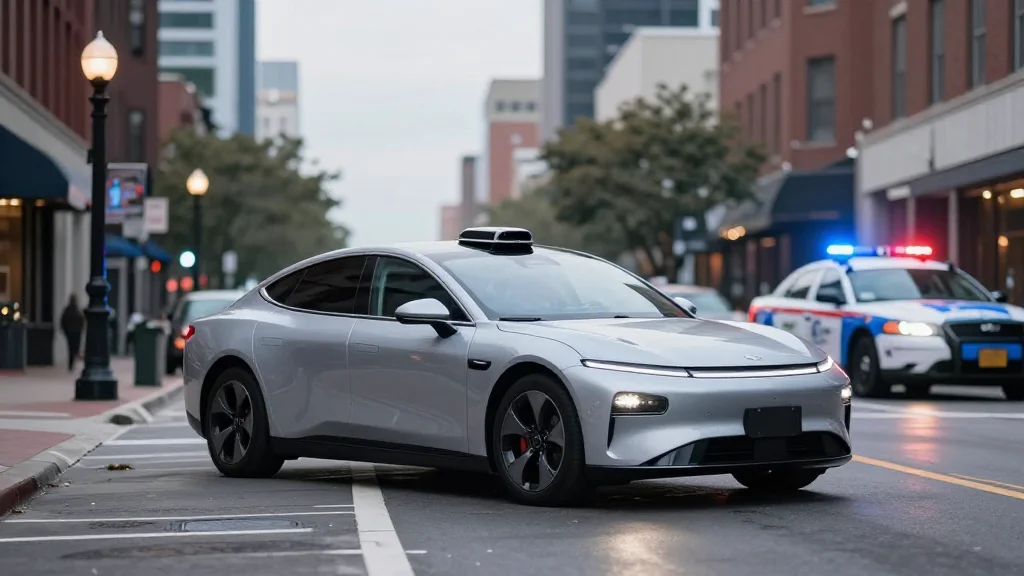
Waymo Robotaxis Stuck in Nashville Prompt Police Guidance

Companies Mentioned
Why It Matters
The Nashville episode underscores the practical challenges of deploying fully autonomous vehicles in complex cityscapes. When a robotaxi cannot navigate a routine intersection, the incident not only disrupts traffic but also tests the readiness of municipal emergency responders to handle driverless technology. For the autonomy sector, each real‑world failure becomes a data point that can accelerate improvements in perception algorithms, sensor redundancy, and remote‑assistance protocols. Moreover, public confidence hinges on transparent handling of such events, influencing both regulatory approvals and consumer adoption rates. Cities that have granted Waymo operating permits are closely watching the outcome. A swift, coordinated response can reinforce trust and keep the rollout schedule on track, while prolonged uncertainty could prompt other municipalities to pause or tighten their own autonomous‑vehicle licensing criteria. The incident also offers competitors a chance to highlight the robustness of their own systems, potentially reshaping market dynamics as firms vie for the limited pool of early‑adopter cities.
Key Takeaways
- •Waymo robotaxis became immobilized on Nashville streets, prompting MNPD guidance.
- •Police instructions emphasize safety, scene control, and remote assistance contact.
- •No injuries reported; traffic cleared within an hour of each incident.
- •Waymo has not disclosed the number of vehicles affected or root cause details.
- •Joint debrief and public briefing scheduled for early May to address findings.
Pulse Analysis
Waymo's Nashville mishap arrives at a pivotal moment for the autonomous‑vehicle industry. After years of incremental expansion, the company now faces the practical reality of integrating driverless fleets into legacy traffic ecosystems. The incident highlights a gap between laboratory‑tested perception models and the unpredictable nuances of urban roadways—construction zones, ambiguous signage, and weather‑induced sensor noise can still confound even the most sophisticated AI.
From a competitive standpoint, the event offers rivals such as Cruise, Zoox, and emerging Chinese players an opportunity to differentiate. If they can demonstrate higher redundancy or more resilient fallback strategies, they may capture the attention of city planners wary of operational hiccups. Investors will likely scrutinize Waymo's response speed and transparency, as any perception of delayed remediation could affect valuation and future funding rounds.
Regulators, too, are taking notes. The MNPD's proactive guidance sets a precedent for how law‑enforcement agencies can collaborate with autonomous‑vehicle operators, establishing a template for incident response that could be codified into municipal ordinances. As more cities negotiate pilot agreements, the Nashville case may become a reference point for contractual safety clauses, insurance requirements, and real‑time data‑sharing mandates. Ultimately, Waymo's ability to turn this setback into a learning loop will determine whether it retains its leadership position or cedes ground to more adaptable competitors.
Waymo Robotaxis Stuck in Nashville Prompt Police Guidance
Comments
Want to join the conversation?
Loading comments...