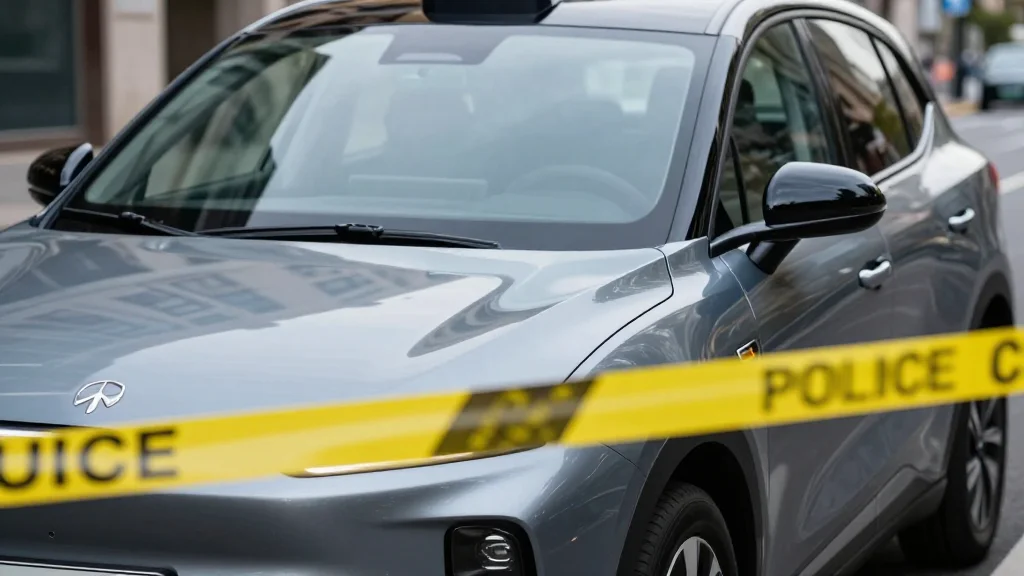
Waymo Taxi Crashes Into Crime‑Scene Tape During London Test

Companies Mentioned
Why It Matters
The Harlesden crash underscores the gap between controlled testing environments and real‑world unpredictability that autonomous taxis must navigate. As Waymo eyes a premium, app‑based service in the UK, any safety lapse can erode public trust and give regulators pause, potentially slowing the adoption of driverless mobility across Europe. Beyond Waymo, the incident serves as a cautionary tale for all autonomous‑vehicle developers about the importance of robust fail‑safe mechanisms when operating alongside emergency services. It also highlights the need for clear regulatory frameworks that define liability when a human validation driver, rather than the AI, is in control.
Key Takeaways
- •Waymo’s autonomous taxi breached police tape at a Harlesden double‑stabbing scene on Wednesday evening.
- •Company spokesperson apologised, citing a validation driver operating in manual mode; the driver has been suspended.
- •Waymo has been testing in London since last autumn, with dozens of vehicles across 19 boroughs.
- •The incident raises safety and regulatory concerns ahead of Waymo’s planned UK commercial launch in Q4 2026.
- •UK authorities will investigate, and Waymo pledged to tighten validation‑driver protocols and software updates.
Pulse Analysis
Waymo’s London pilot has always been a high‑stakes proving ground, but the Harlesden episode reveals a structural vulnerability: the reliance on human validation drivers as a safety net. While the company touts its AI’s ability to handle routine traffic, emergency scenarios—where police tape, flashing lights and unpredictable human behavior dominate—remain a blind spot. The incident may force Waymo to recalibrate its rollout timeline, prioritising additional sensor fusion and edge‑case training over rapid market entry.
Historically, autonomous‑vehicle firms have stumbled when transitioning from closed‑course trials to open‑city environments. Uber’s 2018 fatal crash in Arizona and Cruise’s 2022 incident in San Francisco both triggered regulatory backlashes that delayed commercial services. Waymo’s response—transparent apologies, driver suspension, and a promise of software upgrades—mirrors best‑practice crisis management, but the real test will be whether regulators accept the remedial measures. If the UK grants a full licence, Waymo could set a precedent for other European markets; if not, the company may see its European ambitions throttled, ceding ground to rivals with more conservative deployment strategies.
From an investor perspective, the episode injects short‑term risk into Waymo’s valuation, especially as Alphabet balances its autonomous‑driving unit against broader AI investments. However, the long‑term upside remains substantial: a successful UK launch would validate Waymo’s ability to operate in dense, heterogeneous traffic, unlocking a multi‑billion‑dollar market. Stakeholders will be watching the forthcoming Met Police and Office for AI and Transport reports closely, as they will likely shape the regulatory playbook for driverless taxis across the continent.
Waymo Taxi Crashes Into Crime‑Scene Tape During London Test
Comments
Want to join the conversation?
Loading comments...