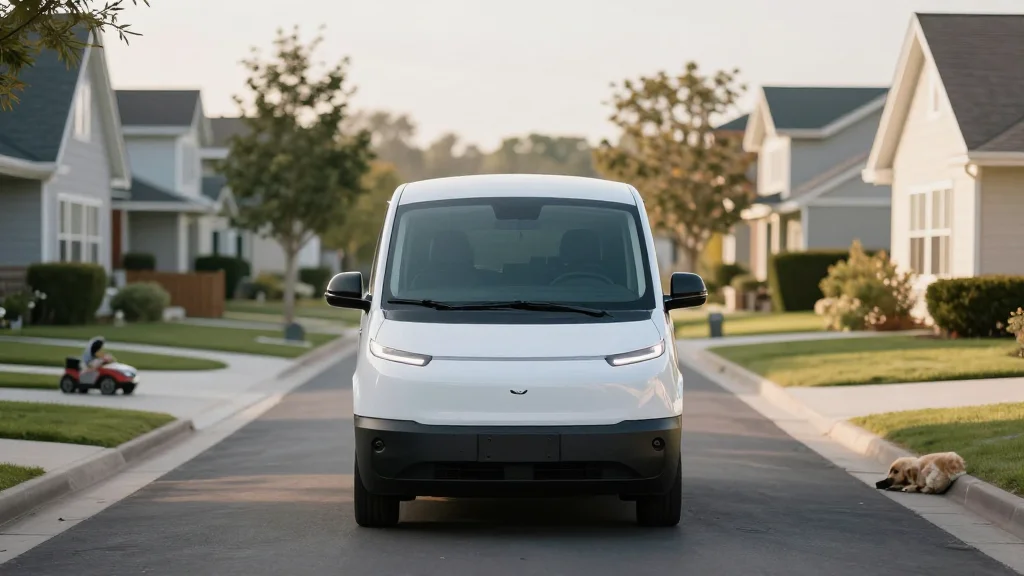
Waymo’s Empty Driverless Cars Flood Atlanta’s Buckhead Cul‑de‑Sacs, Raising Safety Alarm

Companies Mentioned
Why It Matters
The Waymo incidents in Buckhead illustrate how autonomous‑vehicle fleets can unintentionally disrupt local traffic patterns, raising questions about algorithmic routing, real‑time monitoring, and community engagement. As driverless services expand into dense urban areas, municipalities will need clearer protocols for handling unexpected vehicle behavior, especially when it threatens pedestrian safety. The situation also highlights the regulatory gap surrounding autonomous fleets. While Waymo operates under federal guidance, local authorities are grappling with how to enforce standards that protect residents without stifling innovation. The outcome could shape future policy on autonomous‑vehicle routing, data sharing, and incident reporting across the United States.
Key Takeaways
- •Up to 50 empty Waymo vehicles entered Battleview Drive cul‑de‑sac between 6 a.m. and 7 a.m. on a single day
- •Residents reported eight Waymo cars stuck after a traffic‑sign blockade
- •Waymo operates over 500,000 weekly trips nationwide
- •Company is recalling nearly 4,000 vehicles due to a software bug that can drive into standing water
- •NHTSA has opened investigations into Waymo’s interactions with school buses and other vulnerable road users
Pulse Analysis
Waymo’s Buckhead episode is a textbook case of the friction between algorithmic efficiency and lived urban experience. The fleet’s routing software likely treats low‑traffic residential streets as convenient holding zones when demand is low, a decision that makes sense from a utilization standpoint but ignores the social cost of empty cars clogging quiet neighborhoods. This misalignment points to a need for more granular geofencing rules that respect residential zones, especially in cities where autonomous services share the road with pedestrians, cyclists and school buses.
Historically, autonomous‑vehicle rollouts have been punctuated by high‑visibility mishaps that prompt rapid regulatory responses—think of Uber’s early safety scandals or Tesla’s Autopilot crashes. Waymo, often lauded for its cautious approach, now faces a reputational test. Its public statement emphasizes safety statistics, yet the community backlash suggests that metrics alone will not assuage local concerns. The company must translate those numbers into tangible actions: transparent data feeds on vehicle routing, real‑time alerts to residents, and a rapid‑response liaison team.
Looking ahead, the Buckhead incident could accelerate municipal demands for mandatory reporting of autonomous‑vehicle routing anomalies and for on‑the‑ground oversight mechanisms. If Waymo’s fixes prove effective, the episode may become a precedent for how autonomous fleets can self‑correct without external enforcement. If not, regulators may consider stricter licensing requirements or even caps on autonomous‑vehicle density in residential zones. The balance Waymo strikes now will likely influence the broader industry’s approach to community‑centric deployment across the United States.
Waymo’s Empty Driverless Cars Flood Atlanta’s Buckhead Cul‑de‑Sacs, Raising Safety Alarm
Comments
Want to join the conversation?
Loading comments...