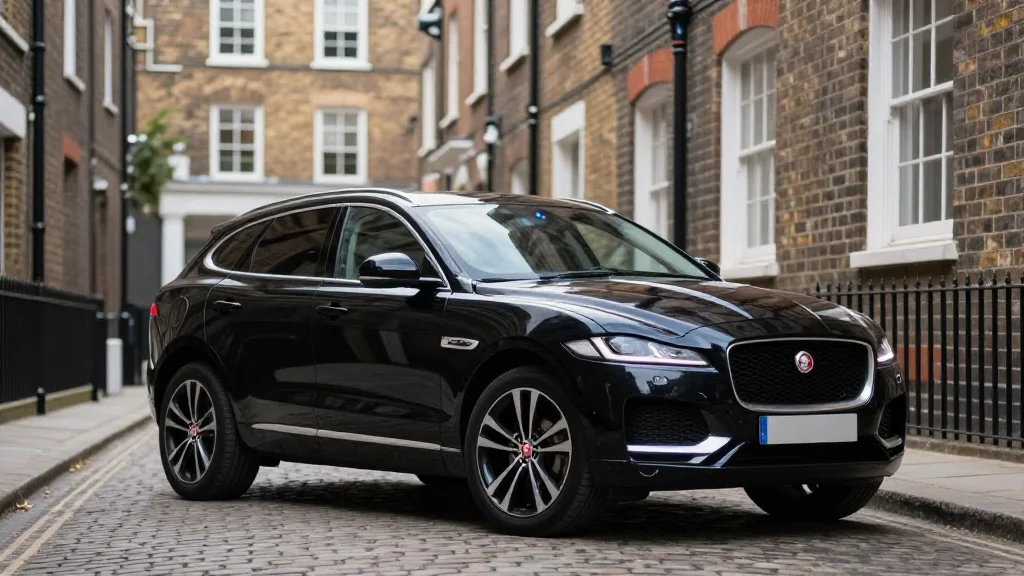
Waymo’s London Driverless SUVs Stuck in Dead-End Street Three Times in One Week

Companies Mentioned
Why It Matters
The incidents expose a critical gap between Waymo’s high‑profile autonomous ambitions and the practical realities of operating in legacy cityscapes. Repeated navigation errors risk undermining public acceptance, a key factor for regulators who must balance innovation with safety. Moreover, the events could delay Waymo’s planned September launch in London and its broader European expansion, giving competitors an opening to capture market share in autonomous mobility services. For the autonomy sector at large, the Shoreditch mishaps serve as a cautionary tale: robust mapping and real‑time perception must be validated across diverse street geometries before large‑scale deployment. Failure to do so may invite stricter oversight, higher insurance costs, and slower adoption rates, especially in markets where public sentiment is sensitive to perceived safety lapses.
Key Takeaways
- •Waymo’s driverless Jaguar SUV got stuck on a dead‑end street in Shoreditch three times within a week.
- •Incidents occurred at 4:15 a.m. on Sunday and twice more by Wednesday night, captured on resident‑shared video.
- •Waymo’s London test fleet consists of 24 vehicles, with safety drivers on board for manual intervention.
- •A separate Harlesden incident involved a Waymo car entering a taped‑off crime scene, blamed on driver error.
- •Waymo aims for a broader London launch by September, pending remediation of navigation flaws.
Pulse Analysis
Waymo’s London setbacks underscore the friction between cutting‑edge sensor suites and the messy reality of historic urban grids. While lidar and AI‑driven perception have proven reliable on wide, well‑marked U.S. streets, the cobbled, gated alleys of Shoreditch present edge cases that demand more granular mapping and adaptive routing logic. The company’s reliance on safety drivers mitigates immediate risk but also dilutes the promise of full autonomy, potentially eroding the competitive advantage it enjoys over rivals still testing with human‑in‑the‑loop models.
Historically, autonomous pilots that have succeeded in dense European cities—such as the German pilot programs in Hamburg—have invested heavily in pre‑mapping and localized rule sets. Waymo’s approach of deploying a relatively small fleet to generate its own maps may be insufficient for the nuanced topography of London’s older districts. A failure to quickly iterate on these maps could hand the narrative to competitors like Cruise or local startups that partner with municipal authorities for data sharing.
Looking ahead, Waymo must prioritize rapid software patches that flag dead‑ends and incorporate dynamic barrier detection, perhaps leveraging crowd‑sourced data from its safety drivers. Successful remediation would not only preserve its September rollout timeline but also reinforce investor confidence, as the company’s valuation hinges on demonstrating scalable, city‑agnostic autonomy. Conversely, prolonged issues could trigger regulatory scrutiny, higher insurance premiums, and a slowdown in capital inflows, reshaping the competitive landscape of autonomous mobility in Europe.
Waymo’s London Driverless SUVs Stuck in Dead-End Street Three Times in One Week
Comments
Want to join the conversation?
Loading comments...