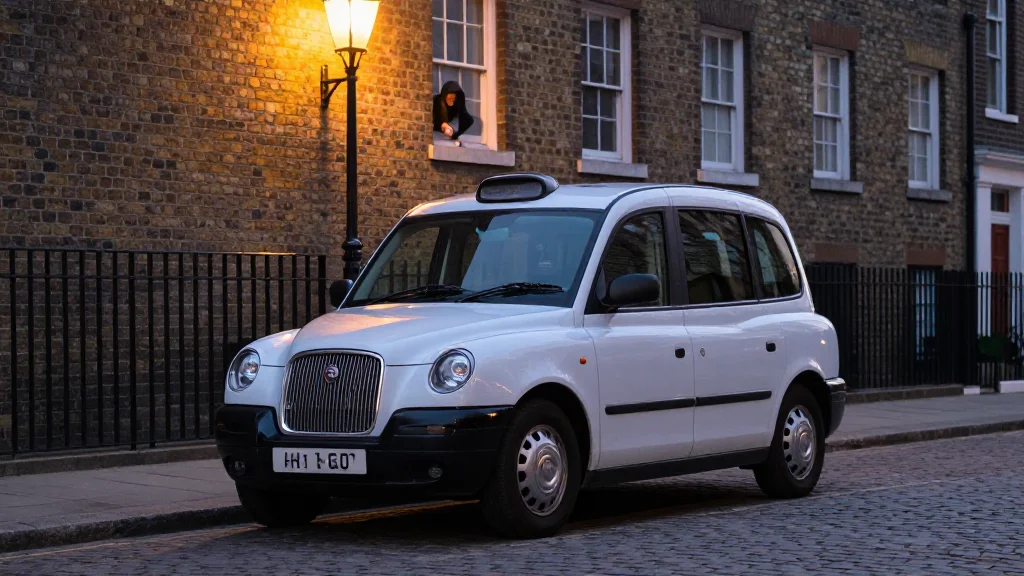
Waymo's London Test Cars Stuck on Dead-End Street Three Times, Residents Wake at 4am

Companies Mentioned
Why It Matters
The Waymo incidents expose a critical friction point between autonomous‑vehicle ambition and real‑world urban complexity. London’s streets, with their irregular geometry and historic infrastructure, are a litmus test for any self‑driving system that aspires to global deployment. Repeated failures not only erode public trust but also invite tighter regulatory scrutiny, potentially slowing the timeline for commercial autonomous taxi services in the UK and Europe. Beyond Waymo, the events serve as a cautionary tale for all firms racing to commercialise driverless fleets. Investors and city planners are likely to demand more rigorous validation of perception algorithms, especially in low‑visibility night conditions. The outcome will shape the competitive landscape, influencing which companies secure municipal contracts and which may be forced to recalibrate their rollout strategies.
Key Takeaways
- •Waymo’s autonomous Jaguar fleet got stuck on a Shoreditch dead‑end street three times in one week, waking residents at 4:15 am.
- •Resident Chris posted video showing the vehicle mounting the curb and reversing slowly; a Twitter user @ccshoreditch called the repeats "seriously @Waymo".
- •Waymo is testing 24 driver‑less vehicles across 19 London boroughs, with a safety driver present in each car.
- •The incidents follow a prior mishap in Harlesden where a Waymo car entered a taped‑off crime scene, which the firm blamed on driver error.
- •Waymo plans a commercial rollout in the UK as early as September 2026, but the setbacks may trigger stricter regulator oversight.
Pulse Analysis
Waymo’s London trials have always been a high‑visibility barometer for the feasibility of autonomous taxis in dense, legacy cities. The three dead‑end incidents reveal a gap in the firm’s high‑definition mapping and real‑time decision‑making layers, especially under low‑light conditions where sensor fusion can be challenged by cobblestones and narrow curbs. While Waymo’s safety‑driver model provides a manual fallback, the repeated reliance on human intervention erodes the promise of a truly driver‑less service and fuels public skepticism.
From a market perspective, the backlash could tilt municipal procurement decisions toward competitors that can demonstrate more robust urban navigation. Cruise, for instance, has been emphasizing its Lidar‑centric stack for complex city environments, and local UK startups are lobbying for a level playing field that favours home‑grown solutions. Investors will be watching Waymo’s response: a swift software patch and transparent reporting could restore confidence, but a prolonged remediation period may depress Alphabet’s valuation of its autonomous unit.
Strategically, Waymo must balance speed to market with the need for reliability. The company’s roadmap to a September 2026 commercial launch hinges on proving that these edge‑case failures are isolated, not systemic. A transparent post‑mortem, coupled with an accelerated rollout of updated perception algorithms, could turn this PR crisis into a showcase of rapid iteration—a narrative that resonates with tech‑savvy stakeholders. Conversely, if the firm downplays the incidents, it risks a credibility gap that regulators and the public may not easily forgive, potentially delaying not just the UK launch but also broader European ambitions.
Waymo's London Test Cars Stuck on Dead-End Street Three Times, Residents Wake at 4am
Comments
Want to join the conversation?
Loading comments...