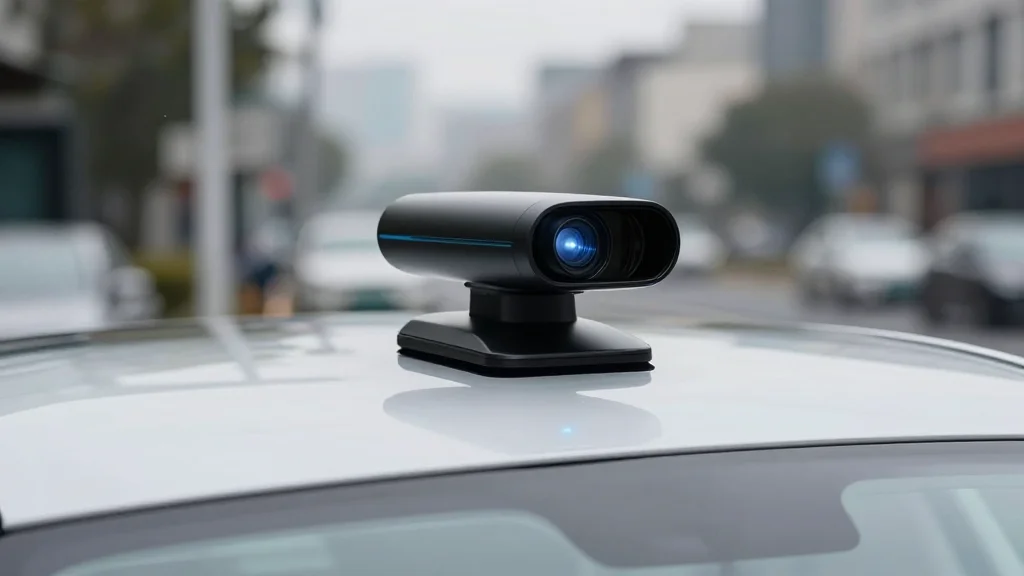
Wayve Launches $1.5 B‑Backed Wayve Labs to Expand AI Beyond Self‑Driving Cars

Companies Mentioned

Why It Matters
Wayve Labs represents a strategic pivot for the autonomy industry, moving from vehicle‑only AI to a platform that can interpret and act in any physical environment. By leveraging massive driving datasets, the lab could accelerate breakthroughs in perception, decision‑making, and risk assessment that are applicable to logistics, manufacturing, and even consumer robotics. This diversification reduces the sector’s exposure to regulatory delays—such as the UK’s postponed driverless‑car rollout—by opening alternative markets where AI can be deployed more quickly. The initiative also highlights the growing importance of ecosystem support. London’s resurgence as a deep‑tech hub supplies Wayve with capital, talent, and academic partnerships, while collaborations with Stellantis and Uber embed the research within real‑world vehicle platforms. If successful, Wayve’s model could inspire other autonomous‑driving firms to spin out research units, fostering a more open, cross‑industry AI landscape.
Key Takeaways
- •Wayve launches Wayve Labs, a new AI research unit focused on embodied intelligence
- •Lab is funded by Wayve’s $1.5 billion February financing round, valuing the startup at $8.6 billion
- •Chief scientist Jamie Shotton leads the lab, emphasizing a five‑year horizon for broader robotics applications
- •Wayve partners with Stellantis, leveraging the STLA Brain platform and Uber’s robotaxi network
- •London’s AI ecosystem, ranked Europe’s top tech hub, underpins Wayve’s talent and funding pipeline
Pulse Analysis
Wayve’s decision to create a dedicated research arm reflects a maturation of the autonomy market. Early‑stage self‑driving firms have largely been forced to prove safety and regulatory compliance before scaling. Wayve, by contrast, is betting that its core competency—learning to drive from raw sensor data—can be abstracted into a general‑purpose embodied‑intelligence engine. This mirrors the trajectory of companies like DeepMind, which moved from game‑playing AI to health‑care and robotics. The $1.5 billion capital injection not only validates investor confidence but also provides the compute budget needed for large‑scale model training, a cost barrier that has limited many startups.
Strategically, Wayve’s alignment with Stellantis gives it a foothold in the traditional automotive supply chain, while its existing Uber partnership ensures a testbed for real‑world deployment. The dual‑track approach mitigates risk: research breakthroughs can be commercialized through OEM software stacks, and the robotaxi service can serve as a proving ground for new perception and planning algorithms. However, the lack of an immediate commercialization roadmap for Wayve Labs could raise questions about return on investment, especially as venture capital cycles tighten.
London’s resurgence as Europe’s AI capital is a crucial enabler. The city’s deep‑tech talent pool, bolstered by universities like Cambridge and Imperial, feeds the lab’s recruitment drive. Moreover, the city’s regulatory environment—still cautious about fully driverless cars—may actually accelerate Wayve’s diversification into non‑vehicle domains where oversight is less stringent. If Wayve can translate its autonomous‑driving data into robust, transferable AI models, it could set a new standard for how mobility startups expand beyond the car, potentially reshaping the competitive landscape for years to come.
Wayve Launches $1.5 B‑Backed Wayve Labs to Expand AI Beyond Self‑Driving Cars
Comments
Want to join the conversation?
Loading comments...