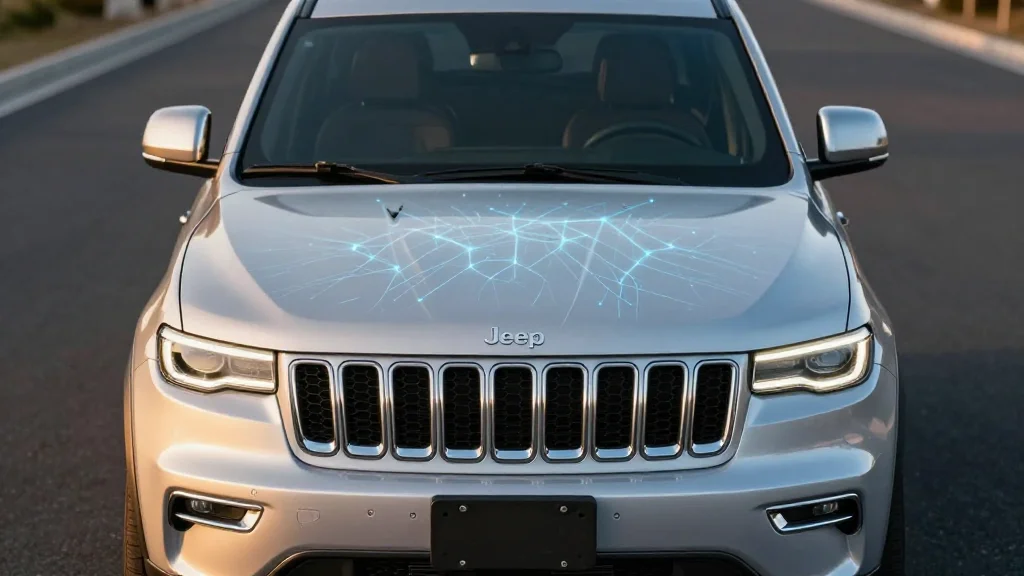
Wayve Teams with Stellantis to Deploy AI‑Driven Hands‑Free Driving in Jeep by 2028

Companies Mentioned
Why It Matters
The Wayve‑Stellantis partnership could democratize autonomous driving by making it affordable for everyday consumers, not just premium‑segment buyers. By sidestepping costly lidar and extensive mapping, the collaboration lowers the barrier to entry for Level 2++ features, potentially accelerating adoption rates and generating massive data sets that will improve AI performance across all brands. Moreover, the deal illustrates a strategic pivot for automakers: rather than building proprietary stacks, they are turning to specialist AI firms to stay competitive, a trend that could reshape supply chains and R&D investment across the automotive industry. Beyond cost, the partnership tests the viability of a sensor‑agnostic, end‑to‑end learning model at scale. Success would validate a new architectural paradigm for autonomy, encouraging further investment in AI‑first solutions and possibly hastening the transition to higher SAE levels as the underlying neural networks mature. Conversely, any setbacks could reinforce the dominance of lidar‑centric, map‑heavy approaches, making this collaboration a bellwether for the future direction of the autonomous vehicle market.
Key Takeaways
- •Wayve and Stellantis announce partnership to deliver Level 2++ hands‑free driving in Jeep and other models by 2028
- •Wayve secured $1.2 billion Series D funding, valuing the company at $8.6 billion
- •Prototype integrated on a Stellantis vehicle in under two months, showcasing platform‑agnostic capability
- •Sensor‑agnostic AI driver eliminates need for expensive lidar and HD maps, reducing per‑vehicle cost
- •Initial rollout targets North America in 2028, with potential expansion to Europe thereafter
Pulse Analysis
Wayve’s deal with Stellantis is more than a headline partnership; it is a litmus test for the viability of AI‑first, hardware‑agnostic autonomy at volume. Historically, the autonomous vehicle space has been dominated by lidar‑heavy, map‑dependent players who have struggled to translate prototype performance into affordable production models. Wayve’s end‑to‑end neural network sidesteps those constraints, promising a cheaper, faster path to market. If the 2028 launch meets its milestones, it could force legacy players like Waymo and Cruise to reconsider their heavy‑sensor strategies, especially as OEMs look for scalable solutions that fit existing vehicle architectures.
From Stellantis’s perspective, the partnership mitigates the massive R&D spend required to develop an in‑house stack while still delivering a differentiated feature set to its customers. The move also aligns with the broader industry trend of software‑centric revenue models, where automakers monetize over‑the‑air updates and subscription services rather than relying solely on hardware sales. This could reshape profit structures across the sector, with AI providers becoming critical suppliers akin to chip manufacturers today.
However, the collaboration is not without risk. Level 2++ still depends on driver supervision, and regulatory frameworks in key markets remain uncertain. Moreover, the success of Wayve’s approach hinges on the quality and diversity of data collected from millions of vehicles—a chicken‑and‑egg problem that requires rapid scaling. Competitors such as Tesla, which already ships a supervised FSD system, will likely accelerate their own hardware‑agnostic efforts, intensifying the race for data and market share. In short, the Wayve‑Stellantis partnership could either catalyze a new era of affordable autonomy or become a cautionary tale about the challenges of scaling AI‑driven driving at mass‑market volumes.
Wayve Teams with Stellantis to Deploy AI‑Driven Hands‑Free Driving in Jeep by 2028
Comments
Want to join the conversation?
Loading comments...