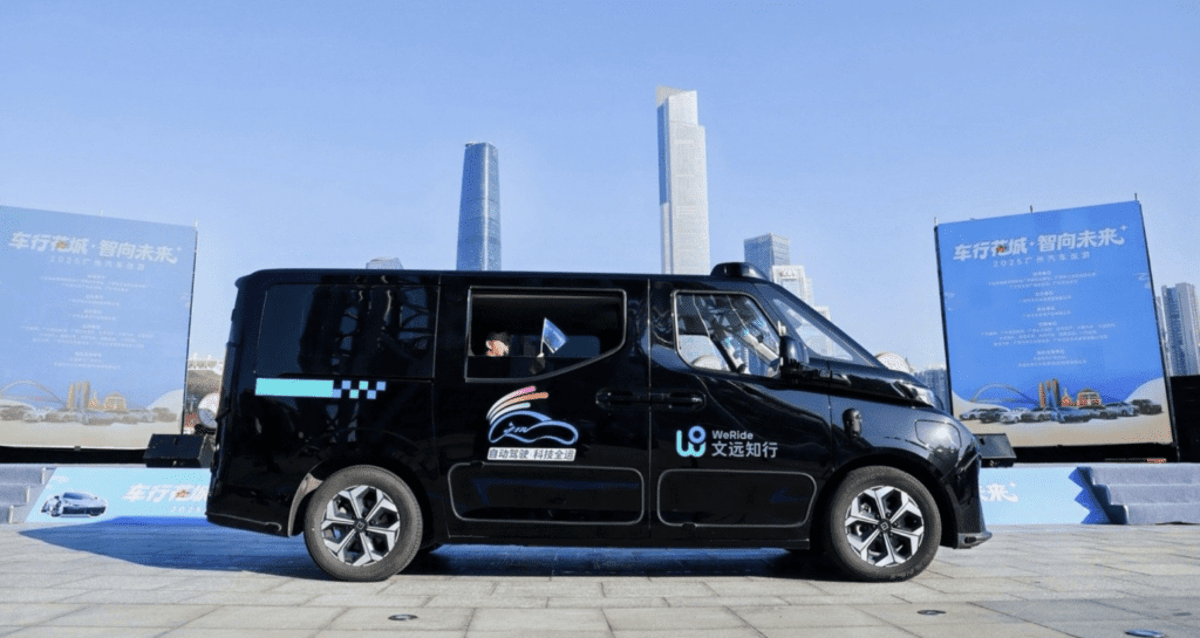
WeRide and Geely’s Farizon Prepare to Scale AV Production
•March 9, 2026
0
Why It Matters
The deal proves large‑scale autonomous vehicle manufacturing is feasible, accelerating market rollout and strengthening both firms’ competitive positions globally.
Key Takeaways
- •2,000 GXR units slated for 2026 delivery.
- •Fleet expands to over 2,600 vehicles by year‑end.
- •Drive‑by‑wire chassis cuts assembly to under ten minutes.
- •LiDAR range reaches 600 metres, triple typical solutions.
- •Farizon targets one million autonomous vehicle sales by 2030.
Pulse Analysis
WeRide’s partnership with Geely’s Farizon marks a pivotal step toward mass‑producing autonomous robotaxis. The new GXR model runs the company’s Gen8 stack, anchored by a thousand‑line LiDAR that sees up to 600 metres—far beyond the 200‑metre norm of most competitors. More importantly, the adoption of Farizon’s drive‑by‑wire chassis slashes assembly time from roughly an hour to under ten minutes and trims vehicle cost by about 15 percent. These engineering shortcuts directly address the cost‑and‑time barriers that have long limited large‑scale AV rollouts.
The 2,000‑unit order will swell WeRide’s global fleet to more than 2,600 vehicles by the end of 2026, providing a real‑world laboratory for the Gen8 system across Chinese megacities and emerging overseas hubs such as Abu Dhabi and Dubai. By testing production at near‑mass scale, the firm can validate supply‑chain resilience, software updates, and fleet‑management algorithms ahead of its ambition to deploy tens of thousands of robotaxis by 2030. This move also pressures rivals like Pony.ai and Baidu to accelerate their own manufacturing roadmaps.
For Farizon, the GXR run is a proof point for a broader commercial‑vehicle strategy that targets one million autonomous vans, trucks and buses annually by 2030. Success will demonstrate that its modular drive‑by‑wire platform can be replicated across multiple body styles without sacrificing speed or cost efficiency. As China’s autonomous‑driving ecosystem matures, the ability to produce vehicles quickly and cheaply could become a decisive competitive advantage, shaping partnerships with global ride‑hailing firms and influencing regulatory standards worldwide.
WeRide and Geely’s Farizon prepare to scale AV production
0
Comments
Want to join the conversation?
Loading comments...