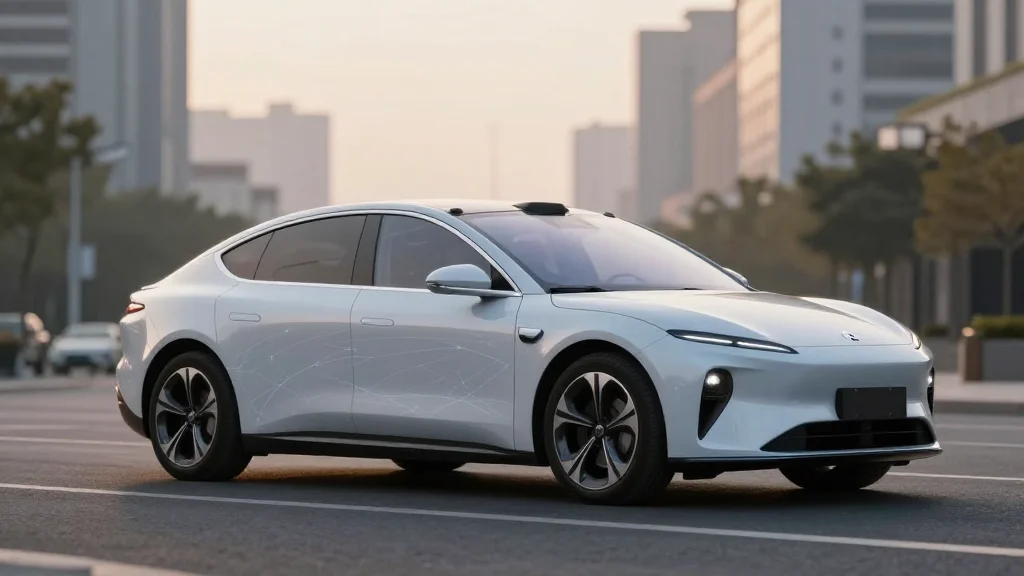
WeRide Posts 123% Revenue Jump, Expands China Robotaxi Fleet to 1,125 Vehicles

Why It Matters
WeRide’s rapid revenue growth and fleet scaling illustrate that autonomous ride‑hailing is moving from pilot projects to commercial scale in China, the world’s largest mobility market. The company’s cost‑efficiency gains and strategic OEM partnerships address two longstanding barriers: high vehicle BOM costs and low utilization rates. If WeRide can sustain double‑digit growth while narrowing its loss, it could set a benchmark for other Chinese and global robotaxi firms, accelerating investor confidence and regulatory support for autonomous mobility. The USD 100 million share‑buyback program also signals that capital markets are beginning to value autonomous‑driving firms on cash‑flow potential rather than purely on speculative growth. This shift may unlock deeper financing for the sector, enabling more aggressive expansion into emerging markets such as the Middle East and Southeast Asia, where WeRide already has a foothold.
Key Takeaways
- •Q4 2025 revenue rose 123% to RMB 314 million ($44 million).
- •Global robotaxi fleet reached 1,125 vehicles; China fleet >800 vehicles.
- •Cost of ownership in China fell 38%; BOM cost for GXR robotaxi down 15%.
- •Board approved up to USD 100 million share‑buyback program.
- •Geely Farizon order for 2,000 upgraded robotaxis and Uber partnership target 1,200 vehicles by 2027.
Pulse Analysis
WeRide’s Q4 results mark a turning point for Chinese robotaxi operators, who have historically struggled with thin margins and high capital intensity. The 123% revenue surge is largely powered by product‑revenue acceleration, suggesting that the company’s GENESIS simulation platform and rapid‑assembly GXR production line are delivering tangible cost savings. By slashing BOM costs and improving remote‑assistance efficiency, WeRide is narrowing the gap between autonomous‑vehicle economics and traditional ride‑hailing models.
The strategic alignment with Geely and Uber is equally critical. Geely’s Farizon brand provides a direct pipeline to mass‑market vehicle integration, while Uber offers a distribution network and demand aggregation that can boost vehicle utilization. These partnerships could help WeRide achieve its >40% contribution‑margin target in China, a level that would make robotaxi services financially viable without heavy subsidies. However, the company’s quarterly net loss of RMB 5.6 billion ($785 million) underscores that scaling remains capital‑heavy, and the upcoming share‑buyback may raise questions about cash allocation priorities.
Looking ahead, WeRide’s ability to replicate its Chinese operational efficiencies abroad will determine whether it can become a global leader in autonomous mobility. The Middle East rollout, already profitable on a standalone basis, offers a testbed for international expansion. If the company can sustain double‑digit growth while tightening its cost structure, it could catalyze a wave of investment into the broader autonomy ecosystem, prompting OEMs and tech firms to double down on robotaxi deployments worldwide.
WeRide Posts 123% Revenue Jump, Expands China Robotaxi Fleet to 1,125 Vehicles
Comments
Want to join the conversation?
Loading comments...