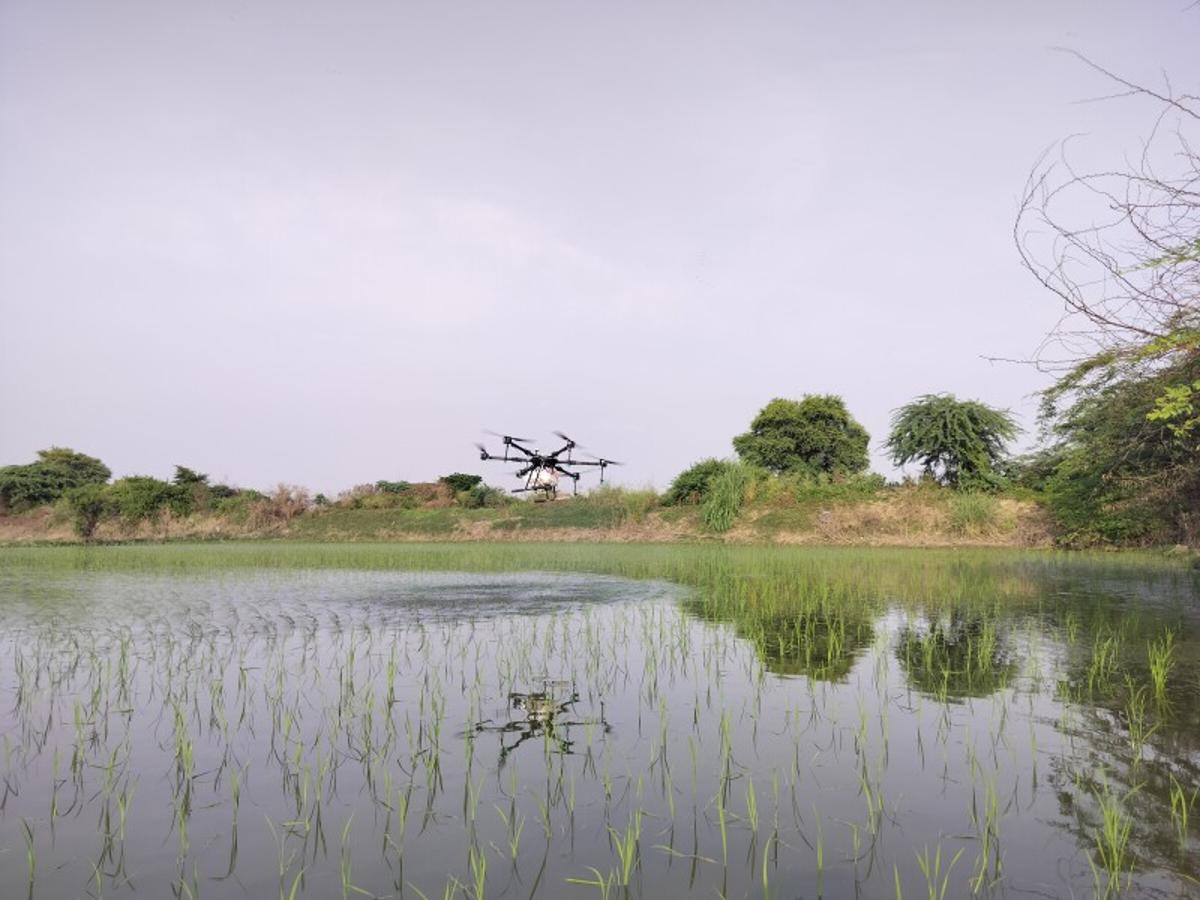
What the Data Actually Says: Quantifying the Environmental and Operational Trade-Offs of Agricultural UAV Spraying
•February 11, 2026
0
Why It Matters
The data proves UAVs can deliver measurable sustainability gains, but only when deployment is evidence‑based, shaping regulator, insurer, and climate‑finance decisions.
Key Takeaways
- •UAVs reduce water use tenfold versus ground sprayers.
- •Correct nozzle and flight planning essential for chemical savings.
- •Carbon footprint advantage depends on optimized mission planning.
- •Machine‑learning models enable predictive parameter optimization.
- •Standardized metrics needed for regulatory and financing credibility.
Pulse Analysis
The rapid uptake of agricultural UAVs has sparked interest in their promised efficiency gains, yet many stakeholders still rely on vendor hype rather than hard data. Recent multi‑regional trials in India provide the first robust life‑cycle assessment of UAV spraying, confirming that ultra‑low‑volume (ULV) nozzle configurations can slash water consumption from 150‑250 L/ha to just 10‑25 L/ha. This dramatic reduction not only conserves scarce water resources in semi‑arid farming zones but also curtails runoff and evaporation, directly supporting water‑stress mitigation strategies endorsed by climate‑smart agriculture policies.
Beyond water, the studies reveal a nuanced picture for pesticide use and carbon emissions. When nozzle geometry, flight altitude, and speed are finely tuned, pesticide application can drop 15‑30 % per hectare and deposition uniformity improves, enhancing crop protection while limiting off‑target drift. However, the carbon advantage of battery‑powered UAVs is not automatic; inefficient mission planning, excessive flight overlap, or under‑utilized payloads can raise CO₂‑equivalent emissions above those of conventional tractor sprayers. Operators must therefore treat energy intensity as an operational metric, optimizing routes and payloads to realize true climate benefits.
The integration of machine‑learning models marks a turning point, shifting UAVs from purely mechanical tools to intelligent decision‑support platforms. By ingesting flight parameters, environmental conditions, and outcome data, these models uncover non‑linear relationships that guide pre‑flight configuration for optimal water, chemical, and carbon performance. As regulators, insurers, and climate‑finance mechanisms increasingly demand quantifiable sustainability evidence, the industry faces pressure to adopt standardized performance benchmarks. Establishing common metrics for water use, pesticide efficiency, and carbon intensity will not only legitimize UAV deployment but also align it with broader SDG and climate‑adaptation goals, positioning data‑driven operators for scalable growth.
What the Data Actually Says: Quantifying the Environmental and Operational Trade-offs of Agricultural UAV Spraying
0
Comments
Want to join the conversation?
Loading comments...