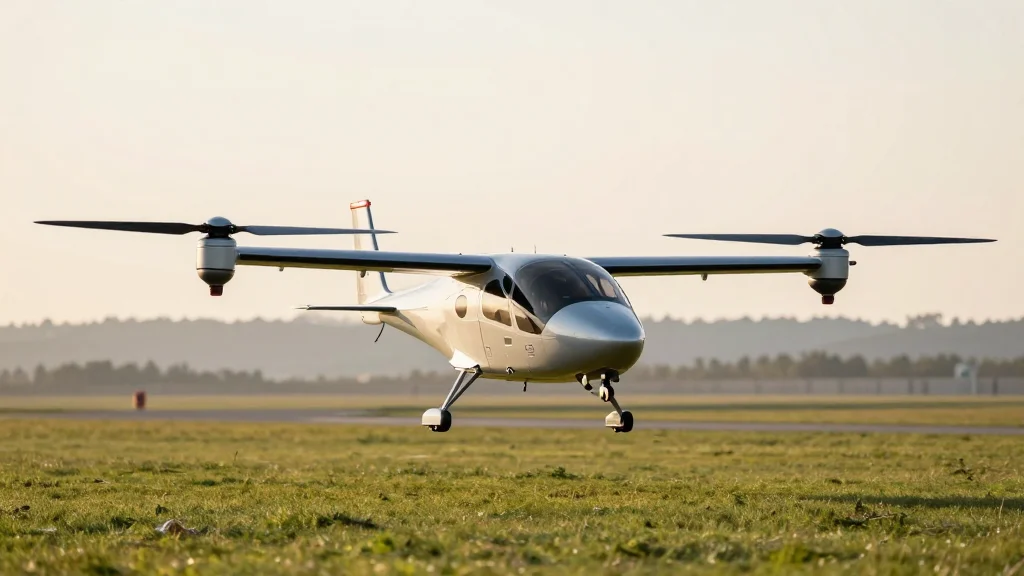
Wisk Reports First Flight of Its “Second Generation 6” Aircraft
Companies Mentioned
Why It Matters
Adding a second test vehicle accelerates data collection and certification, bringing autonomous air‑taxi services closer to commercial launch. It also showcases the U.S. government’s support for integrating eVTOLs into national airspace.
Key Takeaways
- •Second Gen 6 aircraft completes first flight, expanding test fleet.
- •Dual‑aircraft testing will broaden flight envelope and refine control laws.
- •Autonomous, all‑electric eVTOL operates under ground‑based human oversight.
- •Flight data accelerates certification path for commercial air‑taxi service.
- •Supports TxDOT eIPP program to integrate autonomous taxis into U.S. airspace.
Pulse Analysis
Wisk Aero’s second Generation 6 eVTOL took to the skies in early May, marking a pivotal step for the company’s autonomous air‑taxi ambitions. The aircraft’s inaugural flight showcased core capabilities—vertical lift, hover stability, and precise chirp maneuvers—at the company’s Hollister, California facility. By fielding a second test vehicle, Wisk doubles its data‑gathering capacity, enabling parallel flight campaigns that compress the timeline for performance validation and safety assessments.
The dual‑aircraft phase shifts focus toward expanding the flight envelope, particularly the transition from hover to sustained wing‑borne cruise. Engineers will fine‑tune control laws and system performance while the aircraft remains fully electric and autonomous, overseen by a ground‑based operator. This hybrid oversight model balances cutting‑edge autonomy with the rigorous safety standards demanded by commercial aviation regulators, positioning Wisk’s platform as a scalable, cost‑effective solution for urban air mobility.
Beyond the technical milestones, the flight reinforces Wisk’s strategic alignment with the U.S. Department of Transportation’s eVTOL and Advanced Air Mobility Integration Pilot Program, led by the Texas Department of Transportation. Participation in this federal initiative provides a real‑world testbed for operating autonomous taxis in national airspace, accelerating certification pathways and market entry. As cities worldwide grapple with congestion, Wisk’s progress signals a tangible move toward viable, on‑demand aerial transportation, potentially reshaping urban logistics and commuter patterns.
Wisk reports first flight of its “second generation 6” aircraft
Comments
Want to join the conversation?
Loading comments...