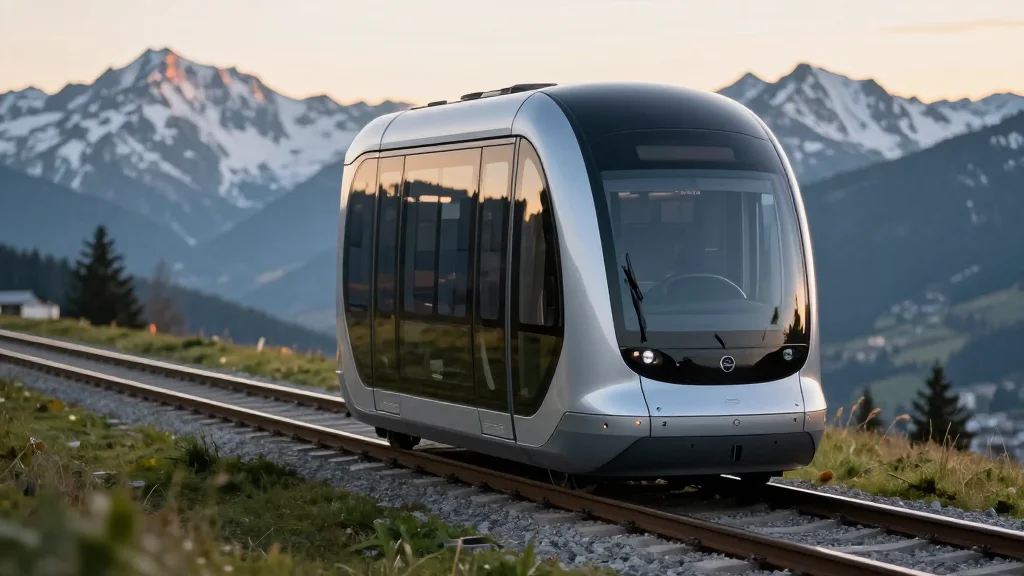
World’s First Autonomous Rail Taxi Launches 24‑Hour Service in Italy

Why It Matters
Railevo’s debut marks a tangible step toward integrating autonomy into mass‑transit infrastructure, a sector traditionally dominated by fixed‑schedule, human‑operated services. By demonstrating that driverless vehicles can safely and efficiently run on public rail tracks, the project could accelerate investment in autonomous rail technologies worldwide. Moreover, the ability to monetize existing, under‑used rail lines offers a cost‑effective pathway for governments to expand mobility without the fiscal burdens of new construction. The service also tests a new business model that blends on‑demand ride‑hailing with the high capacity and low emissions of rail. If passenger adoption proves strong, it could spur a wave of similar deployments in rural and suburban corridors, reshaping the competitive dynamics between rail operators, bus companies, and emerging mobility‑as‑a‑service platforms.
Key Takeaways
- •Railevo launched 24‑hour autonomous rail taxi service in Trentino, Italy
- •Vehicles are smaller than conventional trains and operate driverlessly on existing tracks
- •On‑demand model adjusts frequency in real time based on passenger requests
- •Targets low‑density areas where traditional rail is inefficient or costly
- •Six‑month trial will assess safety, performance, and scalability
Pulse Analysis
The Railevo rollout arrives at a moment when autonomous vehicle (AV) technology is maturing beyond road‑based shuttles and delivery bots. Rail has historically lagged in autonomy due to stringent safety standards and the high cost of retrofitting legacy signaling systems. Railevo’s approach—using proven electric multiple‑unit platforms equipped with off‑the‑shelf perception stacks—demonstrates that the barrier to entry may be lower than previously thought, especially when operators can piggyback on existing track infrastructure.
From a market perspective, the service could carve out a niche that sits between high‑capacity commuter rail and low‑capacity micro‑mobility solutions. Traditional rail operators face pressure to improve asset utilization, and autonomous taxis like Railevo provide a way to increase train‑hour productivity without adding new rolling stock. Meanwhile, ride‑hailing giants eyeing the autonomous space may view rail‑based AVs as a strategic complement to their road fleets, offering a differentiated product for longer distances and harsher weather conditions.
Challenges remain. Regulatory frameworks for driverless rail are still fragmented across Europe, and safety certification will require extensive real‑world testing. Public perception of driverless trains—especially operating through night hours—will be a decisive factor. Economic viability hinges on achieving sufficient ridership to offset the high upfront costs of vehicle retrofits and software integration. If the Trentino pilot delivers strong utilization metrics, it could unlock a wave of public‑private partnerships aimed at reviving dormant rail corridors across the continent, turning a long‑standing infrastructure liability into a new revenue stream.
World’s First Autonomous Rail Taxi Launches 24‑Hour Service in Italy
Comments
Want to join the conversation?
Loading comments...