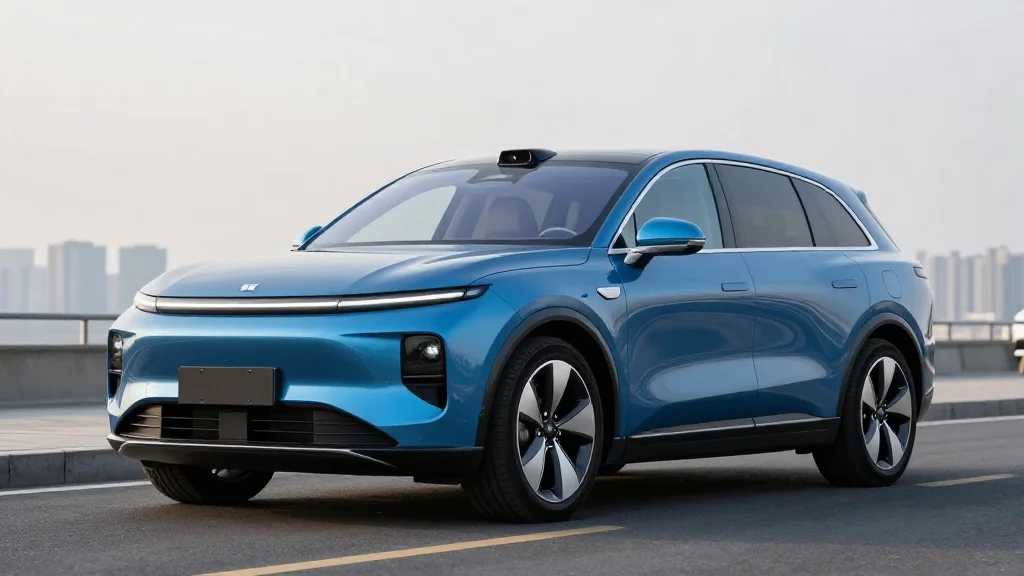
Xpeng Defends Its Pure Vision Strategy, Says LiDAR Is No Longer Necessary for Cars
Key Takeaways
- •Xpeng’s new GX SUV sold 24,863 units in 12 hours
- •Company shifts all models to LiDAR‑free pure‑vision system
- •CEO argues cameras outperform LiDAR in rain, fog, and cost
- •Over 80% of GX orders are top‑trim Ultra Flagship versions
Pulse Analysis
The autonomous‑driving industry has long been divided between sensor‑heavy approaches that combine LiDAR, radar and cameras, and vision‑only strategies championed by Tesla. Xpeng’s latest move signals a decisive tilt toward the latter, reflecting a broader trend as AI models become capable of extracting richer context from high‑resolution imagery. By leveraging its second‑generation Vision‑Language‑Action (VLA) system, Xpeng aims to match or exceed the perception range traditionally reserved for LiDAR, while sidestepping the sensor’s power‑draw and regulatory hurdles. This shift underscores how advances in deep‑learning architectures are reshaping hardware roadmaps.
From a technical standpoint, Xpeng’s argument rests on three pillars: computational power, data richness, and environmental robustness. Modern GPUs and dedicated AI accelerators now process billions of pixels per second, enabling end‑to‑end large‑model pipelines that ingest raw camera feeds directly. High‑resolution cameras capture more granular detail than LiDAR, especially in complex urban settings, and recent research shows they can maintain detection accuracy in rain or fog when paired with sophisticated denoising algorithms. Moreover, LiDAR’s requirement for high transmission power conflicts with automotive safety standards, making a pure‑vision stack both legally and economically attractive.
Market implications are immediate. By eliminating LiDAR, Xpeng can lower vehicle BOM costs, improve price competitiveness, and accelerate production scaling—critical factors as Chinese EV demand intensifies. The GX’s rapid order uptake suggests consumer confidence in the vision‑only promise, while the company’s alignment with Tesla’s sensor philosophy may attract tech‑savvy buyers seeking a comparable autonomous experience. However, the strategy also carries risk; any shortfall in camera‑based perception under extreme conditions could erode trust. As AI vision continues to mature, Xpeng’s bet may set a new benchmark for Chinese automakers, potentially reshaping supplier ecosystems and influencing global debates on the future of autonomous sensor suites.
Xpeng defends its pure vision strategy, says LiDAR is no longer necessary for cars
Comments
Want to join the conversation?