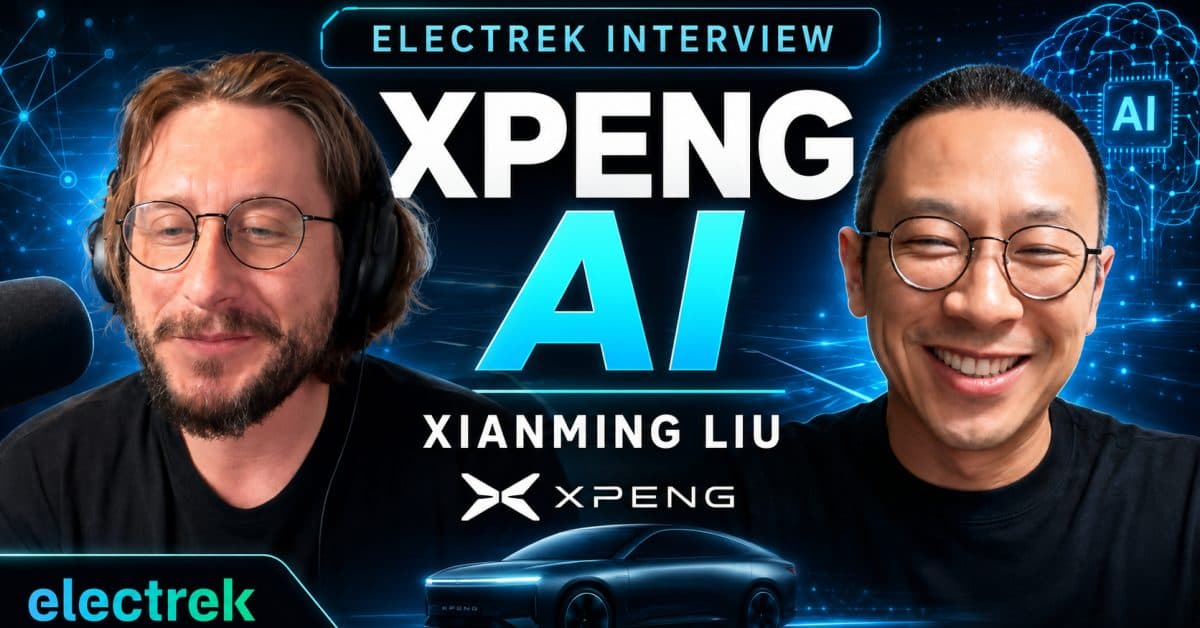
Xpeng Spends $500M/Year on AI Training to Beat Tesla FSD
Companies Mentioned
Why It Matters
Spending half a billion dollars on AI training signals Xpeng’s commitment to become a leading physical‑AI platform, challenging Tesla’s dominance in autonomous driving. The move also positions Xpeng as both a car maker and a technology supplier, accelerating industry‑wide adoption of vision‑only AD systems.
Key Takeaways
- •Xpeng spends $500 M annually on AI model training.
- •VLA 2.0 removes language tokens, matching Tesla FSD v14 performance.
- •New world model predicts future scenes and actions in one network.
- •Radar and ultrasonics stay separate safety layer, not for driving.
- •Volkswagen to license VLA 2.0, targeting deployment in 2027.
Pulse Analysis
Xpeng’s $500 million annual AI‑training budget reflects a broader industry trend of scaling compute to accelerate autonomous‑driving progress. By allocating roughly $41 million each month, the Chinese automaker can run massive simulation workloads and train trillion‑token models, a level of investment previously associated only with tech giants and Tesla. This financial commitment not only narrows the performance gap with Tesla’s FSD but also showcases how deep‑pocketed car manufacturers can leverage AI to create a competitive moat in a market where data and compute are king.
Technically, Xpeng’s VLA 2.0 marks a departure from the language‑centric pipelines many AI researchers champion. The model discards language tokens as an intermediate representation, cutting latency and computational overhead while still accepting natural‑language commands from drivers. Coupled with a unified world‑model that forecasts future visual scenes and optimal actions, VLA 2.0 delivers a more streamlined perception‑planning stack. Reported efficiency gains—a 4,360 % improvement in single‑job training and GPU utilization climbing from 40 % to 90 %—suggest the architecture can scale rapidly, positioning Xpeng to iterate faster than rivals.
Beyond the technology, Xpeng’s strategy to license VLA 2.0 to Volkswagen and retain radar‑based safety layers underscores a hybrid business model. By acting as both OEM and AD‑software supplier, Xpeng can monetize its AI breakthroughs across multiple vehicle platforms while maintaining a safety net through redundant sensors. This approach could pressure incumbents to open their own licensing channels and accelerate the industry’s shift toward vision‑only autonomous systems, reshaping the competitive landscape for the next decade.
Xpeng spends $500M/year on AI training to beat Tesla FSD
Comments
Want to join the conversation?
Loading comments...