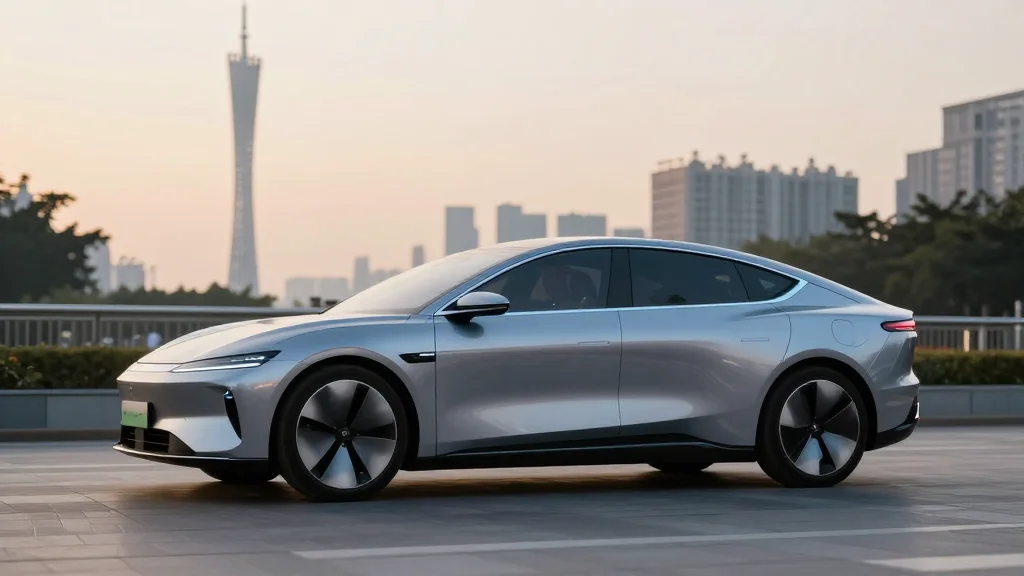
XPeng Starts Mass Production of First China‑Made Robotaxi in Guangzhou, Aims for H2 2026 Pilot

Companies Mentioned
Why It Matters
XPeng’s mass‑production launch signals that Chinese firms are no longer just testing autonomous prototypes but are moving toward commercial scale. By integrating its robotaxi on the same GX platform used for consumer SUVs, XPeng demonstrates a cost‑effective path to mass deployment that could pressure rivals to adopt similar shared‑platform strategies. The pure‑vision, LiDAR‑free architecture also challenges the prevailing industry belief that high‑cost sensor suites are essential for Level‑4 safety, potentially reshaping hardware roadmaps for future autonomous vehicles. The pilot rollout will provide the first large‑scale performance data for a vision‑only robotaxi in dense urban environments, offering regulators and investors concrete evidence of safety, reliability and economic viability. A successful pilot could accelerate policy approvals for driverless services across China’s major cities and influence global standards, positioning XPeng as a benchmark for cost‑efficient, in‑house autonomous solutions.
Key Takeaways
- •XPeng began mass production of its first robotaxi in Guangzhou, the first Chinese automaker to do so
- •The vehicle uses four in‑house Turing AI chips delivering 3,000 TOPS and a pure‑vision VLA 2.0 model with sub‑80 ms latency
- •Pilot operations are scheduled for the second half of 2026; fully driverless service targeted for early 2027
- •XPeng opened a robotaxi SDK, with Alibaba’s Amap as the first ecosystem partner
- •The robotaxi shares the GX platform with XPeng’s consumer SUV, priced at 399,800 yuan (≈$58,620)
Pulse Analysis
XPeng’s decision to mass‑produce a robotaxi on a shared consumer platform is a strategic gamble that could redefine cost structures in the autonomous‑mobility market. Historically, manufacturers have pursued purpose‑built robotaxis—Tesla’s Cybercab and Waymo’s purpose‑engineered pods—to maximise design freedom and sensor integration. XPeng flips that script, betting that validation at scale in its consumer line will amortise hardware development costs and accelerate software maturity. If the pilot validates the vision‑only approach, it could trigger a wave of platform convergence, where OEMs bundle passenger‑vehicle and robotaxi variants under a single chassis, dramatically lowering the barrier to entry for new players.
The absence of LiDAR, while reducing bill of materials, also raises questions about performance under low‑visibility conditions—a known weakness of pure‑vision systems. XPeng’s claim of five‑fold performance gains over competitors hinges on the VLA 2.0 model’s ability to generalise across diverse urban scenarios. Real‑world data from the H2 2026 pilot will be the litmus test. Should the model deliver consistent safety metrics without a safety driver, regulators may relax sensor‑redundancy mandates, opening the door for broader adoption of vision‑only stacks worldwide.
From a market perspective, XPeng’s move intensifies competition in China’s burgeoning robotaxi sector, where Tesla, Waymo, and domestic rivals like Geely are already staking claims. XPeng’s early‑stage integration of an SDK ecosystem could create a network effect, attracting third‑party developers to build value‑added services—ranging from in‑car entertainment to dynamic routing algorithms—that differentiate its offering. If successful, XPeng could capture a sizable share of the projected $200 billion global robotaxi market by 2030, leveraging its vertical integration to outpace rivals still reliant on external sensor suppliers and mapping services.
XPeng Starts Mass Production of First China‑Made Robotaxi in Guangzhou, Aims for H2 2026 Pilot
Comments
Want to join the conversation?
Loading comments...