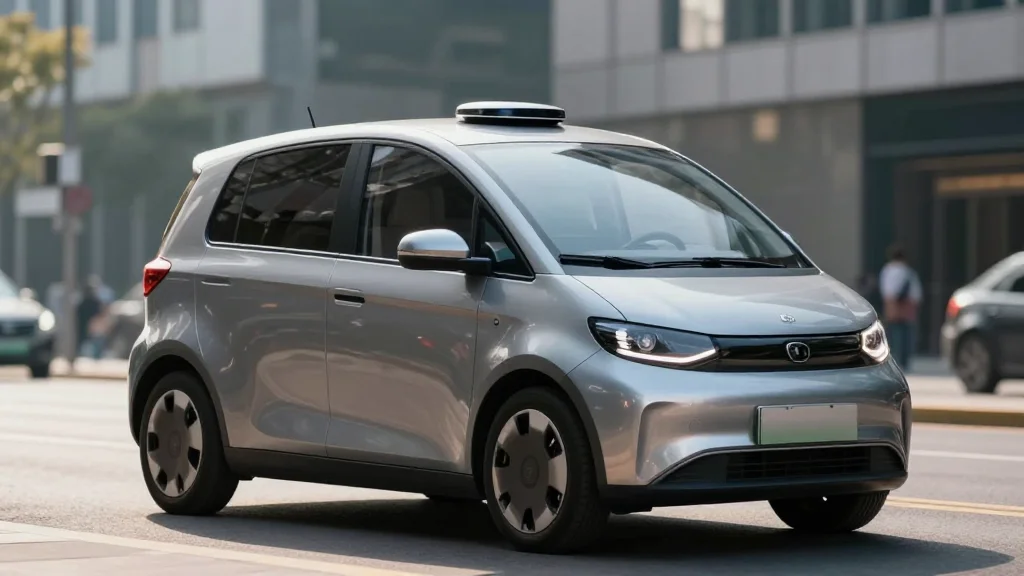
XPeng Starts Mass Production of L4 GX Robotaxi in Guangzhou

Companies Mentioned
Why It Matters
The launch of XPeng’s mass‑produced GX robotaxi marks a pivotal shift from experimental prototypes to scalable, commercial‑grade autonomous mobility in China. By delivering a Level‑4 vehicle without LiDAR or HD maps, XPeng challenges the prevailing sensor‑heavy paradigm and demonstrates that high‑performance vision‑only systems can be manufactured at volume. If the upcoming pilot proves technically sound and economically viable, it could accelerate the rollout of driverless ride‑hailing services across Chinese megacities, reshaping urban transport, reducing congestion, and creating new revenue streams for automakers and mobility platforms alike. The move also signals to global competitors that China’s autonomous vehicle ecosystem is maturing rapidly, with homegrown firms now capable of end‑to‑end production.
Key Takeaways
- •XPeng begins mass production of its GX robotaxi in Guangzhou
- •Vehicle uses four Turing AI chips delivering 3,000 TOPS of computing power
- •Pure‑vision, LiDAR‑free platform makes decisions in under 80 ms
- •First Chinese automaker to achieve series production of a full‑stack robotaxi
- •Pilot operations slated for second half of 2026 to test feasibility and acceptance
Pulse Analysis
XPeng’s decision to internalise the entire autonomy stack reflects a strategic bet on vertical integration that mirrors trends seen in Silicon Valley, where firms like Tesla have leveraged in‑house chip design to control costs and accelerate innovation. By eliminating LiDAR, XPeng not only cuts hardware expenses but also simplifies supply‑chain logistics, a critical advantage in a market where component shortages have repeatedly delayed rollouts.
The timing aligns with a broader policy push in China to promote intelligent connected vehicles as part of its "New Infrastructure" agenda. Municipal governments are increasingly offering test‑bed zones and regulatory sandboxes, which could fast‑track XPeng’s pilot deployments. However, the pure‑vision approach must overcome lingering safety concerns, especially in adverse weather where lidar traditionally provides redundancy. XPeng’s upcoming pilots will therefore be closely watched by regulators and competitors alike, as they will either validate the viability of vision‑only L4 systems or reinforce the need for multi‑sensor fusion.
In the competitive landscape, XPeng’s move puts pressure on rivals such as Baidu’s Apollo and Pony.ai, which have leaned heavily on lidar and high‑definition mapping. Should XPeng demonstrate a cost‑effective, scalable model, it could force a re‑evaluation of sensor strategies industry‑wide, potentially reshaping R&D budgets and partnership structures. The GX robotaxi’s success could also catalyse new business models, where automakers not only sell vehicles but also operate autonomous fleets, blurring the line between OEM and mobility‑as‑a‑service provider.
XPeng Starts Mass Production of L4 GX Robotaxi in Guangzhou
Comments
Want to join the conversation?
Loading comments...