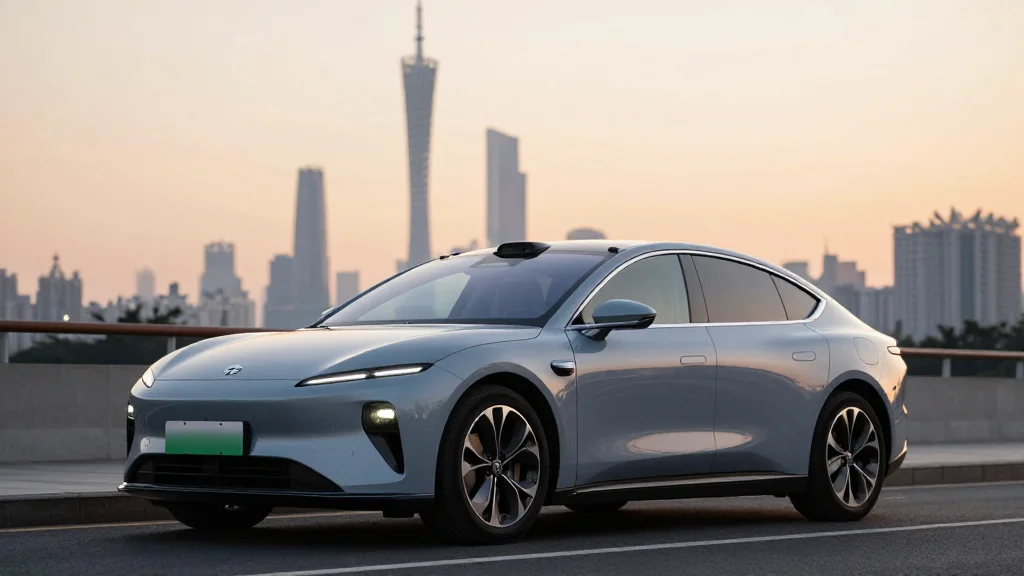
XPENG Starts Mass Production of L4 Robotaxi in Guangzhou

Companies Mentioned
Why It Matters
XPENG’s mass‑production launch signals a shift from experimental robotaxi pilots to commercial‑scale deployment, demonstrating that traditional automakers can compete with pure‑tech firms in autonomous mobility. By delivering a Level‑4 vehicle built entirely with in‑house hardware and software, XPENG reduces reliance on external suppliers and may accelerate cost reductions for the broader market. The Guangzhou rollout also tests China’s regulatory framework for driver‑less services, providing a template for other cities and potentially influencing policy across the region. The move could reshape competitive dynamics in the global autonomy arena. If XPENG’s vision‑only stack proves reliable, it may prompt rivals to reconsider costly LiDAR‑centric architectures, reshaping sensor strategies and supply chains. Moreover, successful large‑scale production could attract new investors and partners, further fueling China’s ambition to lead the next generation of autonomous transportation.
Key Takeaways
- •XPENG began mass production of its L4 robotaxi in Guangzhou, the first Chinese automaker to do so with full‑stack in‑house tech.
- •The robotaxi runs on the GX platform with four Turing AI chips delivering 3,000 TOPS of computing power.
- •Vehicle operates without LiDAR or high‑definition maps, using a pure‑vision VLA 2.0 model with sub‑80 ms latency.
- •Pilot operations slated for the second half of 2026; fully driver‑less service targeted for early 2027.
- •XPENG’s approach could lower hardware costs and challenge both domestic tech firms and Tesla in the robotaxi market.
Pulse Analysis
XPENG’s decision to mass‑produce a robotaxi leverages its existing manufacturing scale, a strategic advantage that pure‑software startups lack. By integrating chip design, vehicle engineering, and autonomous software, the company can iterate faster and control costs, a model reminiscent of Tesla’s vertical integration but with a distinct hardware philosophy that eschews LiDAR. This could force competitors to re‑evaluate the cost‑benefit trade‑offs of sensor suites, especially as Chinese regulators appear supportive of vision‑only solutions.
Historically, China’s autonomous vehicle sector has been fragmented between tech giants, dedicated robotaxi firms, and legacy automakers. XPENG’s entry blurs these lines, suggesting a consolidation where vehicle manufacturers become the primary platform providers. If the Guangzhou pilot demonstrates reliable L4 performance and user acceptance, it may accelerate policy liberalization, encouraging other cities to grant testing permits and eventually full deployment licenses.
Looking ahead, the key risk lies in scaling the technology from controlled pilot zones to diverse urban environments. The VLA 2.0 model’s claim of cross‑city generalization will be tested as XPENG expands beyond Guangzhou. Success could cement China’s leadership in commercial robotaxis, while setbacks may reaffirm the dominance of sensor‑heavy approaches championed by firms like Waymo. Investors and industry watchers will therefore monitor the pilot’s performance metrics, regulatory feedback, and any shifts in partnership strategies as the next phase of autonomous mobility unfolds.
XPENG Starts Mass Production of L4 Robotaxi in Guangzhou
Comments
Want to join the conversation?
Loading comments...