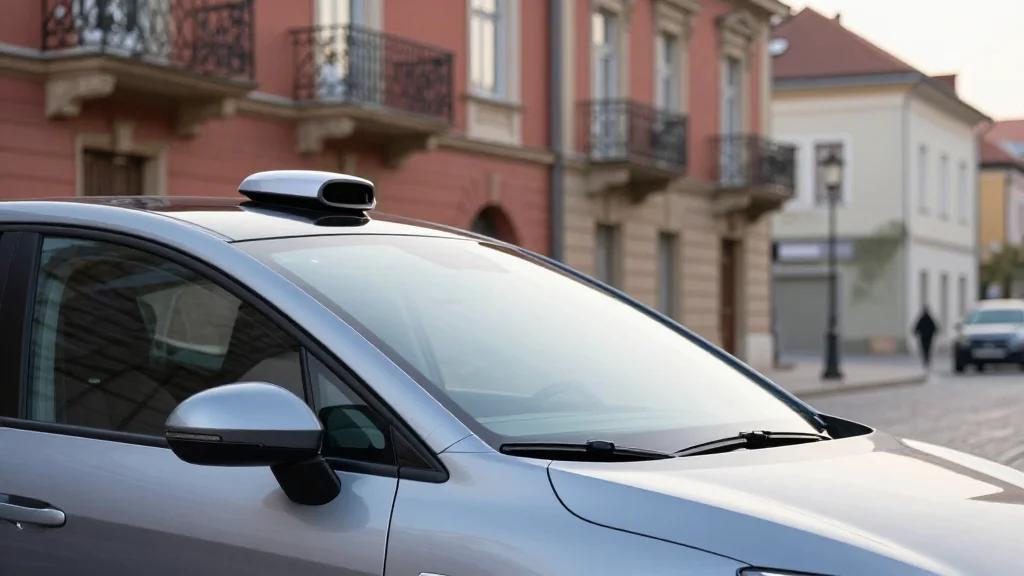
Zagreb Launches Europe’s First Commercial Robotaxi Service with Uber and Pony.ai

Companies Mentioned
Why It Matters
Zagreb’s robotaxi service demonstrates that European cities can overcome regulatory, safety and public‑acceptance barriers that have slowed autonomous‑vehicle deployments elsewhere. By offering a low‑cost, data‑rich pilot, the project provides a real‑world testbed for sensor suites, AI decision‑making and human‑in‑the‑loop safety models, accelerating the continent’s path toward fully driverless mobility. The initiative also signals a shift in the competitive landscape: traditional automotive OEMs and tech giants must now contend with agile, regionally focused startups backed by global platforms like Uber. Success in Zagreb could spur municipal governments to allocate funding and streamline permitting processes, potentially unlocking a wave of similar projects across Europe and beyond.
Key Takeaways
- •Zagreb launched Europe’s first commercial robotaxi fleet of 10 vehicles on April 8, 2026.
- •Service priced at €1.99 per ride (~$2.15) and has a waiting list of ~4,000 users.
- •Partnership includes Uber, Chinese autonomous‑driving firm Pony.ai, and Verve (co‑founded by Mate Rimac).
- •90 % of riders gave four‑ or five‑star ratings; tens of thousands of kilometres logged without accident.
- •Goal to achieve fully driverless operation by end‑2026, with expansion talks in 11 additional cities.
Pulse Analysis
Zagreb’s robotaxi launch is more than a local curiosity; it is a proof point that European regulatory frameworks can accommodate high‑risk autonomous trials when backed by strong public‑private partnerships. The involvement of Uber provides a ready‑made marketplace and payment infrastructure, while Pony.ai contributes proven sensor‑fusion and perception algorithms honed in China’s dense traffic. This combination reduces the time to market for Verve’s technology and gives the city a competitive edge over larger, slower‑moving incumbents.
Historically, Europe’s autonomous‑vehicle pilots have been fragmented, often limited to low‑speed shuttles or restricted zones. Zagreb’s approach—starting with a modest fleet, maintaining a human safety operator, and using a low fare to generate volume—creates a scalable model that can be replicated in other mid‑size cities. The data harvested from thousands of rides will feed back into machine‑learning pipelines, improving reliability and potentially lowering insurance costs, which have been a major cost driver for early deployments.
Looking ahead, the key risk lies in regulatory approval for fully driverless operation. If Zagreb secures clearance by year‑end, it could trigger a cascade of policy reforms across the EU, prompting cities to fast‑track similar services. Conversely, a setback could reinforce caution among regulators, slowing the continent’s autonomous‑mobility timeline. Investors will be watching the performance metrics—ride‑completion rates, incident frequency, and user churn—closely, as they will dictate the valuation of not only Verve but also the broader ecosystem of suppliers and platform partners.
Overall, Zagreb’s robotaxi service illustrates how a focused, data‑driven pilot can accelerate autonomous‑vehicle adoption, reshape urban mobility, and reshape the competitive dynamics between legacy automakers, tech platforms and nimble startups in the European market.
Zagreb Launches Europe’s First Commercial Robotaxi Service with Uber and Pony.ai
Comments
Want to join the conversation?
Loading comments...