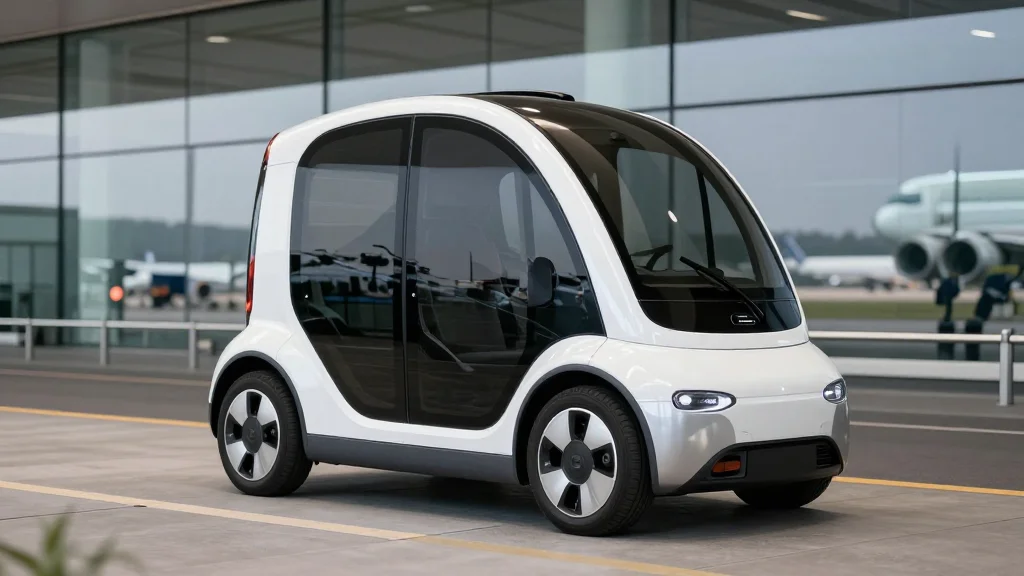
Zoox Begins Employee‑Only Robotaxi Service at Las Vegas Airport

Companies Mentioned
Why It Matters
The Zoox airport pilot tests autonomous mobility in one of the most complex transportation environments in the United States. Success could accelerate the adoption of robotaxis at other major hubs, reducing reliance on traditional shuttle buses and potentially lowering carbon emissions. Moreover, the deployment provides a real‑world laboratory for refining vehicle perception systems, fleet management software and passenger safety protocols, all of which are critical for broader commercial viability. For the autonomous vehicle industry, the ability to operate safely in high‑density, regulated spaces like airports could serve as a benchmark for future deployments in other constrained settings such as stadiums, convention centers and urban downtown districts. The pilot also puts pressure on competitors to demonstrate comparable safety records and operational efficiency, intensifying the race for market share in the emerging robotaxi sector.
Key Takeaways
- •Zoox launched an employee‑only robotaxi pilot at Harry Reid International Airport on April 24, 2026.
- •The first phase focuses on safety and performance testing in a high‑traffic airport environment.
- •Zoox plans to open the service to the public in the near future, though no timeline was disclosed.
- •The pilot follows earlier Las Vegas Strip deployments and a partnership with Uber for ride‑share integration.
- •Success could pave the way for autonomous shuttle services at other major U.S. airports.
Pulse Analysis
Zoox’s decision to target an airport for its first public‑facing robotaxi rollout reflects a strategic shift from street‑level services to controlled, high‑value corridors. Airports offer a predictable flow of passengers, defined pick‑up and drop‑off points, and a captive audience that values convenience—conditions that mitigate many of the uncertainties that have hampered robotaxi adoption on open city streets. By proving the technology in this environment, Zoox can gather granular data on vehicle‑to‑infrastructure communication, passenger onboarding processes, and integration with existing ground‑service operations.
Historically, autonomous vehicle pilots have struggled to achieve scale due to regulatory hurdles and public skepticism. Zoox’s incremental approach—starting with employees before opening to the public—mirrors the phased rollout strategies of Waymo and Cruise, which have also used internal or limited‑access trials to refine their systems. This method reduces risk while building a performance record that can be leveraged in negotiations with regulators and potential corporate partners, such as airlines seeking to differentiate their passenger experience.
Looking ahead, the airport pilot could become a template for other high‑density venues. If Zoox can demonstrate low incident rates and high passenger satisfaction, it may attract additional funding and accelerate partnerships with airport authorities nationwide. Conversely, any safety lapses could reinforce regulatory caution and slow the overall momentum of autonomous mobility. The outcome of this pilot will therefore be a bellwether for the broader robotaxi market, influencing investor sentiment, competitive dynamics, and the speed at which autonomous ride‑hail becomes a mainstream transportation option.
Zoox Begins Employee‑Only Robotaxi Service at Las Vegas Airport
Comments
Want to join the conversation?
Loading comments...