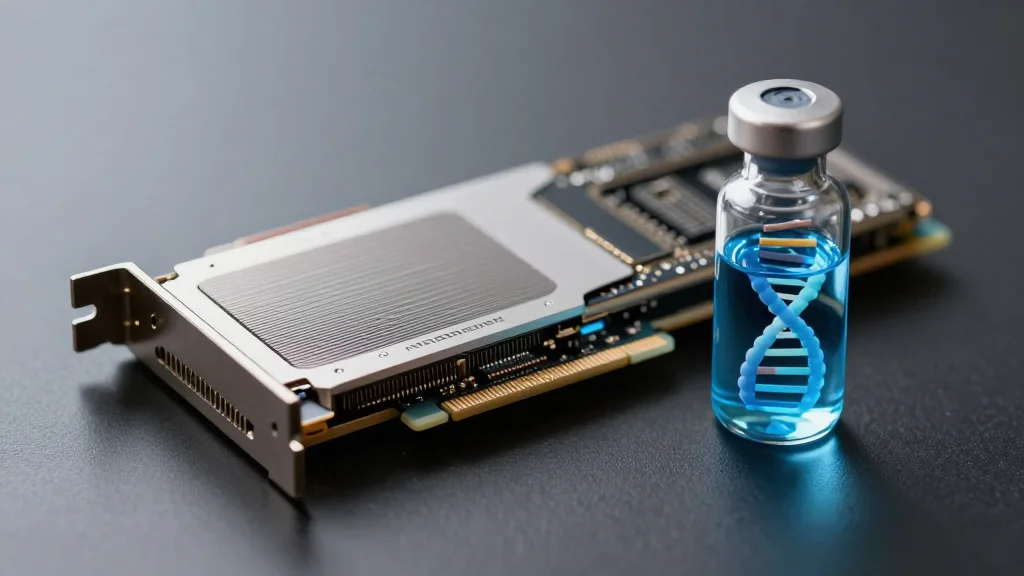
Eli Lilly and NVIDIA Deploy 1,016‑GPU LillyPod Supercomputer to Speed AI Drug Discovery

Companies Mentioned
Why It Matters
LillyPod demonstrates how big‑data infrastructure can become a competitive moat in pharma, where the speed of hypothesis testing directly influences market entry and patent windows. By internalizing AI compute, Lilly reduces reliance on external cloud providers, potentially lowering long‑term costs and safeguarding sensitive research data. The initiative also forces the broader industry to grapple with AI ethics and compliance. As models ingest historic trial data that may reflect past biases, the need for transparent, auditable pipelines becomes a regulatory imperative. Successful navigation of these challenges could set a template for other drug makers seeking to harness massive data sets without compromising safety or equity.
Key Takeaways
- •LillyPod launched in February with 1,016 NVIDIA Blackwell Ultra GPUs.
- •The supercomputer serves as a computational dry lab linked to Lilly’s wet lab in San Francisco.
- •Partnership aims to re‑analyze decades of legacy pharmaceutical data for new drug targets.
- •Lilly emphasizes AI governance, aligning with NIST’s AI Risk Management Framework.
- •Industry watchers see LillyPod as a shift from cloud‑only AI to integrated, purpose‑built hardware.
Pulse Analysis
The deployment of LillyPod marks a watershed moment for data‑intensive drug discovery. Historically, pharma has leaned on external cloud services to run AI workloads, a model that offers flexibility but introduces latency and data‑sovereignty concerns. By building an on‑premises AI supercomputer, Lilly not only accelerates its own R&D cycles but also signals to competitors that control over compute resources is becoming a strategic differentiator. This mirrors trends in other data‑heavy sectors, such as finance and genomics, where firms are investing in private AI clusters to protect intellectual property and to fine‑tune performance.
From a market perspective, the partnership could pressure cloud providers to offer more specialized, pharma‑focused AI services, potentially spawning a new niche of hybrid solutions that blend on‑prem hardware with cloud orchestration. Moreover, Lilly’s explicit focus on bias mitigation and regulatory alignment may set industry standards, prompting peers to adopt similar governance frameworks. If Lilly can demonstrate measurable reductions in drug‑candidate cycle time—say, cutting lead‑time by 20‑30%—the financial upside could be substantial, given the high cost of failed trials.
Looking ahead, the success of LillyPod will hinge on two factors: the ability to translate raw compute power into actionable scientific insights, and the capacity to satisfy increasingly stringent AI‑regulation regimes. Should Lilly achieve both, the model could become a blueprint for a new generation of AI‑driven pharma enterprises, where big data, high‑performance computing, and ethical AI converge to reshape the drug‑development pipeline.
Eli Lilly and NVIDIA Deploy 1,016‑GPU LillyPod Supercomputer to Speed AI Drug Discovery
Comments
Want to join the conversation?
Loading comments...