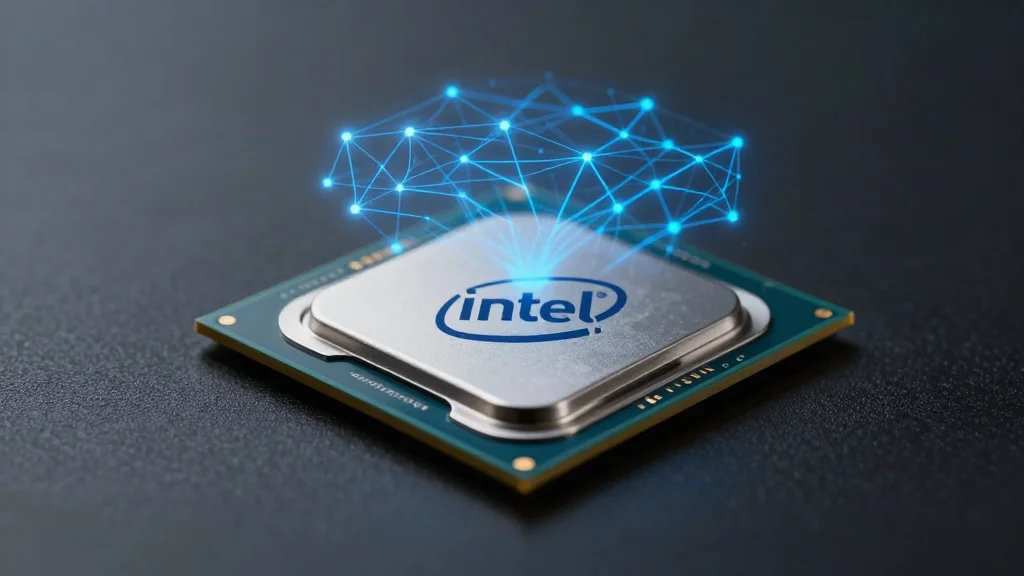
Google Chooses Intel Xeon 6 CPUs for AI Data Centers, Deepening Decades‑Long Partnership

Companies Mentioned

Why It Matters
Google’s decision to double down on Intel CPUs reshapes the competitive dynamics of AI infrastructure. By anchoring its AI workloads to a proven x86 ecosystem, Google signals that heterogeneous compute—mixing CPUs, GPUs, and custom accelerators—will be the norm for large‑scale analytics and model training. This could accelerate the adoption of high‑core‑count server CPUs across the broader big‑data market, prompting cloud providers and enterprises to reevaluate cost‑performance trade‑offs. The partnership also highlights the growing supply constraints for server‑grade silicon. As AI agents demand more CPU cycles for orchestration, data preprocessing, and reinforcement‑learning loops, the industry may see a shift in procurement strategies, with vendors like Intel leveraging long‑term contracts to secure volume. For investors, the stock reactions suggest that the market is pricing in both the opportunity for Intel and the potential cost pressure on Google, making the deal a bellwether for future AI‑hardware financing structures.
Key Takeaways
- •Google commits to multiple generations of Intel Xeon 6 CPUs for AI training and inference.
- •The partnership extends a collaboration that began nearly 30 years ago and includes co‑development of custom IPUs.
- •Intel shares rose 2% on the news; Alphabet shares fell more than 1%.
- •Futurum Group predicts CPU market growth could outpace GPU growth by 2028, driven by AI workloads.
- •Google is also developing its own Arm‑based Axion processor while AMD gains record server market share.
Pulse Analysis
Google’s renewed reliance on Intel marks a strategic pivot away from the GPU‑only narrative that has dominated AI infrastructure discourse. While GPUs excel at raw matrix math, modern AI pipelines increasingly require orchestration, data shuffling, and reinforcement‑learning loops that are more efficiently handled by high‑core‑count CPUs. By locking in Xeon 6 silicon, Google is hedging against future supply bottlenecks and ensuring a predictable performance baseline for its cloud customers.
Historically, Google’s hardware choices have been a mix of off‑the‑shelf and custom silicon—think TPUs for inference and the recent Axion effort for edge workloads. The Xeon 6 commitment suggests a tiered architecture: CPUs for control‑plane and preprocessing, GPUs for heavy‑weight model training, and IPUs for specialized networking and security tasks. This layered approach could become a template for other hyperscalers, especially as the industry grapples with the “quiet supply crisis” of high‑core‑count processors.
From a market perspective, the stock moves underscore divergent investor expectations. Intel’s modest share gain reflects confidence that the deal will translate into sustained revenue streams, while Alphabet’s dip hints at concerns over cost escalation without clear margin benefits. The real test will be the performance and pricing outcomes of the first Xeon 6‑powered AI instances. If Google can demonstrate a lower total cost of ownership compared with GPU‑heavy alternatives, it may trigger a wave of similar CPU‑centric contracts, reshaping the procurement landscape for big‑data workloads worldwide.
Google Chooses Intel Xeon 6 CPUs for AI Data Centers, Deepening Decades‑Long Partnership
Comments
Want to join the conversation?
Loading comments...