
Key Takeaways
- •PCSFT aims to derive quantum mechanics from classical random fields.
- •Khrennikov stresses detector calibration as key to interpreting Bell tests.
- •Proposes using superconducting transition‑edge sensors to test Born‑rule deviations.
- •Introduces new constant α to quantify pre‑quantum jitter scale.
- •Review highlights rigorous math but calls for clearer experimental guidance.
Pulse Analysis
Prequantum Classical Statistical Field Theory (PCSFT) positions itself as a bridge between classical randomness and quantum phenomena, challenging the prevailing view that quantum mechanics is irreducibly probabilistic. By framing probability in a contextual, detector‑centric manner, Khrennikov aligns with a growing school of thought that sees measurement devices—not abstract wavefunctions—as the origin of quantum statistics. This perspective reframes Bell‑inequality violations as potential artifacts of uncalibrated threshold detectors, prompting a re‑examination of long‑standing assumptions in quantum foundations.
The book’s most actionable contribution lies in its experimental roadmap. Khrennikov recommends next‑generation superconducting transition‑edge sensors (W‑TES) and microwave kinetic‑inductance detectors (MKIDs) capable of resolving sub‑photon energy fractions, effectively turning photon detection into calorimetry. Such precision could expose higher‑order interference effects predicted by PCSFT, especially in asymmetric wave‑function setups where the new constant α—representing pre‑quantum jitter—might manifest. By targeting deviations from the Born rule, these experiments could provide the first empirical foothold for a theory that otherwise remains mathematically abstract.
Beyond the laboratory, PCSFT’s implications ripple through quantum technology and industry. A validated sub‑quantum model would demand revised error‑budget calculations for quantum computing hardware, potentially unlocking more accurate noise mitigation strategies. Moreover, the emphasis on detector physics could accelerate advances in low‑noise photonics, benefiting fields from secure communications to high‑resolution imaging. While the review flags the book’s dense exposition, its blend of rigorous theory and concrete experimental proposals makes it a pivotal read for physicists, engineers, and investors tracking the next wave of quantum innovation.
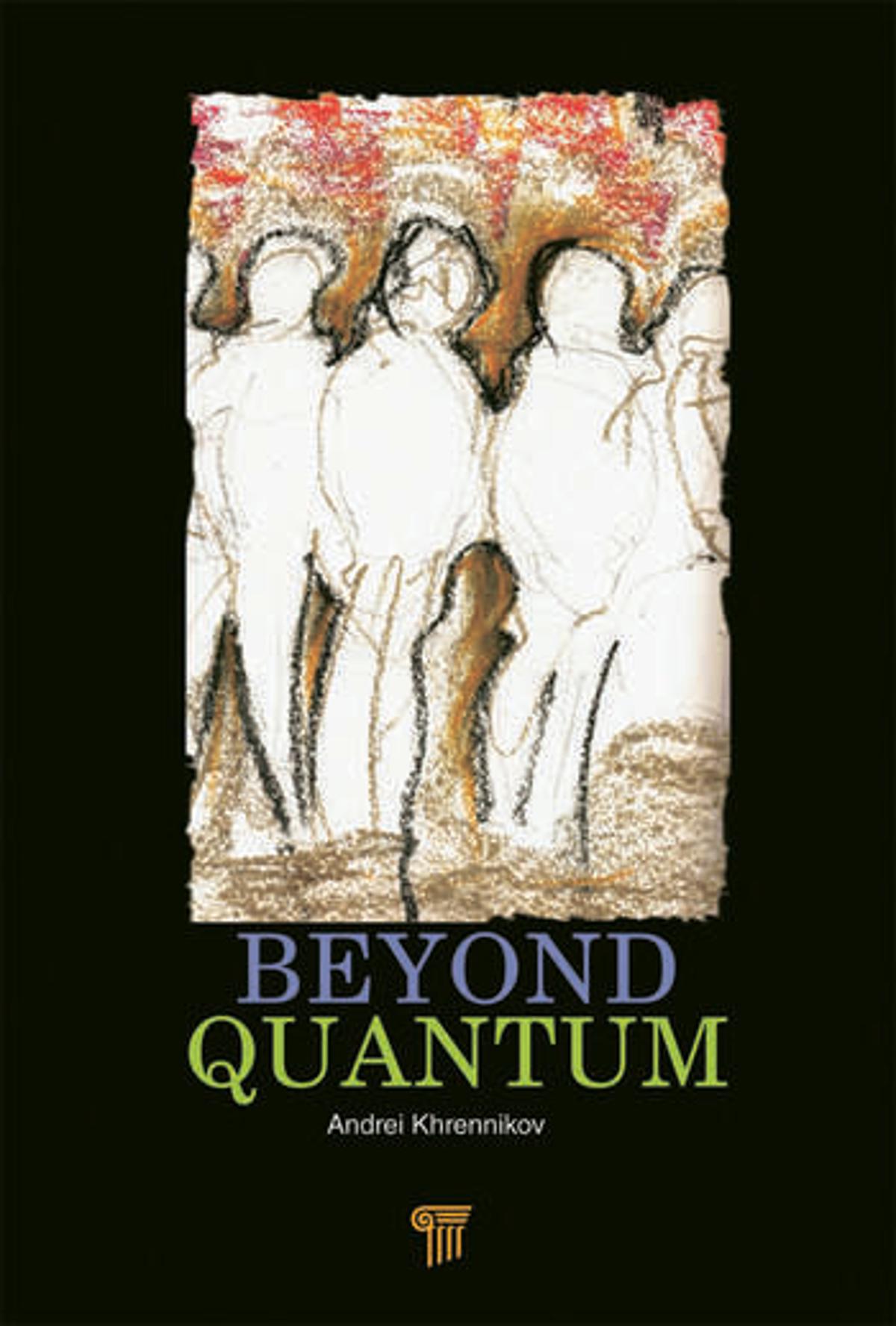
Beyond Quantum with Khrennikov
Comments
Want to join the conversation?