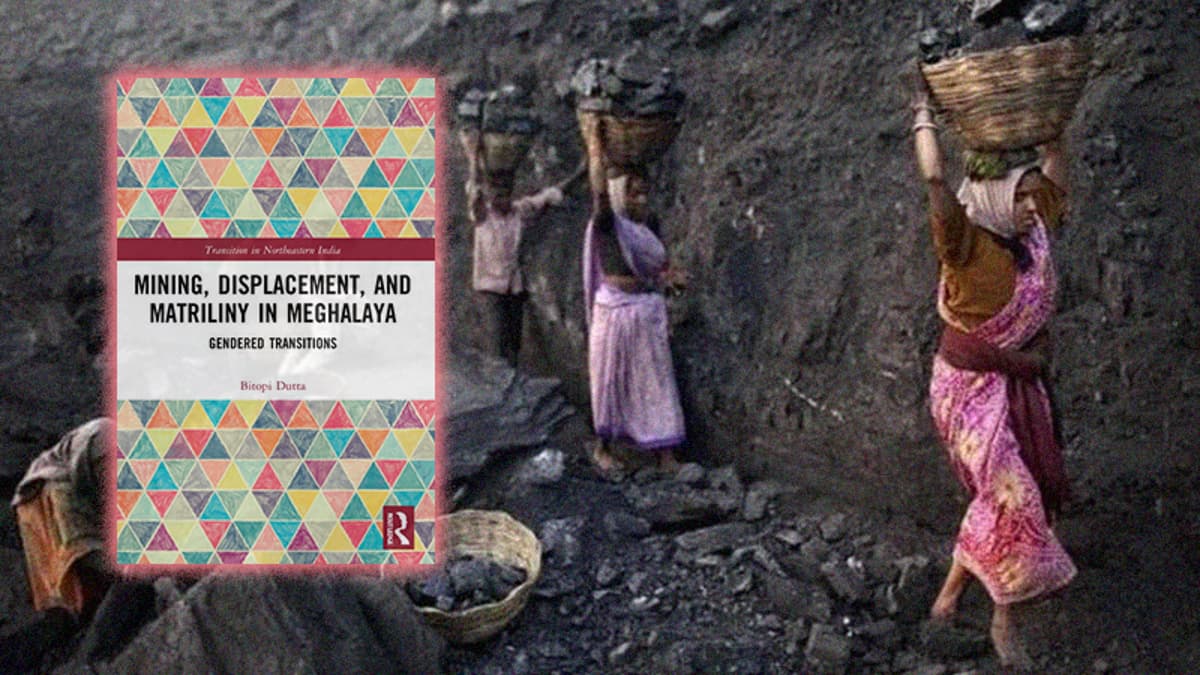
Resisting Mining Book Club: “Mining, Displacement, and Matriliny in Meghalaya: Gendered Transitions” With Bitopi Dutta
•March 11, 2026
0
Key Takeaways
- •Mining displaces communities, reshaping gender roles in Meghalaya
- •Matrilineal societies face unique pressures from urbanisation
- •Book draws on extensive interviews with affected individuals
- •Event invites public, no prior reading required
Summary
London Mining Network’s third Resisting Mining Book Club of 2026 will feature Bitopi Dutta discussing her 2023 Routledge India title, *Mining, Displacement, and Matriliny in Meghalaya: Gendered Transitions*. The book examines how development‑induced displacement from mining reshapes gender relations in Meghalaya’s rare matrilineal societies, drawing on extensive interviews with affected residents. Dutta, an assistant professor at UPES and an award‑winning filmmaker, will deliver an introductory lecture followed by a public Q&A. Registration is open and no prior reading is required.
Pulse Analysis
Mining in the Indian state of Meghalaya has triggered a wave of development‑induced displacement that goes beyond land loss, fundamentally altering gender hierarchies in one of the world’s few matrilineal societies. As traditional livelihoods give way to urban‑centric economies, women and men experience divergent pressures on family structures, inheritance patterns, and social status. Bitopi Dutta’s research captures these shifts through in‑depth interviews, revealing how mining reshapes identity, inter‑generational expectations, and community cohesion in ways that standard economic impact studies often overlook.
The book’s contribution lies in its interdisciplinary blend of anthropology, gender studies, and displacement research, offering policymakers a nuanced lens for evaluating mining projects. By documenting lived experiences, Dutta provides evidence that can inform more equitable compensation frameworks, gender‑sensitive resettlement plans, and safeguards for matrilineal customs. The findings resonate beyond Meghalaya, prompting a re‑examination of how extractive industries intersect with indigenous governance structures across South Asia and other matrilineal contexts worldwide.
London Mining Network’s upcoming Book Club session creates a platform for scholars, activists, and industry stakeholders to engage directly with these insights. The open‑access format encourages broader public participation, fostering dialogue that bridges academic research and on‑the‑ground advocacy. As the conversation expands, it may inspire further research collaborations, policy revisions, and community‑led initiatives aimed at mitigating the gendered impacts of mining in vulnerable regions.
Comments
Want to join the conversation?