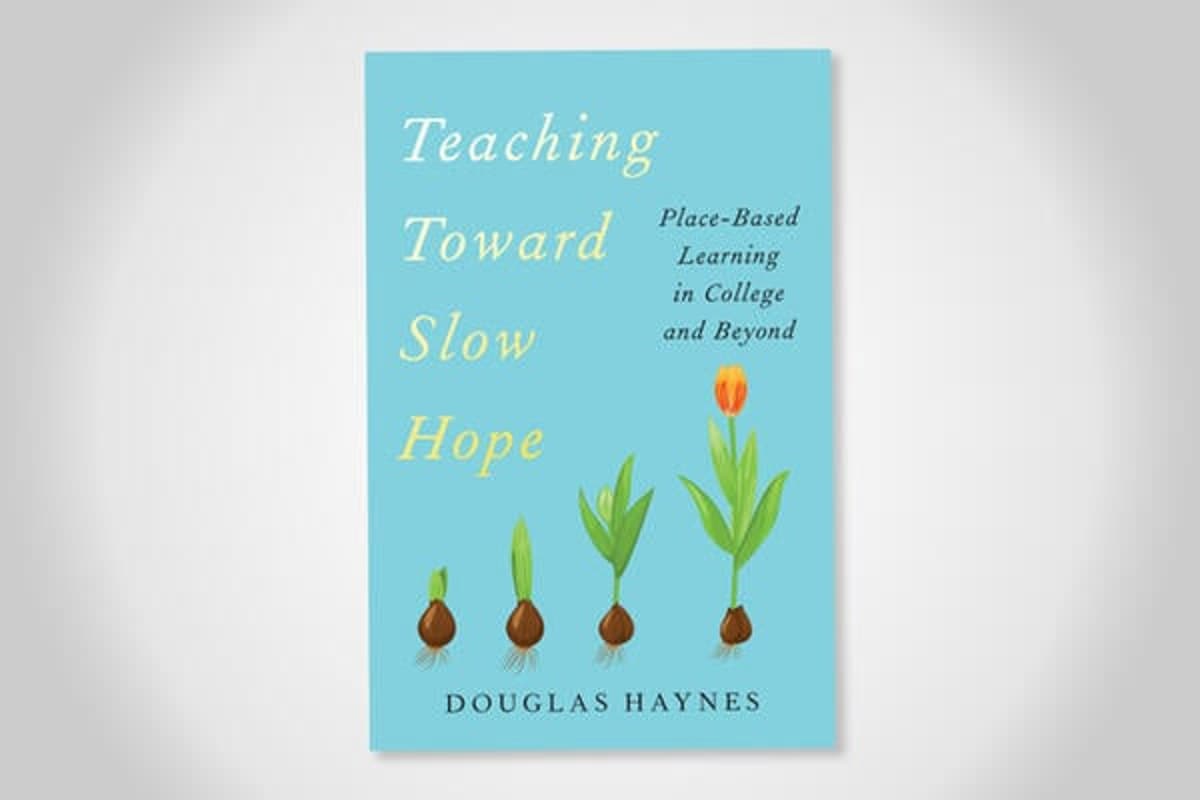
Teaching Toward Slow Hope
•March 11, 2026
0
Key Takeaways
- •Transactional education stifles student agency.
- •Place‑based learning fosters community and collaboration.
- •Slow hope counters AI‑driven shortcut culture.
- •Inequities persist across institution types.
- •Collaboration builds resilience and belonging.
Summary
Douglas Haynes’s new book *Teaching Toward Slow Hope* argues that the prevailing transactional model of higher education undermines student agency and well‑being. Drawing on place‑based learning experiments at regional colleges, the book showcases how community, collaboration and a slower, reflective pace can nurture hope amid economic, ecological and AI‑driven pressures. Haynes, an English professor at UW‑Oshkosh, blends ethnographic fieldwork with personal narrative to map practical capacities—listening, reciprocity, collaboration, wandering—that re‑center education on whole‑person development. The work arrives as institutions grapple with rising costs, mental‑health crises, and the lure of AI shortcuts.
Pulse Analysis
Higher education faces a paradox: soaring tuition and AI‑enabled tools promise efficiency, yet students report burnout, financial strain, and a loss of purpose. Haynes’s *Teaching Toward Slow Hope* confronts this tension by exposing the limits of a transactional, grade‑centric system. He argues that when learning is reduced to a series of right‑answer checkpoints, it erodes critical thinking and discourages risk‑taking. The book’s timing is crucial, as universities seek strategies to retain relevance while safeguarding student mental health and resisting the temptation to outsource thinking to generative AI.
The core of Haynes’s proposal is place‑based, community‑oriented pedagogy. By embedding courses in local farms, health hubs and culinary labs—as exemplified by Kalamazoo Valley Community College—students experience collaboration that extends beyond the classroom. These “capacities” of listening, reciprocity, wandering and especially collaboration transform abstract theory into tangible problem‑solving. Such models not only deepen engagement but also provide pathways for low‑income and first‑generation students to acquire real‑world skills, fostering a sense of belonging that traditional lecture formats often miss.
For policymakers and administrators, the book offers a pragmatic blueprint for scaling slow hope across diverse campuses. Investing in interdisciplinary hubs, reducing class sizes for experiential seminars, and allowing time for reflective dialogue can mitigate inequities highlighted between flagship and regional institutions. As AI tools become ubiquitous, cultivating a slower, deliberative educational rhythm becomes a competitive advantage, producing graduates who can navigate complex societal challenges with empathy and collaborative acumen. Embracing this paradigm shift may redefine the purpose of higher education for the next generation.
Comments
Want to join the conversation?