Key Takeaways
- •Ivy's political intrigue deepens, showcasing ruthless queenly strategy.
- •The Otherworld's vivid cruelty elevates the series' gothic fantasy tone.
- •Romance pacing accelerates, delivering a satisfying heat after slow burn.
- •Supporting cast gains depth, enhancing court politics and emotional stakes.
- •Minor pacing issues in Bath section prevent flawless narrative flow.
Pulse Analysis
The Thorn Queen arrives at a moment when publishers are capitalizing on the crossover appeal of Victorian‑styled fantasy and dark faerie lore. Readers hungry for lush world‑building and high‑stakes court drama have driven titles like Holly Black’s The Cruel Prince to bestseller status, and Smith’s sequel taps that momentum with a meticulously rendered 1848 England that feels both historically grounded and magically menacing. By anchoring the narrative in recognizable social hierarchies while introducing an Otherworld of brutal enchantments, the book positions itself to attract both traditional historical romance fans and the growing audience for gritty, morally ambiguous fantasy.
Smith’s narrative choices sharpen the series’ literary edge. The first‑person present tense delivers immediacy, and the interspersed chapters from Emmett, Lydia, and the ladies‑in‑waiting broaden perspective without diluting Ivy’s voice. The Otherworld’s sensory details—gold‑capped acorns, biting faerie wine, double moons—function as marketable hooks that reviewers frequently cite, boosting discoverability on recommendation algorithms. Character arcs evolve beyond archetype: Ivy becomes a calculated queen, Emmett wrestles with survivor guilt, and Lydia’s ascent to faerie royalty adds a fresh power dynamic. These layered developments satisfy readers seeking depth beyond the romance, encouraging longer engagement and repeat purchases across the duology.
From a commercial standpoint, The Thorn Queen’s alignment with proven genre formulas makes it a strong candidate for multi‑format exploitation. Its four‑star average and favorable comparisons to titles like Once Upon a Broken Heart suggest robust sales potential in both print and digital channels. Retailers can leverage the book’s gothic aesthetic for in‑store displays, while marketing teams might pitch the series for streaming adaptation, given its cinematic court intrigue and vivid Otherworld visuals. Positioning the duology as a complete, self‑contained narrative also appeals to subscription services looking for concise, binge‑ready content, further expanding its revenue footprint.
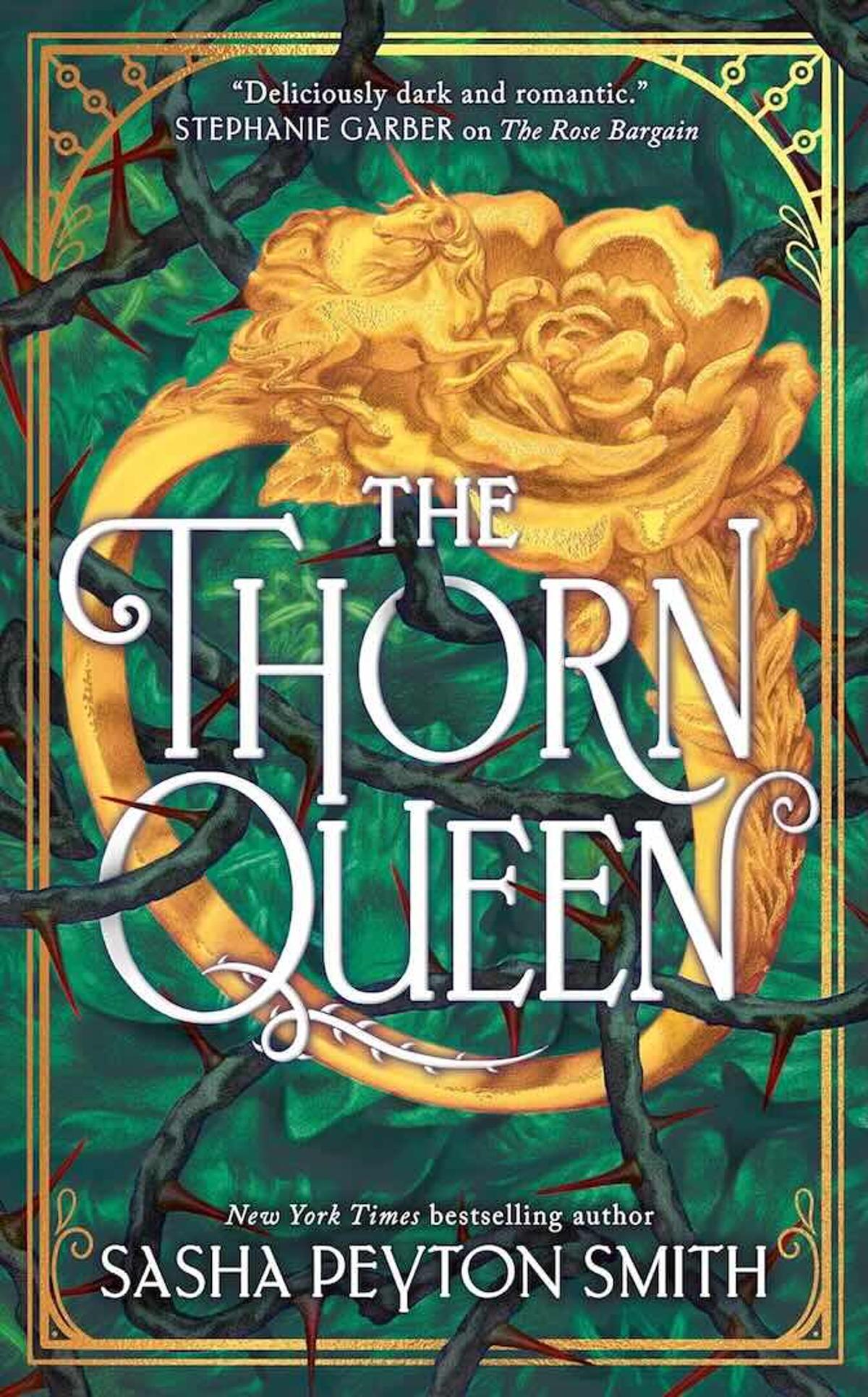
The Thorn Queen by Sasha Peyton Smith
Comments
Want to join the conversation?