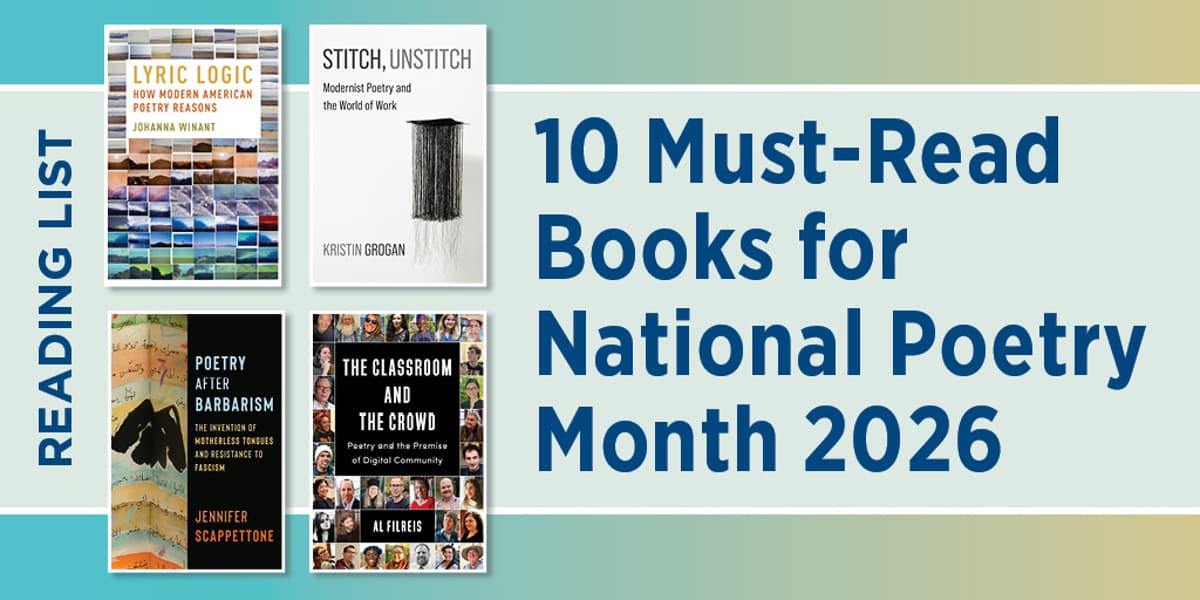
10 Must-Read Books for National Poetry Month 2026
Why It Matters
The collection underscores poetry’s relevance to contemporary social issues and education, offering scholars, teachers, and readers fresh lenses on how verse shapes and reflects public discourse. It signals a growing demand for interdisciplinary literary works that bridge art, politics, and technology.
Key Takeaways
- •Stitch, Unstitch links modernist poetry to everyday labor and gender
- •Lyric Logic shows poems use logical structures as literary form
- •The Classroom and the Crowd notes 435k learners in free poetry courses
- •Poetry in General maps post‑war poetry’s move into public politics and privatization
- •I’ll Get Right On It blends climate crisis with diverse working‑life poetry
Pulse Analysis
National Poetry Month’s 30th anniversary arrives at a moment when poetry is being re‑examined through the prisms of work, technology, and environmental urgency. The ten‑book reading list curated for 2026 reflects this shift, offering scholars and casual readers alike a roadmap to the discipline’s expanding boundaries. From Grogan’s materialist reading of modernist labor to Finberg’s exploration of polyglot resistance, the selections illustrate how verse can interrogate gendered economies, philosophical logic, and the politics of language.
Digital pedagogy emerges as a central theme, highlighted by Al Filreis’s account of the free ModPo course that has attracted over 435,000 participants from 179 countries. This unprecedented reach demonstrates how online platforms democratize access to experimental poetry, fostering a global community that mirrors democratic ideals. Meanwhile, works like "Poetry in General" trace the post‑war migration of poetry from elite print circles into public policy debates, revealing a persistent drive to make verse a civic instrument.
The anthology "I’ll Get Right On It" brings the climate crisis into the poetic conversation, amplifying voices of marginalized workers whose livelihoods are reshaped by environmental change. By pairing ecological anxiety with lived labor experiences, the collection offers a template for future literary activism. Collectively, these books signal a renaissance in poetry publishing, where interdisciplinary scholarship, digital outreach, and urgent social themes converge to attract new audiences and reaffirm poetry’s cultural vitality.
10 Must-Read Books for National Poetry Month 2026
Comments
Want to join the conversation?
Loading comments...