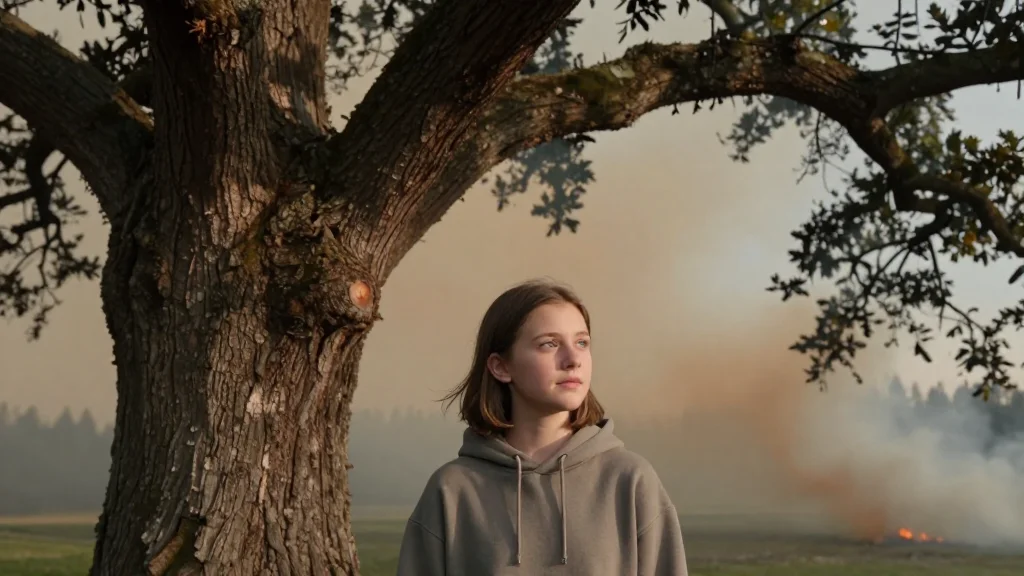
Book Review: ‘When Tomorrow Burns,’ by Tae Keller
Why It Matters
The novel signals a shift in children’s literature toward tackling climate and sociopolitical issues, offering parents and educators a tool to discuss complex topics with teens.
Key Takeaways
- •Keller blends climate anxiety with middle‑school romance.
- •Diverse family structures highlighted through Arthur’s two dads.
- •Story tackles bullying amid post‑COVID societal tension.
- •Talking tree motif frames environmental and personal growth.
Pulse Analysis
Tae Keller, the 2022 Newbery Medalist for “The Science of Breakable Things,” returns with a novel that places climate anxiety at the heart of middle‑grade storytelling. “When Tomorrow Burns” uses Seattle’s persistent wildfire haze as a literal backdrop, echoing a growing catalog of climate‑focused fiction for readers aged 10‑14. Publishers have noted a surge in titles that pair environmental stakes with relatable protagonists, a trend that boosts shelf appeal and library acquisition budgets. Keller’s reputation for lyrical prose and nuanced character work positions the book to become a seasonal bestseller in both trade and school markets.
The narrative’s core trio reflects the diversity of contemporary families: Arthur lives with two dads, while Nomi’s scientific skepticism balances Violet’s digital immersion. By weaving bullying, post‑COVID uncertainty and a hint of proto‑fascist rhetoric into the plot, Keller gives educators a springboard for discussions on mental health, media literacy and civic responsibility. Such layered storytelling aligns with the increasing demand from parents for books that do more than entertain, offering a scaffold for conversations about identity, resilience and the collective burden of climate change.
From an industry perspective, the book’s hybrid of speculative elements—a talking tree that becomes a journal—and grounded social commentary exemplifies the ‘genre‑blending’ formula that drives cross‑category sales. Libraries report higher circulation for titles that address real‑world crises, and school districts are allocating funds for curricula that incorporate climate literacy. “When Tomorrow Burns” therefore not only expands Keller’s literary footprint but also reinforces a market shift toward purpose‑driven children’s literature, a segment projected to grow double‑digit percentages through 2028.
Book Review: ‘When Tomorrow Burns,’ by Tae Keller
Comments
Want to join the conversation?
Loading comments...