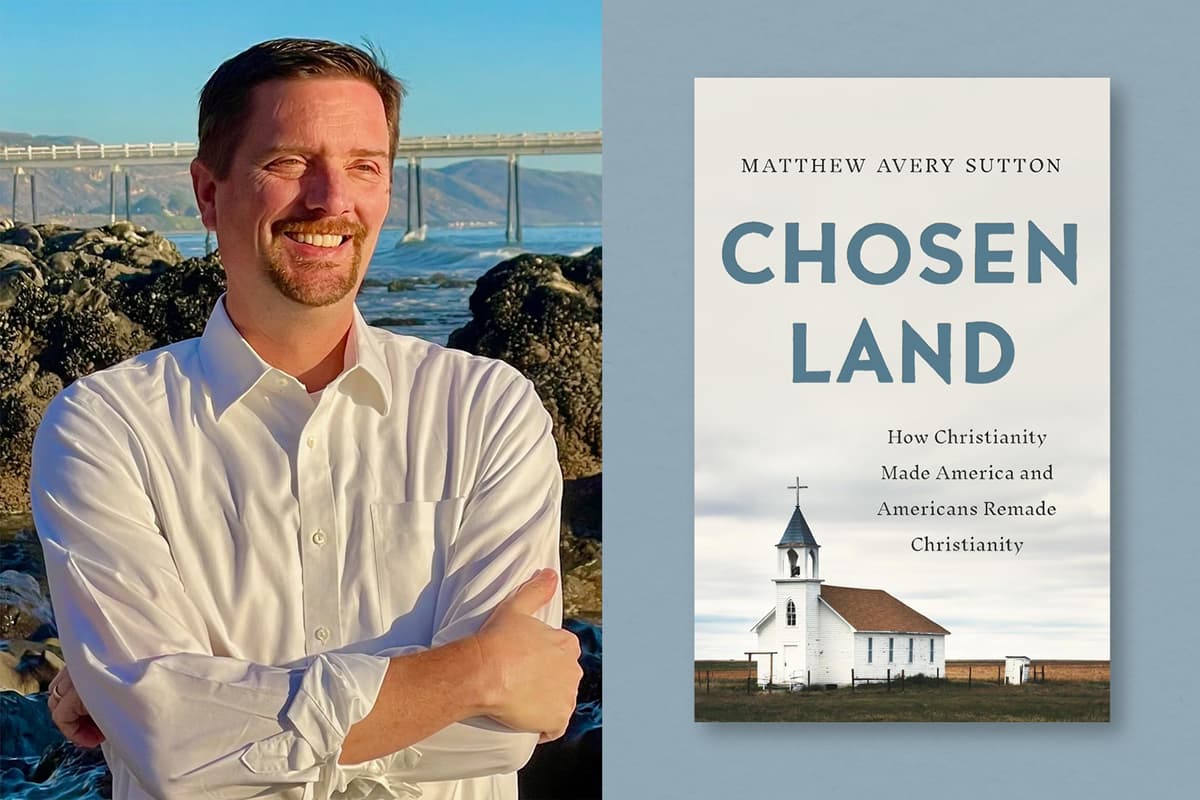
Christian Nationalism Isn’t a MAGA Aberration. Historian Matthew Sutton Says It’s the Whole American Story.
Why It Matters
It reframes the debate over religion in public life, showing that Christian nationalism has deep historical roots that affect current policy and electoral dynamics. Understanding this continuity helps policymakers, scholars, and voters assess the future trajectory of American governance.
Key Takeaways
- •Chosen Land surveys 500 years of Christianity shaping U.S. history.
- •Sutton argues Christian nationalism is a longstanding American force.
- •Book links early missionary work to modern MAGA religious rhetoric.
- •First Amendment viewed as pragmatic compromise, not strict secularism.
- •Historians praise the work’s ambitious synthesis of religious scholarship.
Pulse Analysis
Matthew Avery Sutton’s Chosen Land arrives at a symbolic moment—the United States’ 250th birthday—to map five centuries of Christian influence on the American experiment. Drawing on colonial mission records, Revolutionary-era debates, and 20th‑century evangelical surges, Sutton demonstrates how religious ideas have been woven into the nation’s legal and cultural fabric. He treats denominations as market competitors vying for adherents, a lens that reveals the pragmatic compromises embedded in the First Amendment. The book’s exhaustive footnotes and interdisciplinary sources position it as a reference point for scholars of religion, law, and political history.
The central thesis—that Christian nationalism is a constant, not a fringe phenomenon—reframes contemporary headlines about MAGA‑driven theocracy. Sutton traces a lineage from early Spanish missionaries and Puritan settlers to abolitionist sermons and 20th‑century televangelists, showing how biblical rhetoric has repeatedly been mobilized to legitimize policy goals. By labeling the movement “productive” or “problematic,” he avoids moralizing and instead highlights its capacity to shape voter behavior, legislative agendas, and even foreign policy. This historical continuity explains why religious language resurfaces during crises, such as presidential inaugurations or national emergencies.
For policymakers and business leaders, the book offers a cautionary roadmap of how faith‑based lobbying can sway regulatory environments and market expectations. Recognizing the deep‑rooted partnership between church and state equips investors to anticipate shifts in sectors ranging from education to healthcare, where faith‑aligned legislation often emerges. Academics have praised Sutton’s ambitious synthesis, noting its potential to spark renewed debate on the proper balance between pluralism and tradition. As America grapples with demographic change, Chosen Land underscores that the question is not whether Christianity will influence the future, but how that influence will be negotiated.
Christian nationalism isn’t a MAGA aberration. Historian Matthew Sutton says it’s the whole American story.
Comments
Want to join the conversation?
Loading comments...