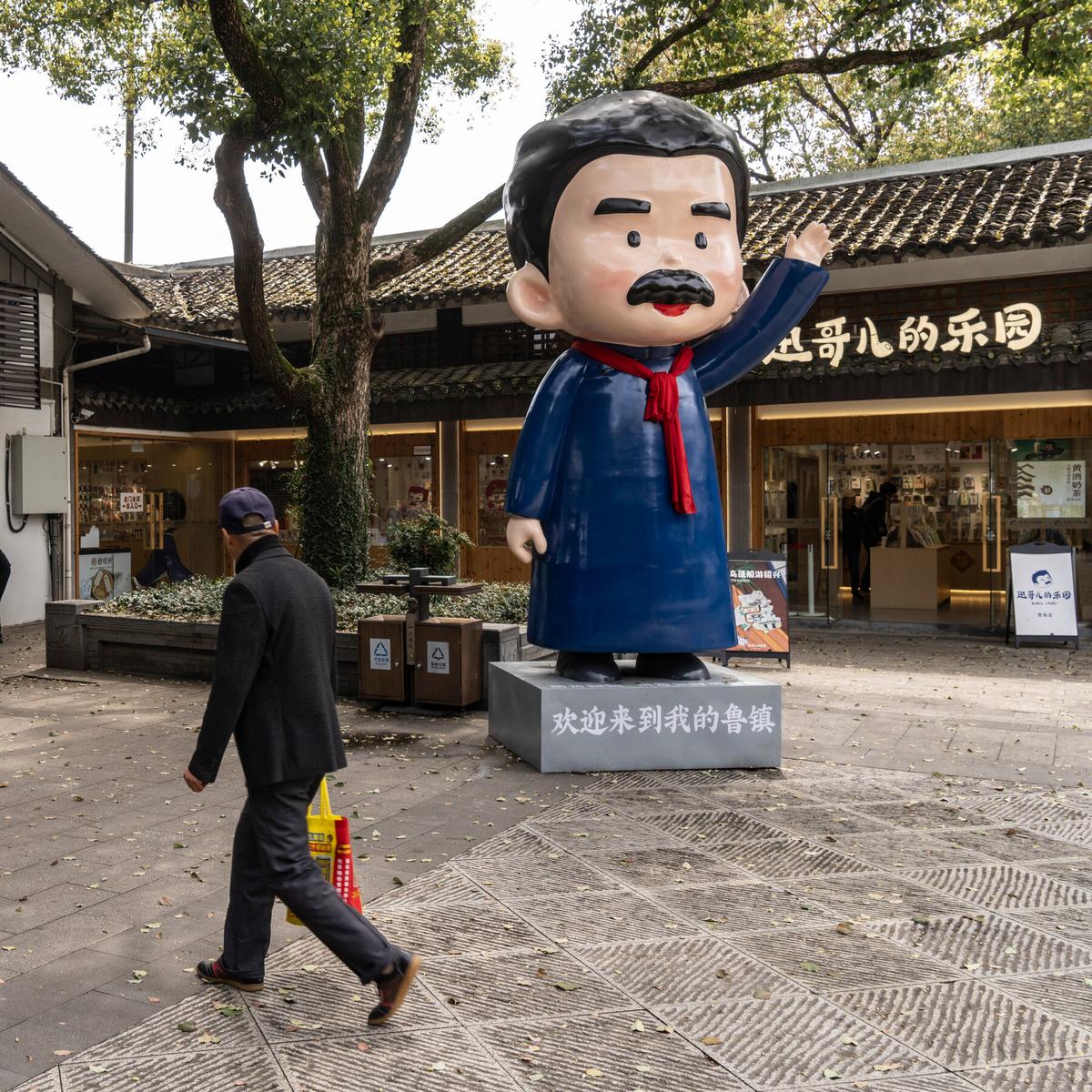
How Lu Xun, a Famous Chinese Writer, Became a Cute Communist Mascot
Why It Matters
The re‑branding signals the CCP’s ongoing effort to reshape historical figures for soft‑power and domestic cohesion, while turning cultural heritage into commercial tourism assets.
Key Takeaways
- •Lu Xun’s rebel image softened into cartoon mascot for tourists.
- •State‑approved souvenirs feature his likeness on magnets and murals.
- •Mao’s 1940 endorsement cemented Lu Xun’s political cult status.
- •Rebranding illustrates CCP’s use of heritage for propaganda and revenue.
Pulse Analysis
Lu Xun occupies a singular place in modern Chinese literature, celebrated for his scathing essays that exposed the decay of Confucian values and the humiliation of foreign aggression in the early 20th century. His work helped shape the intellectual climate that later fed into revolutionary thought, earning him posthumous admiration from the Chinese Communist Party. Mao Zedong’s 1940 proclamation elevated Lu Xun from literary figure to ideological icon, embedding his name in school curricula and state narratives for decades.
In Shaoxing today, that iconic status is being translated into a consumer-friendly brand. Brightly colored refrigerator magnets, cartoon‑style murals and souvenir T‑shirts present a sanitized, almost childlike version of the once‑combative writer. Local authorities and state‑run retailers promote these items as part of a broader cultural tourism push, leveraging Lu Xun’s fame to attract domestic visitors and boost municipal revenues. The visual transformation aligns with Beijing’s wider cultural policy that repackages historical personalities to fit contemporary political messaging while generating economic spillovers.
The phenomenon illustrates how the CCP continues to weaponize heritage for soft‑power objectives. By recasting a once‑radical critic as a cuddly mascot, the party not only reinforces its claim to historical continuity but also creates a marketable symbol that can be deployed in education, media and retail. This dual strategy of ideological reinforcement and commercial exploitation reflects a broader trend in China’s cultural governance, where the line between propaganda and profit is increasingly blurred, shaping public perception of the nation’s past and its future trajectory.
How Lu Xun, a Famous Chinese Writer, Became a Cute Communist Mascot
Comments
Want to join the conversation?
Loading comments...