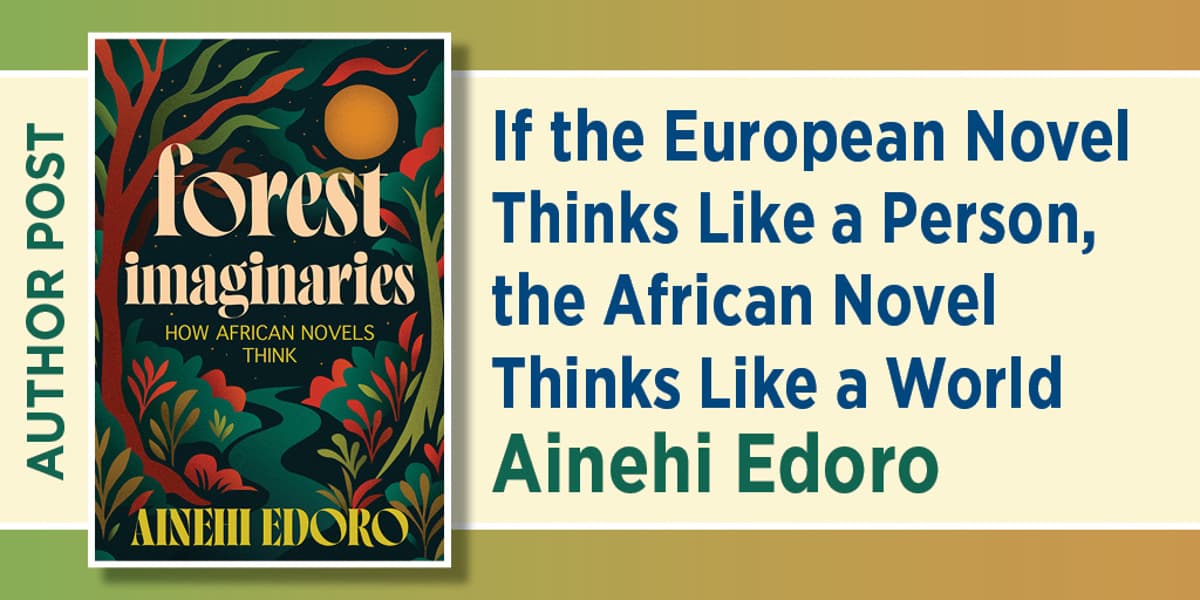
If the European Novel Thinks Like a Person, the African Novel Thinks Like a World Ainehi Edoro
•February 28, 2026
0
Why It Matters
Understanding African novelistic strategies reshapes literary theory and broadens global publishing perspectives, highlighting alternative narrative logics beyond Western individualism.
Key Takeaways
- •African novels prioritize distributed agency over singular protagonists
- •Narratives embed ecological, ancestral, and material forces as characters
- •Forests function as experimental spaces for world‑building
- •Western individualism stems from specific European historical conditions
- •World‑thinking expands narrative possibilities for readers and scholars
Pulse Analysis
European modernism elevated the individual as the narrative engine, a shift traced to liberal philosophy and the rise of capitalism. Virginia Woolf’s metaphor of Mrs. Brown illustrates how the Western novel trains readers to locate desire and meaning within a single interior consciousness. Critics have long measured global literature against this template, often marginalizing works that do not conform to the individual‑hero paradigm.
African fiction, by contrast, cultivates a "world‑thinking" sensibility where agency is distributed across multiple layers of being. Scholars like Cajetan Iheka describe this as "distributed agency," where land, animals, climate, and ancestral spirits act as active participants in plot development. Novels such as Tutuola’s *The Palm‑Wine Drinkard* and Okri’s *The Famished Road* demonstrate how characters move through overlapping realms, allowing the narrative to reflect complex, interwoven forces rather than a solitary perspective.
The implications extend beyond academia. Publishers and readers attuned to these spatial logics gain access to richer storytelling ecosystems that mirror contemporary concerns about climate, digital networks, and collective identity. By foregrounding forests, markets, and communal rituals as narrative scaffolds, African authors offer a template for literature that negotiates power, history, and imagination simultaneously. Embracing this approach can diversify the global literary market and inspire new forms of narrative experimentation.
If the European Novel Thinks Like a Person, the African Novel Thinks Like a World Ainehi Edoro
0
Comments
Want to join the conversation?
Loading comments...