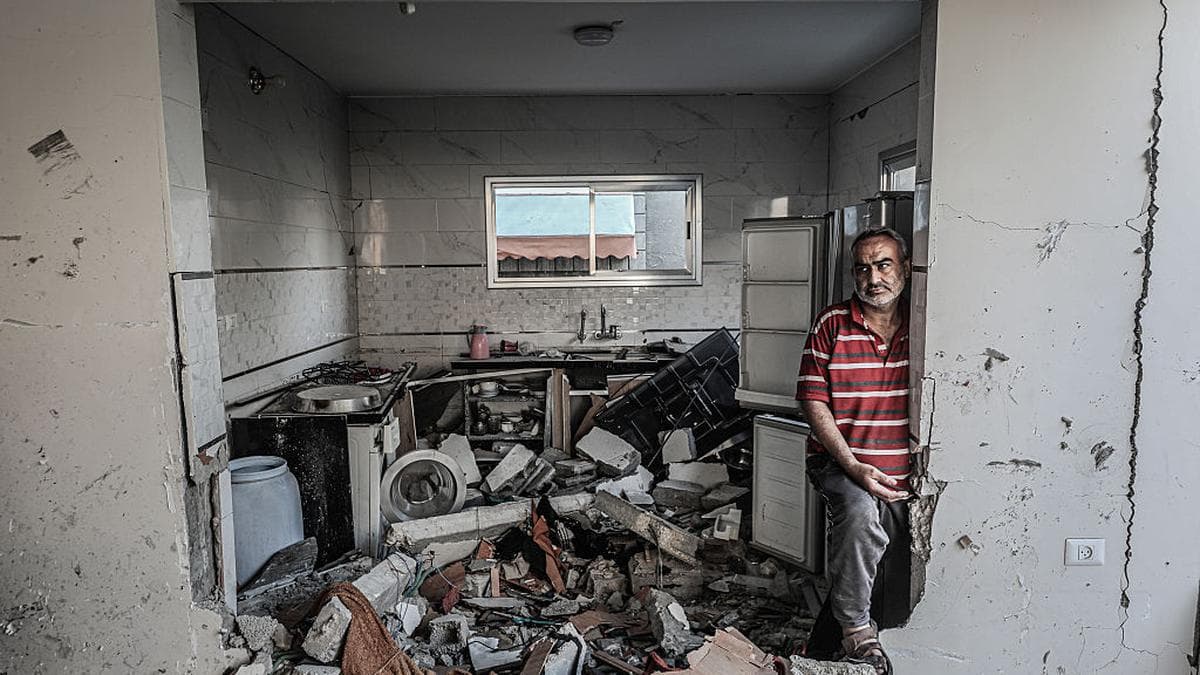
Interview | ‘The Loss of Palestine Defined My Father’s Life’: Author Hannah Lillith Assadi
Why It Matters
The recognition spotlights Palestinian diaspora stories in mainstream literary awards, expanding cultural dialogue and highlighting mixed‑heritage perspectives in American publishing.
Key Takeaways
- •Paradiso 17 long‑listed for the 2026 Women’s Prize for Fiction.
- •Narrative follows a Palestinian family's exile from Safad to the United States.
- •Assadi fulfills a promise to her late father by fictionalizing his story.
- •Book explores identity tensions of mixed Jewish‑Palestinian heritage in diaspora.
Pulse Analysis
Paradiso 17’s long‑list placement marks a rare moment for Palestinian‑centered fiction in a prize traditionally dominated by Western narratives. Hannah Lillith Assadi, a New York‑based writer of Jewish and Palestinian descent, channels her father’s displacement—from the 1948 loss of Safad through stints in Kuwait, Italy, and finally the United States—into a sweeping, character‑driven novel. By blending memoiric detail with literary imagination, she offers readers a visceral sense of exile while meeting the high‑brow standards of the Women’s Prize, positioning the work as both a personal tribute and a cultural artifact.
The novel arrives amid a growing appetite for diaspora literature that interrogates historical trauma through contemporary lenses. Palestinian authors have long struggled for visibility in mainstream publishing; Assadi’s success signals a shift toward broader acceptance of stories that confront the Nakba and its lingering psychological scars. Her dual heritage allows her to navigate the fraught terrain of identity, presenting a nuanced portrait that resonates with readers familiar with mixed‑heritage complexities. Critics note that such works serve as collective memory, preserving oral histories that might otherwise fade.
From a market perspective, the Women’s Prize long‑list can dramatically boost sales, translation deals, and library acquisitions, especially for titles that address under‑represented voices. Publishers are likely to scout similar narratives, anticipating both critical acclaim and commercial viability. For readers, Paradiso 17 offers an entry point into the lived realities of displacement, encouraging empathy and dialogue across cultural lines. As award momentum builds, the novel could catalyze further investment in Middle‑Eastern stories, enriching the literary ecosystem with diverse perspectives.
Interview | ‘The loss of Palestine defined my father’s life’: author Hannah Lillith Assadi
Comments
Want to join the conversation?
Loading comments...