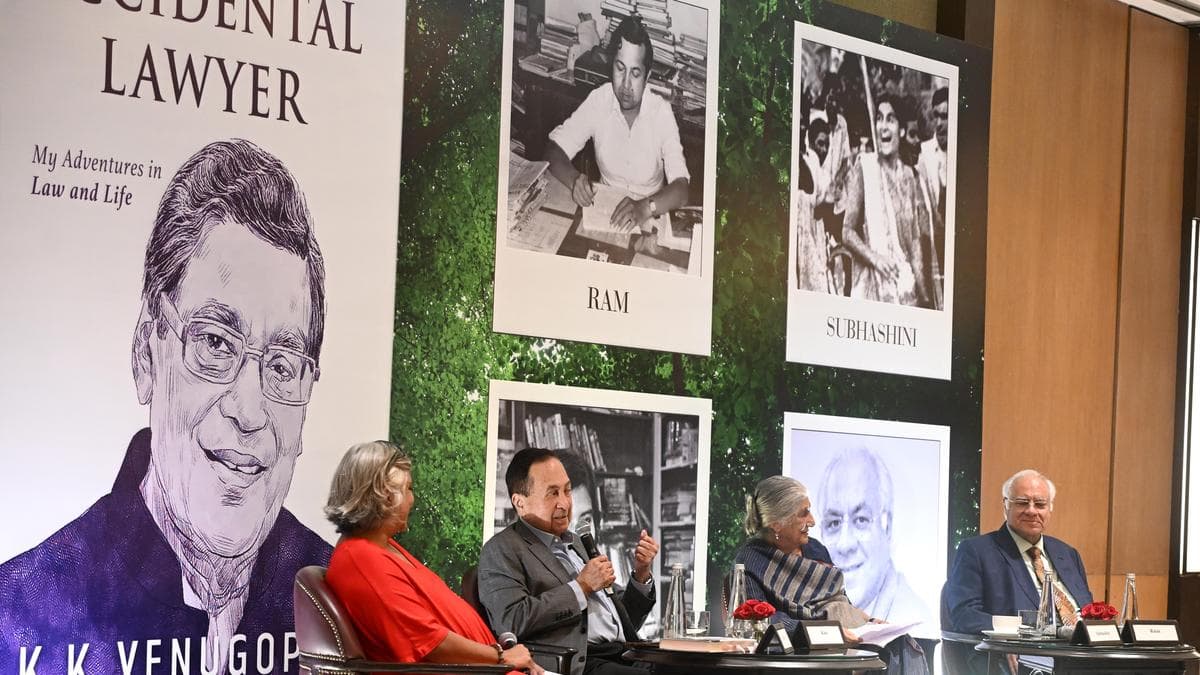
K.K. Venugopal Biography an Attempt to Come to Terms with Himself: N. Ram
•March 10, 2026
0
Why It Matters
The memoir offers rare insight into the mindset of India’s former top law officer, shaping public perception of pivotal legal‑political events. Its selective narrative also sparks debate on accountability and transparency for senior officials.
Key Takeaways
- •Venugopal labels himself an “accidental lawyer” in memoir
- •Book recounts 1984 anti‑Sikh riots and Babri Masjid demolition
- •N. Ram praises memoir’s self‑discovery angle
- •Critics note omission of many tenure controversies
- •Memoir blends personal life, wanderlust, and legal cases
Pulse Analysis
Autobiographies by senior jurists have become a distinctive genre in India, blending personal confession with professional chronicle. By positioning himself as an "accidental lawyer," K.K. Venugopal joins a lineage that includes Nehru’s *Discovery of India* and Gandhi’s *My Experiments with Truth*, offering readers a window into the inner workings of the nation’s legal apparatus while satisfying a growing appetite for behind‑the‑scenes narratives.
The memoir’s most compelling sections revisit two watershed moments: the 1984 anti‑Sikh riots and the 1992 Babri Masjid demolition. Venugopal’s first‑hand recollections provide nuanced context that textbooks often lack, illustrating how legal counsel navigated communal tension, governmental pressure, and personal conscience. By admitting to “hanging his head in shame” over the Babri episode, he adds a human dimension to events that continue to shape Indian politics and jurisprudence.
However, the book’s silence on several controversies from his 2017‑2022 Attorney General tenure has drawn sharp criticism from figures like Subhashini Ali. This selective storytelling raises questions about the responsibilities of public officials to disclose uncomfortable truths, especially in an era demanding greater transparency. The tension between memoir’s marketability and its duty to historical completeness will likely influence how future legal autobiographies are received by both the legal community and the broader public.
K.K. Venugopal biography an attempt to come to terms with himself: N. Ram
0
Comments
Want to join the conversation?
Loading comments...