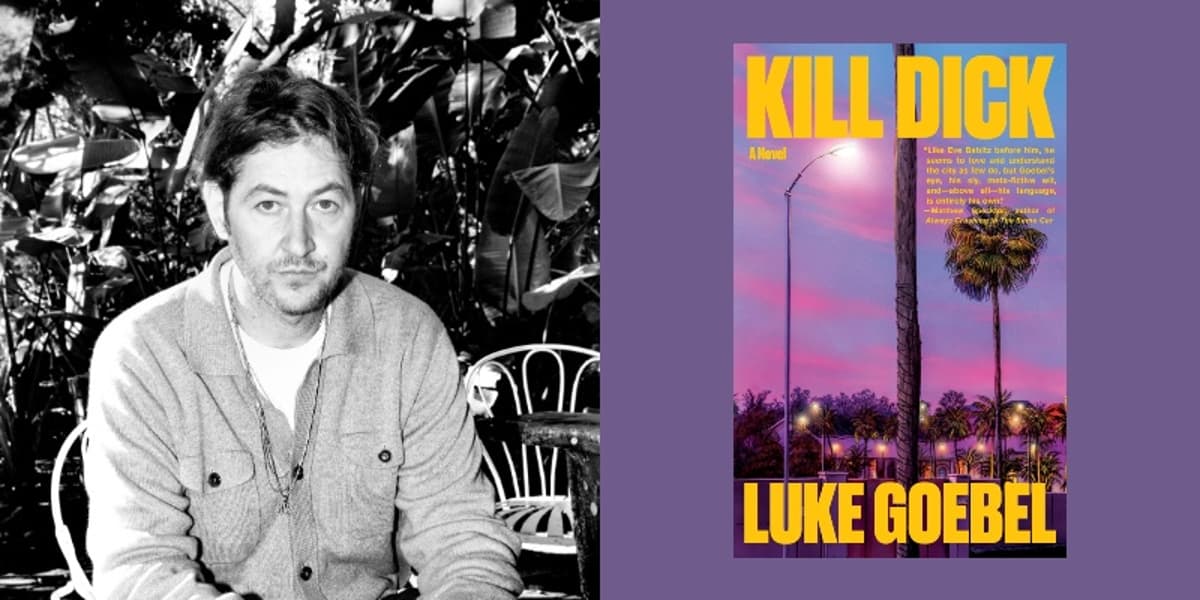
Luke Goebel on Weaponized Fatigue and the Necessity of Violence in His New Novel
Companies Mentioned
Why It Matters
The novel spotlights a growing cultural dilemma—how to capture attention when audiences are numb—offering a provocative template for creators navigating the attention economy. Its approach signals a shift toward more confrontational storytelling as a response to media saturation.
Key Takeaways
- •Kill Dick targets media‑induced shock fatigue with graphic intensity.
- •Novel mirrors systemic violence through a female protagonist, Susie Vogelman.
- •Goebel argues escalation, not subtlety, breaks attention overload.
- •Book leverages the same channels it critiques to force engagement.
- •Highlights challenges for creators in an attention economy driven by distraction.
Pulse Analysis
In today’s hyper‑connected landscape, constant streams of headlines, memes, and alerts have conditioned many readers to a state of "shock fatigue," where even the most harrowing news fails to provoke a visceral response. Scholars of media psychology note that repeated exposure blunts emotional resonance, turning tragedy into background noise. Goebel’s *Kill Dick* taps into this phenomenon, positioning the novel as a deliberate antidote: a work that amplifies the very stimuli that have become numbing, forcing the brain to re‑engage with raw, unfiltered content.
The narrative strategy hinges on transgressive elements—graphic murders, explicit sex, and financial scandal—delivered through a first‑person lens that immerses the reader in Susie Vogelman’s chemically and socially saturated existence. By making violence personal rather than abstract, Goebel mirrors how policy, distribution networks, and financial engineering inflict harm at scale. This literary inversion turns the novel into a mirror, reflecting the systemic brutality of the media ecosystem while simultaneously hijacking its channels to demand attention. Critics argue that such escalation risks alienating some audiences, yet the book’s intent is to fracture the complacent scrolling habit, creating a brief but undeniable cognitive jolt.
For publishers and content creators, *Kill Dick* illustrates a broader trend: the need to break through the noise with bold, often uncomfortable storytelling. As attention becomes the most valuable commodity, subtlety may no longer suffice. Works that deliberately disrupt the rhythm of forgetting—whether through heightened intensity, controversial themes, or immersive narrative techniques—could redefine how culture engages with pervasive media fatigue. Goebel’s approach, while polarizing, underscores a pivotal question for the industry: can shock be repurposed as a catalyst for meaningful dialogue rather than mere spectacle?
Luke Goebel on Weaponized Fatigue and the Necessity of Violence in His New Novel
Comments
Want to join the conversation?
Loading comments...