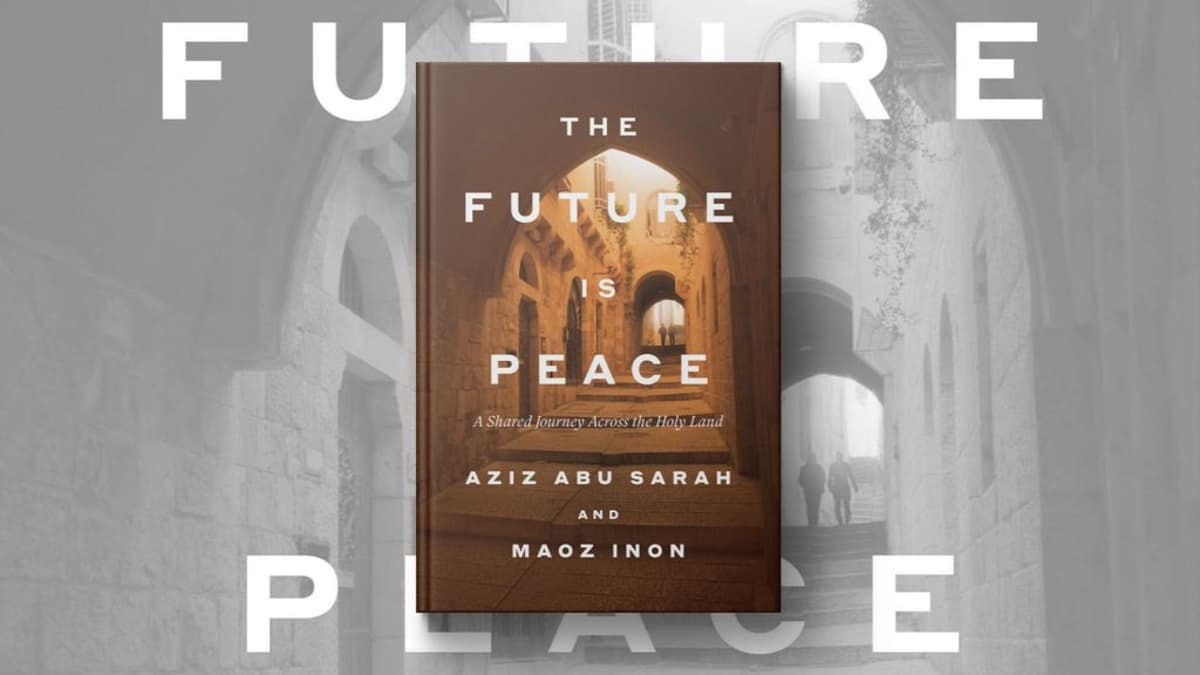
Palestinian and Israeli Writers Reflect on Bridging Divides in 'The Future Is Peace'
Why It Matters
The narrative demonstrates how personal storytelling can break entrenched animosities, offering a scalable template for grassroots peacebuilding in the Israeli‑Palestinian conflict and other protracted disputes.
Key Takeaways
- •Israeli and Palestinian co‑authors lost parents on Oct 7.
- •They began collaboration three days after the attack.
- •Book outlines an eight‑day journey across contested sites.
- •Difficult dialogues include Holocaust and 1948 displacement visits.
- •Their story models grassroots reconciliation for conflicted societies.
Pulse Analysis
The Israeli‑Palestinian conflict has long been framed by macro‑politics, yet the human dimension remains a potent catalyst for change. *The Future Is Peace* emerges from a rare convergence of personal tragedy and mutual empathy, illustrating how individuals directly affected by violence can rewrite the narrative. By documenting their joint pilgrimage through sites of historical trauma, the authors provide readers with a visceral sense of the conflict’s geography, turning abstract headlines into lived experiences that resonate across cultural divides.
Beyond memoir, the book functions as a practical guide for dialogue. Its eight‑day itinerary—spanning Gaza’s streets, Jerusalem’s holy quarters, and a Palestinian village razed in 1948—forces participants to confront uncomfortable histories, such as the Holocaust and the Nakba, in shared spaces. These structured encounters generate moments of cognitive dissonance that, when resolved, foster empathy and dismantle stereotypes. The authors’ method of pairing personal storytelling with on‑site education offers a replicable framework for NGOs, educators, and community leaders seeking to facilitate reconciliation in other entrenched conflicts.
The broader implication is clear: peacebuilding can begin at the individual level, scaling up through narrative diffusion. As global audiences engage with the authors’ journey, the book amplifies a message that transcends the Middle East—a call to replace cycles of retaliation with collaborative visioning. If embraced by policymakers and civil society alike, such grassroots narratives could inform diplomatic initiatives, enrich peace curricula, and ultimately shift public sentiment toward sustainable coexistence. The authors’ willingness to transform grief into hope underscores the transformative power of shared storytelling in reshaping even the most intractable disputes.
Palestinian and Israeli writers reflect on bridging divides in 'The Future is Peace'
Comments
Want to join the conversation?
Loading comments...