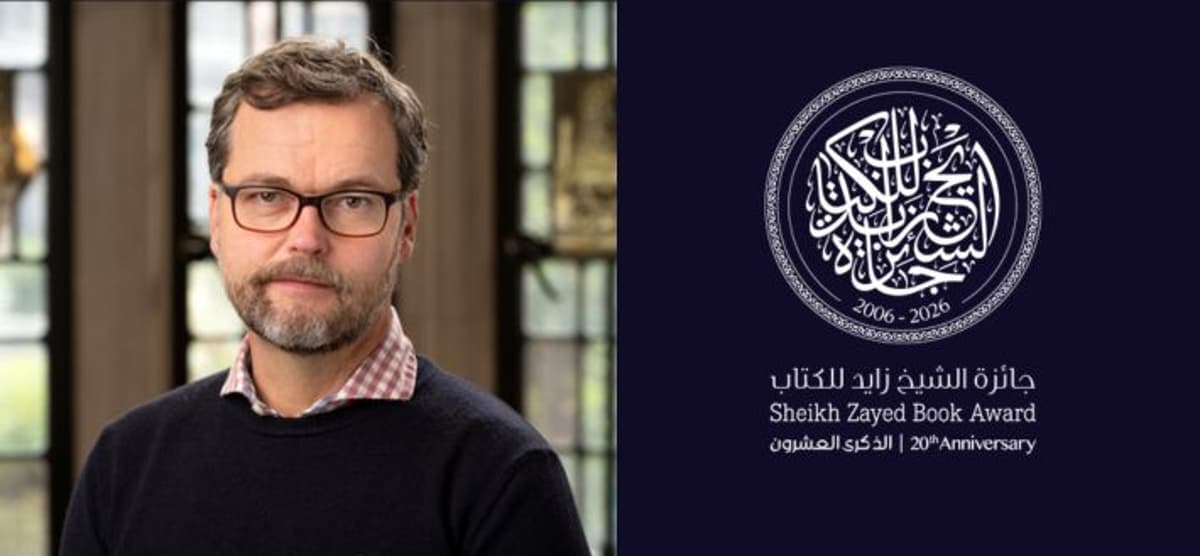
Philosophy Hiding in Plain Sight: A Profile of Scholar and Author Frank Griffel
Why It Matters
By overturning the long‑held view of an Islamic intellectual decline, Griffel’s study reshapes curricula and research on medieval philosophy, influencing both Western scholars and readers in the Arab world.
Key Takeaways
- •Al‑Ghazali’s critique rebranded philosophy as “hikma,” not ending it
- •Eastern Islamic scholars kept writing philosophy until the 18th century
- •Griffel’s book won the 2024 Sheikh Zayed Book Award
- •Translations into Arabic and Turkish broaden the work’s audience
- •The study opens new research avenues into post‑classical Islamic thought
Pulse Analysis
Frank Griffel’s “The Formation of Post‑Classical Philosophy in Islam” earned the prestigious 2024 Sheikh Zayed Book Award, signaling a rare crossover between academic rigor and public recognition in the Arab world. The monograph dismantles the entrenched Orientalist narrative that al‑Ghazali’s “Incoherence of the Philosophers” marked the death of Islamic philosophy. Instead, Griffel demonstrates that philosophical activity persisted, morphing into a distinct intellectual current that flourished in Iraq, Iran, and Central Asia for several centuries. This reframing forces historians to reconsider the timeline of Islamic intellectual vitality and its influence on later scientific developments.
A key insight is the linguistic shift from the Greek‑derived “falsafa” to the indigenous “hikma,” a change that stripped philosophy of foreign connotations while preserving its core inquiry. Griffel’s exhaustive survey of texts—from madrassa curricula to marginal commentaries—shows that scholars continued to engage with metaphysics, epistemology, and ethics well into the eighteenth century. By making the book available in Arabic and Turkish, the Sheikh Zayed Award’s translation grant bridges the gap between Western academia and the Arab readership that traditionally lacked access to such scholarship, fostering a two‑way dialogue.
The broader impact extends beyond historiography. Universities revising Middle‑Eastern philosophy courses now have a definitive source that validates a continuous tradition, encouraging interdisciplinary research that links Islamic thought to contemporary debates on rationality and modernity. Publishers see a growing market for nuanced works that challenge monolithic views of non‑Western intellectual history, while policymakers can draw on this richer narrative to promote cultural understanding. Griffel’s study thus not only reshapes scholarly consensus but also opens commercial and diplomatic avenues rooted in a more accurate portrayal of Islamic heritage.
Philosophy Hiding in Plain Sight: A Profile of Scholar and Author Frank Griffel
Comments
Want to join the conversation?
Loading comments...