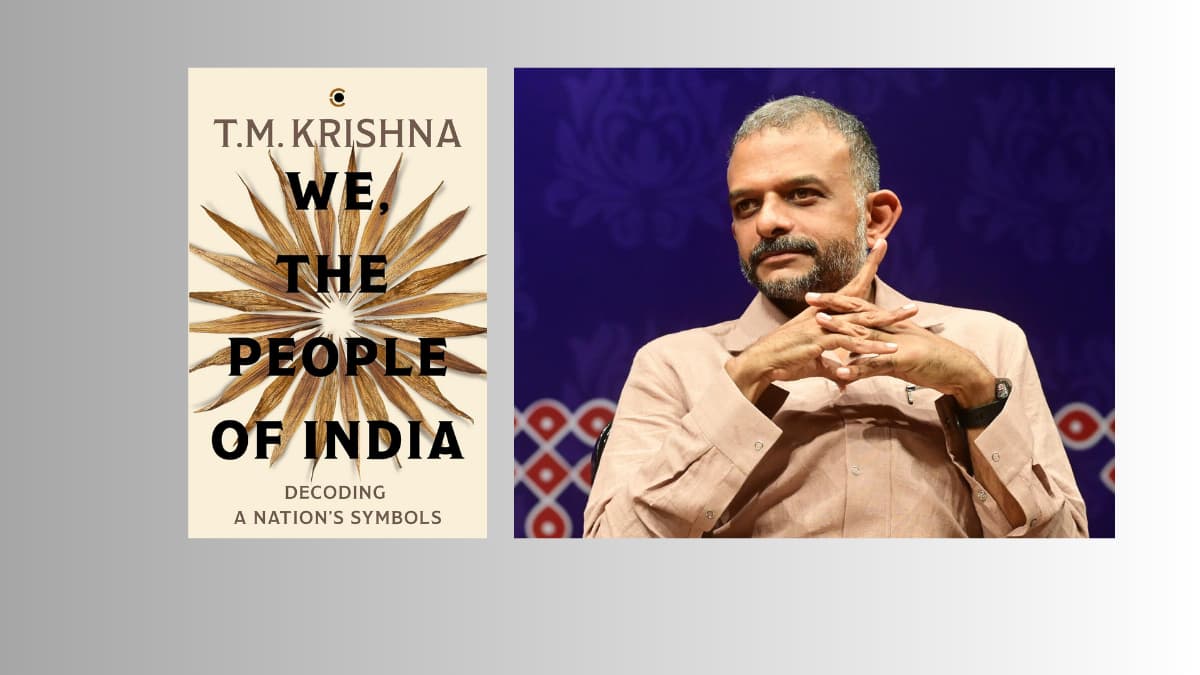
Reading the Republic | Review of T.M. Krishna’s We, the People of India
Why It Matters
By exposing the contested histories behind India’s national symbols, Krishna’s analysis offers citizens a framework to assess current democratic shortcomings and reinvigorate civic identity.
Key Takeaways
- •Krishna reimagines Ashokan edicts as multilingual songs
- •Restores full five‑stanza version of “Jana Gana Mana”
- •Book links historic symbols to contemporary democratic challenges
- •Details debates of Constituent Assembly on flag, emblem, motto
- •Combines scholarly research with activist commentary
Pulse Analysis
The Indian tricolour, the Lion Capital, the motto “Satyameva Jayate”, the anthem “Jana Gana Mana”, and the Constitution’s preamble are more than ceremonial artifacts; they encode centuries‑old philosophical and political choices. Their visual and textual elements draw directly from Ashoka’s 3rd‑century BCE edicts, Buddhist symbolism, and Sanskrit literature, while the anthem’s verses were penned by Rabindranath Tagore in 1911 and later codified at independence. Understanding how these symbols were debated by the Constituent Assembly—figures such as Motilal Nehru, Jawaharlal Nehru, Mahatma Gandhi, B.N. Rau, and Dr B.R. Ambedkar—reveals the pluralistic vision that underpins modern India.
Krishna’s interdisciplinary method bridges musicology, philology, and public history. His earlier *Edict Project* transformed ancient Ashokan proclamations into sung performances in Prakrit, Aramaic and Classical Greek, demonstrating that language can be heard as well as read. In the new volume he applies the same rigor to the national anthem, restoring its original five‑stanza structure and comparing it with the version used by Subhas Chandra Bose’s movement. By pairing scholarly footnotes with recordings, Krishna turns static symbols into lived experiences, inviting listeners to feel the ethical weight of non‑violence, justice and tolerance.
The book arrives at a moment when India’s democratic institutions face heightened scrutiny and civic fatigue. By exposing the contested origins and evolving meanings of the nation’s symbols, Krishna equips citizens with historical context to critique present‑day policy failures and to re‑affirm inclusive values. His blend of academic depth and activist urgency resonates with a growing audience seeking evidence‑based narratives about nationhood. Priced at roughly $11, *We the People of India* positions itself as an accessible yet scholarly resource for educators, policymakers, and culturally curious readers alike.
Reading the republic | Review of T.M. Krishna’s We, the People of India
Comments
Want to join the conversation?
Loading comments...