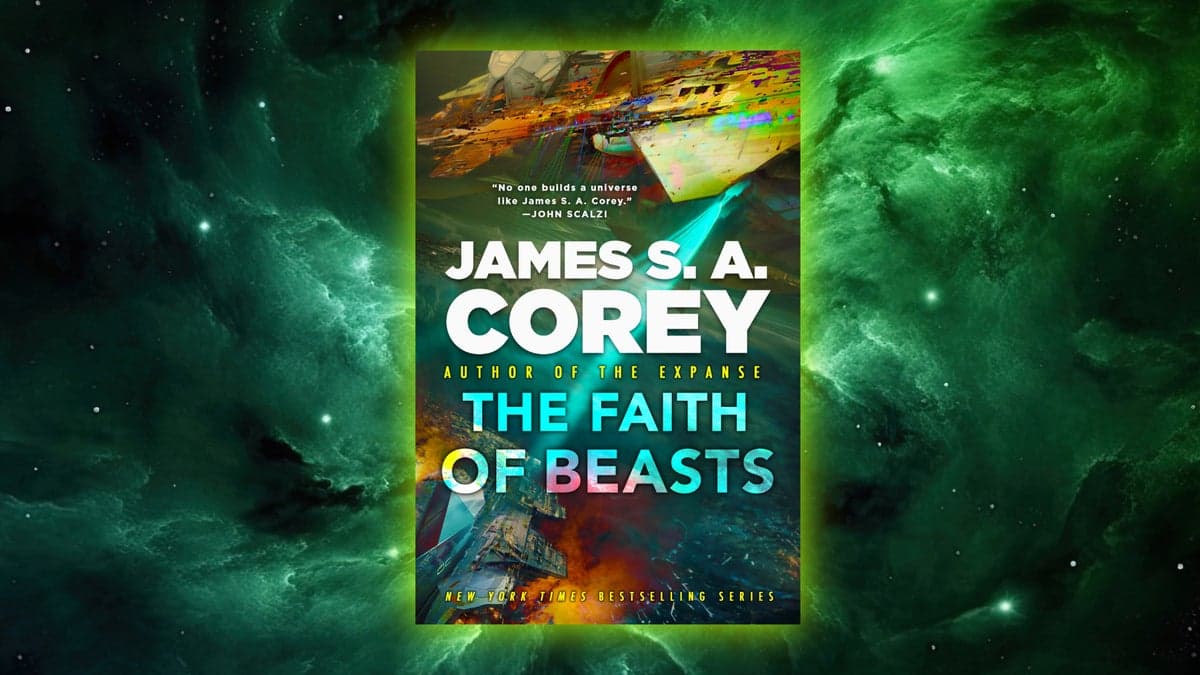
The Expanse Authors James S. A. Corey Explore Alien War in New Book The Faith of Beasts
Why It Matters
The novel signals a bold genre shift for a bestselling duo, expanding sci‑fi’s exploration of alien societies and soft power resistance, which could reshape reader expectations and industry trends.
Key Takeaways
- •The Faith of Beasts released this week, second in Captive’s War
- •Series depicts humans subjugated by a ruthless alien empire
- •Authors argue survival can be an act of resistance
- •Carryx hive introduces sentient superorganism with shifting individual status
- •Book parallels tenure‑track pressures with alien‑imposed existential stakes
Pulse Analysis
James S. A. Corey—actually the collaborative team of Daniel Abraham and Ty Franck—has built a reputation on sprawling, human‑focused space opera with *The Expanse*. Their latest venture, *The Captive’s War* series, pivots sharply toward an alien‑centric narrative, and the second installment, *The Faith of Beasts*, hit shelves this week. By abandoning near‑future realism for far‑future speculation, the authors tap into a growing appetite for speculative worlds where humanity is not the dominant force, positioning the book to attract both longtime fans and readers hungry for fresh sci‑fi concepts.
At the heart of *The Faith of Beasts* is a stark re‑imagining of resistance. Rather than glorifying armed uprising, the story emphasizes survival, adaptation, and subtle subversion as acts of defiance against an overwhelmingly powerful alien empire. The Carryx, a hive‑like superorganism whose members experience status‑driven physiological changes, and a bioluminescent swarm that can redefine its own personhood, serve as vehicles for probing cognition, identity, and the limits of agency. These speculative biology elements echo contemporary discussions in neuropsychology and philosophy, offering readers a layered meditation on what it means to be sentient in a non‑human framework.
From a market perspective, the book’s thematic boldness aligns with a broader industry trend toward nuanced alien‑invasion narratives that move beyond simple militaristic tropes. By weaving academic tenure‑track anxieties into an interstellar survival story, Abraham and Franck create a relatable metaphor that resonates with a professional audience. The novel’s release may encourage publishers to back more experimental sci‑fi projects, while its blend of literary ambition and genre accessibility positions it as a potential catalyst for the next wave of award‑winning speculative fiction.
The Expanse authors James S. A. Corey explore alien war in new book The Faith of Beasts
Comments
Want to join the conversation?
Loading comments...