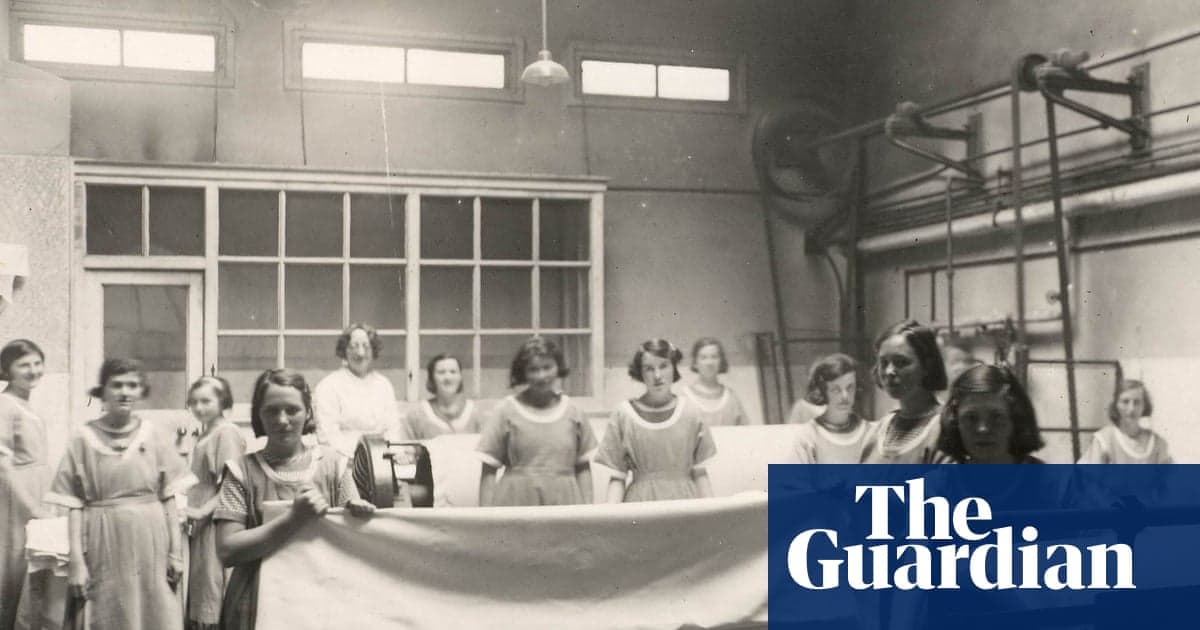
The Fallen by Louise Brangan Review – an Enraging Account of Ireland’s Magdalene Laundries
Why It Matters
The revelations underscore ongoing demands for accountability and full compensation for survivors, and they reshape public understanding of Ireland’s recent history of institutional abuse.
Key Takeaways
- •Magdalene laundries held 70 per 100k women in 1951, surpassing male prisons
- •Survivors received €33 million (~$36 million) state redress; churches largely abstained
- •Book links laundries to broader Catholic‑state control over 20th‑century Ireland
- •Personal testimonies reveal forced labor for minor “moral” offenses
Pulse Analysis
The Magdalene laundries, a network of Catholic‑run institutions that operated across Ireland until the mid‑1990s, have become a focal point for reassessing the nation’s legacy of institutional abuse. While the state provided the legal framework, the nuns administered daily life, forcing women and girls—often as young as nine—into unpaid, grueling labor. The scale of the system is stark: in 1951, for every 100,000 men, 27 were incarcerated, yet 70 women per 100,000 were confined in laundries, making it the country’s predominant carceral facility for females. This gendered disparity reveals how moral policing, rather than criminality, drove confinement.
Brangan’s "The Fallen" adds depth to the historical record by weaving statistical analysis with vivid survivor testimonies, positioning the laundries alongside other notorious establishments such as mother‑and‑baby homes and workhouses. The book’s detailed case studies, like the abduction of 15‑year‑old Eileen, illustrate the mechanisms of social control—legionnaires, local clergy, and community informants colluded to label vulnerable women as "fallen" and consign them to forced labor. By quantifying redress—over €33 million (about $36 million) paid by the Irish government while religious orders largely abstain—the work highlights the incomplete nature of reparations and the lingering financial and moral gaps.
The renewed attention to the Magdalene laundries fuels broader conversations about accountability, historical memory, and the role of religious institutions in public life. As survivors continue to demand full acknowledgment and compensation, policymakers face pressure to extend redress beyond monetary settlements to include formal apologies, archival transparency, and educational initiatives. Internationally, Ireland’s reckoning serves as a cautionary tale for other nations grappling with similar legacies of faith‑based oppression, underscoring the importance of confronting uncomfortable histories to prevent their recurrence.
The Fallen by Louise Brangan review – an enraging account of Ireland’s Magdalene laundries
Comments
Want to join the conversation?
Loading comments...